
Service History
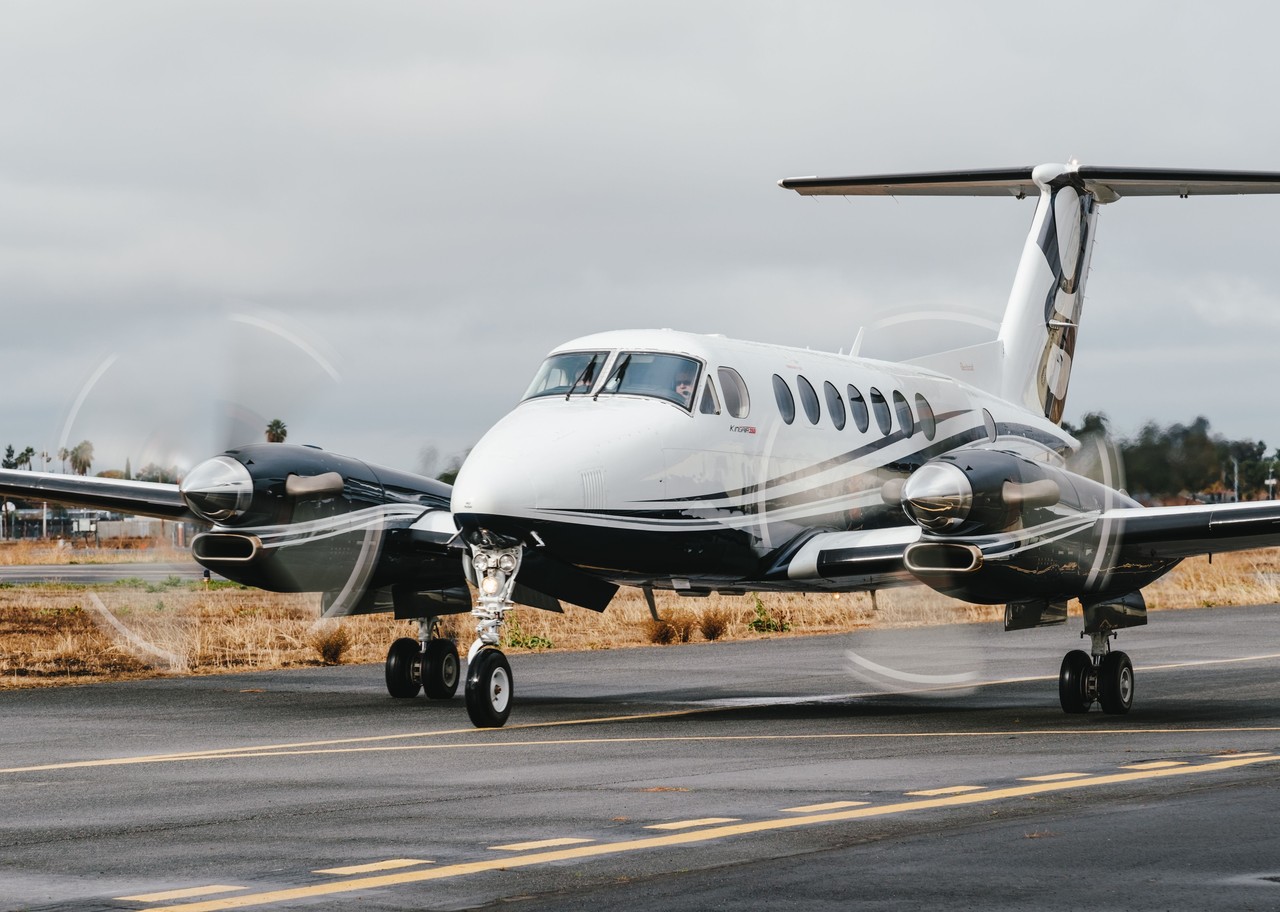
The Super King Air 350 has dominated the corporate aviation market since entering service in 1990, becoming the backbone of business fleets across 94 countries. As part of the broader King Air family that began in 1964, nearly 6,000 King Air aircraft have accumulated over 40 million flight hours in commercial service. By 2009, 687 B300 models had been delivered, including 42 extended-range 350ER variants. The aircraft's versatility extends beyond corporate transport to charter operations, air ambulance services, and specialized government missions.
Limited Military Applications
While primarily civilian, the Super King Air 350 has found selective military applications. The Federal Aviation Administration operated 19 Model 300 variants from 1987 to 1988 for airway inspection duties, designated with serial numbers FF-1 through FF-19. Saudi Arabia acquired five 350C air ambulances in 2008, while Switzerland's Air Force operates one B300C for aerial surveillance missions. The 350CER variant features underwing hardpoints for specialized equipment, though no combat deployments have been recorded.
Manufacturing Heritage
Beechcraft Corporation, founded in 1932 by Walter H. Beech and Olive Ann Beech, originally developed the Super King Air 350. The company achieved significant milestones, including delivery of its 30,000th aircraft in September 1970 and accumulating over $2.5 billion in total sales. Following corporate transitions through Raytheon Company ownership (1980), Hawker Beechcraft (2006-2012), the manufacturing rights now belong to Textron Aviation, which acquired the program in 2014. Production continues at Textron's Wichita, Kansas facilities.
Engine Excellence
Two Pratt & Whitney Canada PT6A-60A turboprops power the Super King Air 350, each flat-rated at 1,050 shaft horsepower. These engines represent the pinnacle of the PT6A series, which entered production in 1963 and has achieved remarkable success with over 55,000 units manufactured across all variants. The PT6A's reverse-flow design provides exceptional reliability and simplified maintenance access, contributing to the engine family's accumulation of millions of flight hours. This powerplant choice marked a departure from earlier considerations of the Garrett AiResearch TPE-331 engines used in some King Air variants.
Development Timeline
The 350's development followed a systematic evolution from the King Air 200 series. Senior engineering test pilot Vaughn Gregg conducted the Model 300 prototype's maiden flight on September 3, 1983, while the B300 pre-production prototype (designated FA-1) first flew on September 13, 1988. FAA certification came on December 12, 1989, enabling production to begin the following year. Design objectives included fuselage stretching (adding two windows per side), winglet installation, increased gross weight capability, and enhanced performance across corporate and commercial applications.
Pilot's Aircraft
Pilots appreciate the Super King Air 350's balanced performance characteristics, including a maximum cruise speed of 312 knots and service ceiling of 35,000 feet. The aircraft maintains a cabin altitude of 8,000 feet while flying at 21,200 feet, providing passenger comfort during extended flights. Initial climb rate reaches 2,500 feet per minute, while the extended-range 350iER variant achieves 1,806 nautical miles range. Standard crew requirements call for two pilots, though single-pilot operations are possible with appropriate certification and equipment.
Production Legacy
Peak Model 300 production reached 60 units in 1985, establishing manufacturing momentum that carried into the 350 series. The "Super" designation was dropped in 1996, with subsequent aircraft marketed as King Air 350/350i models. Current market values for 2015-2016 models range from $5 to $7 million, reflecting the aircraft's continued desirability. Over 500 King Air 350/350i variants remain active worldwide, representing part of the 7,000-plus total King Air fleet currently flying.
Continuing Innovation
Later production models incorporated advanced Pro Line 21 avionics systems, maintaining the 350's technological relevance in modern airspace. The aircraft's 40-plus year production run represents the longest continuous manufacturing period in its class, outlasting competitors including the Piaggio P.180 and Beech Starship. This longevity stems from the design's fundamental soundness and Textron Aviation's commitment to incremental improvements, ensuring the Super King Air 350 remains the benchmark pressurized turboprop for multi-role operations.