
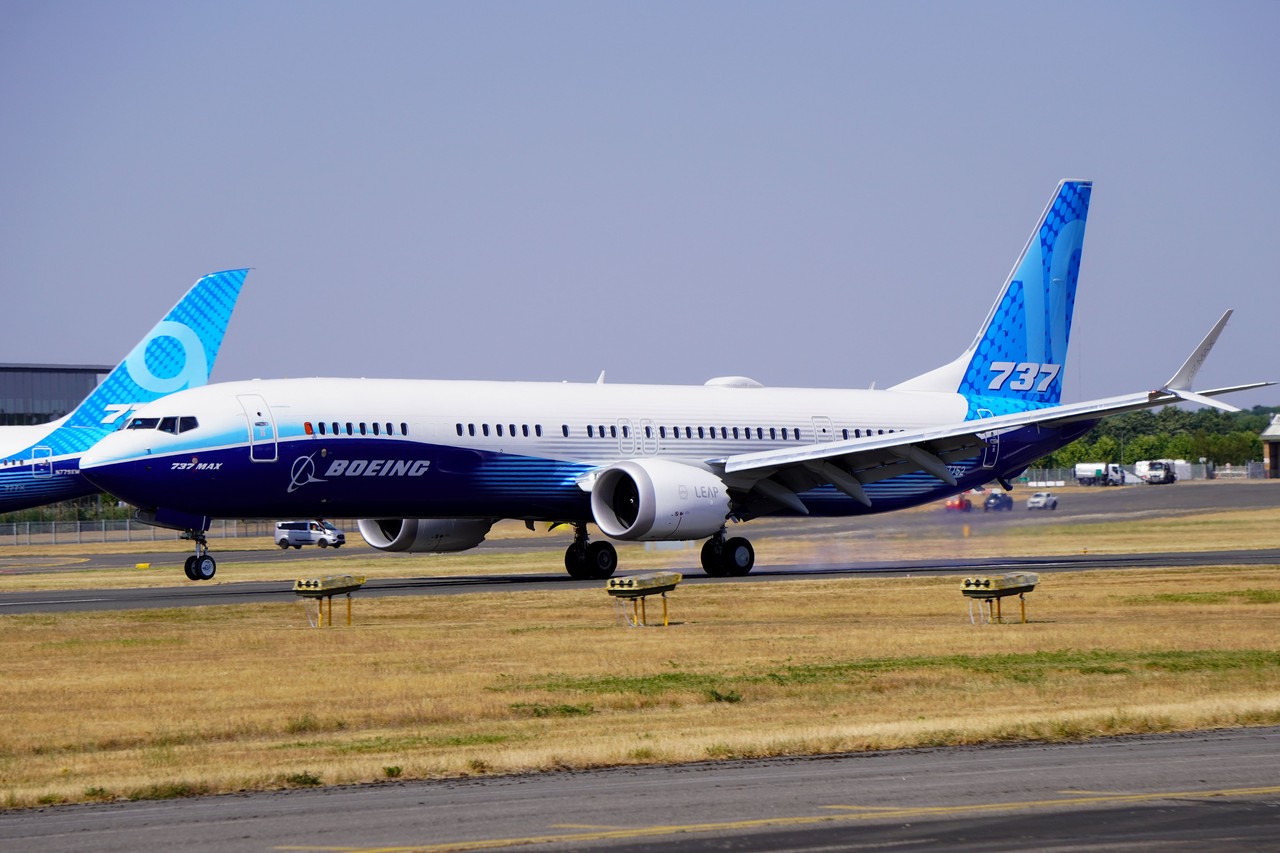
Development and Design
The 737 MAX 10 emerged from Boeing's strategic response to Airbus's dominance in the high-capacity narrowbody market. Launched on June 19, 2017, the aircraft represents a stretched variant of the MAX 8, extending the venerable 737 lineage that began more than five decades earlier. Boeing's engineering teams developed the MAX 10 without a single named lead designer, instead relying on their established design philosophy of evolutionary improvement over revolutionary change.
The aircraft's development timeline reflected Boeing's commitment to rapid market entry, building upon the six-year development cycle that brought the original MAX 8 from announcement to service entry in March 2017. However, the MAX 10's path to certification has proven far more complex, with original delivery targets of 2020 repeatedly pushed back to 2026 due to regulatory scrutiny following the broader MAX family's grounding.
The Boeing Legacy
The Boeing Company traces its origins to July 15, 1916, when William E. Boeing established the Boeing Airplane Company. The manufacturer evolved through strategic acquisitions, including Rockwell International in 1996 and McDonnell Douglas in 1997, transforming from a regional aircraft builder into a global aerospace giant. Boeing's commercial aviation heritage includes pioneering achievements such as launching the first U.S. airmail service in the 1920s and introducing the revolutionary 707 jetliner in 1958, which established the company as a leader in commercial aviation.
Boeing Commercial Airplanes, the division responsible for the 737 MAX 10, operates primarily from the Renton Factory in Washington, where assembly occurs alongside other 737 variants. The manufacturing process involves Spirit AeroSystems in Wichita, Kansas, which completed the first MAX fuselage on August 13, 2015, and a completion facility in Zhoushan, China, operated jointly with Comac.
Technical Innovation
The 737 MAX 10 incorporates two CFM International LEAP-1B turbofan engines, products of the joint venture between GE Aerospace and Safran Aircraft Engines. These powerplants deliver 15 to 20 percent better fuel efficiency compared to the previous CFM56 engines through advanced high-bypass ratio design, composite fan blades, and cutting-edge materials technology. CFM International began LEAP production in 2016, shipping over 3,900 engines across all variants by 2023.
The aircraft's design maintains commonality with earlier 737 variants while incorporating modern aerodynamic improvements and a 65-foot wing spar, with production beginning in October 2017. The controversial Maneuvering Characteristics Augmentation System (MCAS) flight control software, later modified following the MAX family's grounding, represents part of Boeing's effort to maintain pilot type-rating compatibility across the 737 family.
Market Position and Orders
Despite never entering commercial service, the 737 MAX 10 has attracted significant airline interest with 531 firm orders recorded as of 2019. Major customers include United Airlines, which converted 100 MAX 9 orders to the MAX 10 variant, and Ryanair, which placed an order for 150 aircraft in May 2023 with options for 150 additional units. Southwest Airlines and Delta Air Lines represent key launch customers, though both carriers continue awaiting first deliveries originally promised years earlier.
The aircraft targets the high-density short to medium-haul market with seating configurations ranging from 197 to 230 passengers in two-class layouts, directly competing with the Airbus A321neo's 244-seat capacity. However, the MAX 10's approximately 3,800 nautical mile range falls short of the A321XLR's 4,700 nautical mile capability, limiting its appeal for longer routes.
Certification Challenges
The MAX 10's development timeline became entangled with the broader MAX family crisis following two fatal accidents: Lion Air Flight 610 on October 29, 2018, killing 189 people, and Ethiopian Airlines Flight 302 on March 10, 2019, killing 157. These tragedies led to a worldwide grounding from March 2019 to November 2020, resulting in intensive regulatory scrutiny and a $2.5 billion Boeing settlement in January 2021.
Continued safety concerns, including the January 2024 door plug blowout on a MAX 9, have maintained heightened regulatory attention on all MAX variants. The Federal Aviation Administration's cautious approach to MAX 10 certification reflects lessons learned from the original MAX certification process, contributing to the aircraft's delayed entry into service.
Current Status and Future Prospects
As of late 2024, only flight-test aircraft exist, with the first prototype rolling out on November 22, 2019, from Boeing's Renton facility. No commercial deliveries have occurred, leaving airlines to adjust their fleet planning around the extended development timeline. Delta Air Lines now expects first deliveries in 2026, representing a six-year delay from original projections.
The MAX 10's eventual success will depend on Boeing's ability to complete certification while maintaining airline confidence in the MAX family. As the largest member of a family exceeding 10,000 aircraft built since the original 737-100's certification on December 15, 1967, the MAX 10 represents both the culmination of Boeing's derivative design strategy and a test of the company's commitment to safety and regulatory compliance in commercial aviation.