
Revolutionary Design Philosophy
The Bell 525 Relentless emerged from Bell Helicopter's ambitious goal to transform commercial rotorcraft operations through advanced technology integration. Announced at Heli-Expo in Dallas during February 2012, the program represented Bell's largest commercial helicopter development, targeting the super-medium market with unprecedented safety and performance capabilities.
Bell's design team collaborated extensively with a Customer Advisory Panel to prioritize operational safety, payload capacity, cabin comfort, and maintenance efficiency. The aircraft's most significant innovation lies in its fly-by-wire flight control system, replacing traditional cyclic and collective controls with side-stick controllers that dramatically reduce pilot workload while enhancing safety margins.
Technical Innovation and First Flight
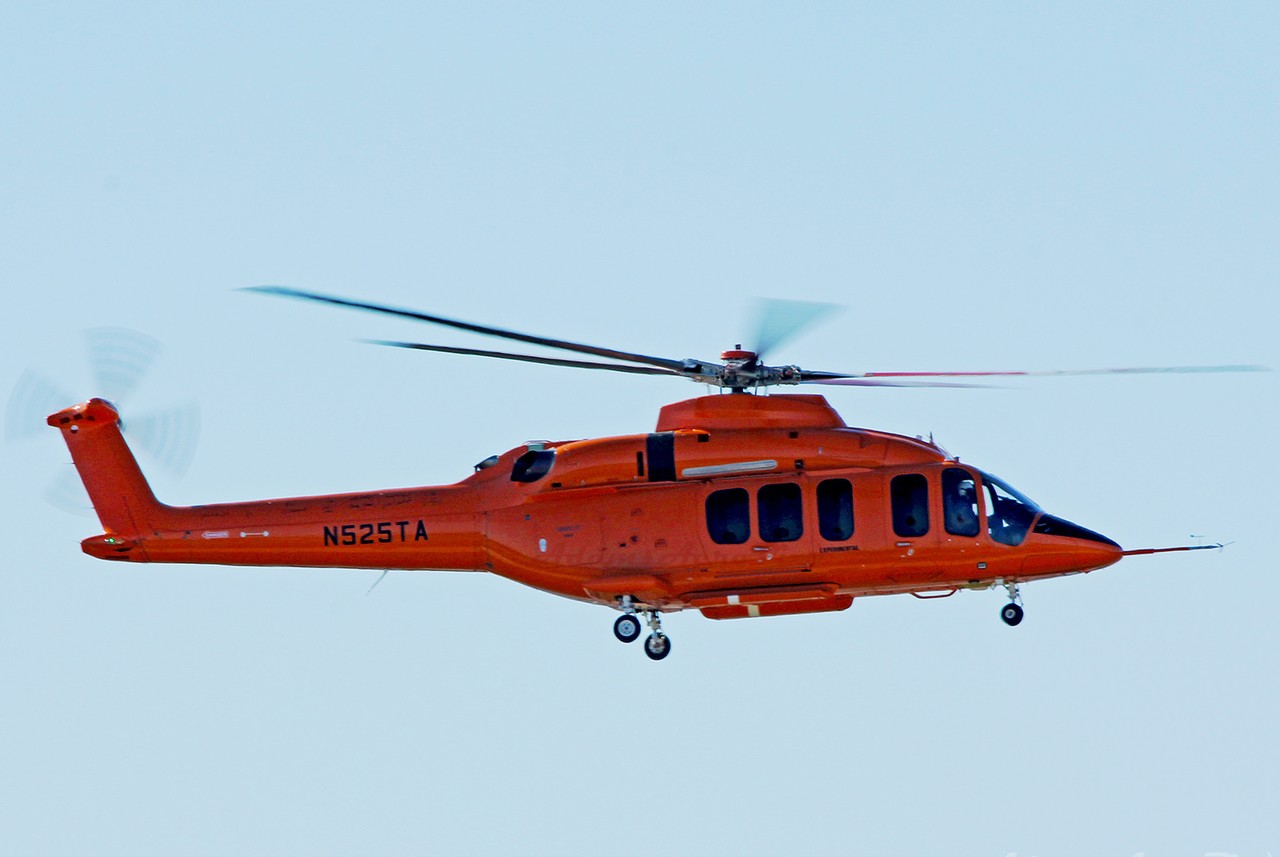
Test pilots Troy Caudill and Jeff Greenwood conducted the maiden flight of prototype N525TA from Bell's Amarillo facility on July 1, 2015. The aircraft showcased numerous technological advances including a five-blade main rotor and four-blade tail rotor constructed entirely from carbon fiber materials, providing superior performance and reduced maintenance requirements.
The 525's Lift Augmented Tail Drive (LATD) system adds 88 horsepower to the main rotor system during hover operations, significantly improving performance in demanding conditions. The composite airframe incorporates bird-strike-tolerant anti-ice blades with specialized airfoil design, while the fully-integrated Garmin G5000H touch-screen avionics suite provides pilots with comprehensive flight management capabilities.
Powerplant and Performance
Two General Electric CT7-2F1 turboshaft engines, each producing 1,800 shaft horsepower, power the Bell 525. General Electric selected this proven powerplant for its reliability in military service aboard Sikorsky UH-60 Black Hawks, exceptional fuel efficiency, and low maintenance requirements. The engines feature Full Authority Digital Engine Control (FADEC) systems with inlet particle separators and self-contained oil cooling for operation in austere environments.
The aircraft achieves a maximum cruise speed of 178 miles per hour with a range of 500 nautical miles and service ceiling of 20,000 feet. Its Category A takeoff and landing capability at maximum gross weight ensures single-engine safety during critical flight phases, a crucial requirement for commercial operations.
Manufacturing and Production Challenges
Bell established manufacturing operations at their Amarillo, Texas assembly plant, selecting seven key suppliers including GKN Aerospace for fuselage structures manufactured in Tallassee, Alabama, and St. Louis, Missouri. The program utilized advanced 3D design techniques to ensure precise component fit and reduce assembly time.
However, the development program faced significant challenges when a fatal test crash occurred during high-speed flight testing. The accident killed Marine Reserve Majors Jason Cori Grogan and Erik Allan Boyce, both U.S. Naval Test Pilot School graduates assigned to HMLA-773, when main rotor blades struck the aircraft's nose and tail at 185 knots and 1,975 feet altitude.
Market Position and Orders
Milestone Aviation placed the program's largest order for 20 units in June 2015, with initial deliveries planned for late 2017. The commercial helicopter market showed strong interest with over 60 helicopters reserved through letters of intent, primarily from energy sector operators requiring best-in-class payload and passenger capacity.
Designed to accommodate 16 passengers in a spacious cabin featuring J-track rotate-outward seats for improved egress and comfort, the 525 targets offshore energy missions, VIP transport, and challenging operational environments where its advanced systems provide significant advantages over conventional helicopters.
The Manufacturer Legacy
Bell Helicopter, now operating as Bell Textron Inc. following Textron's 1985 acquisition, brought decades of rotorcraft expertise to the 525 program. The company's experience with fly-by-wire systems on projects like the Bell Boeing V-22 Osprey provided crucial technological foundation for the commercial application in the 525.
Bell's commitment to advancing helicopter safety through technology integration positioned the 525 as a pioneering platform that would influence future commercial rotorcraft development, despite certification delays that extended the program timeline beyond original projections.
Current Status and Future Prospects
As of recent reports, the Bell 525 test fleet had accumulated over 900 flight hours across four test aircraft, with initial production assembly beginning at the Amarillo facility. FAA certification remains the critical milestone for program success, with deliveries dependent upon regulatory approval.
The aircraft's legacy lies in establishing commercial fly-by-wire helicopter operations as a new industry standard, potentially transforming pilot training requirements and operational procedures across the commercial helicopter sector. While no delivered aircraft currently operate in commercial service, the 525's technological achievements continue influencing next-generation rotorcraft design philosophy throughout the industry.