
Development Genesis
The BA-609's origins trace back to 1994 when Bell Helicopter initiated the Model D-600 commercial tiltrotor program, leveraging experience from their experimental XV-15 tiltrotor. Boeing briefly joined the partnership in 1996, creating the Bell Boeing 609, but withdrew in 1997 after acquiring McDonnell Douglas to focus on military helicopter projects. Bell subsequently partnered with Italy's Agusta helicopter manufacturer, establishing the Bell/Agusta Aerospace Company joint venture and redesignating the aircraft as the BA-609.
Flight Testing Milestones
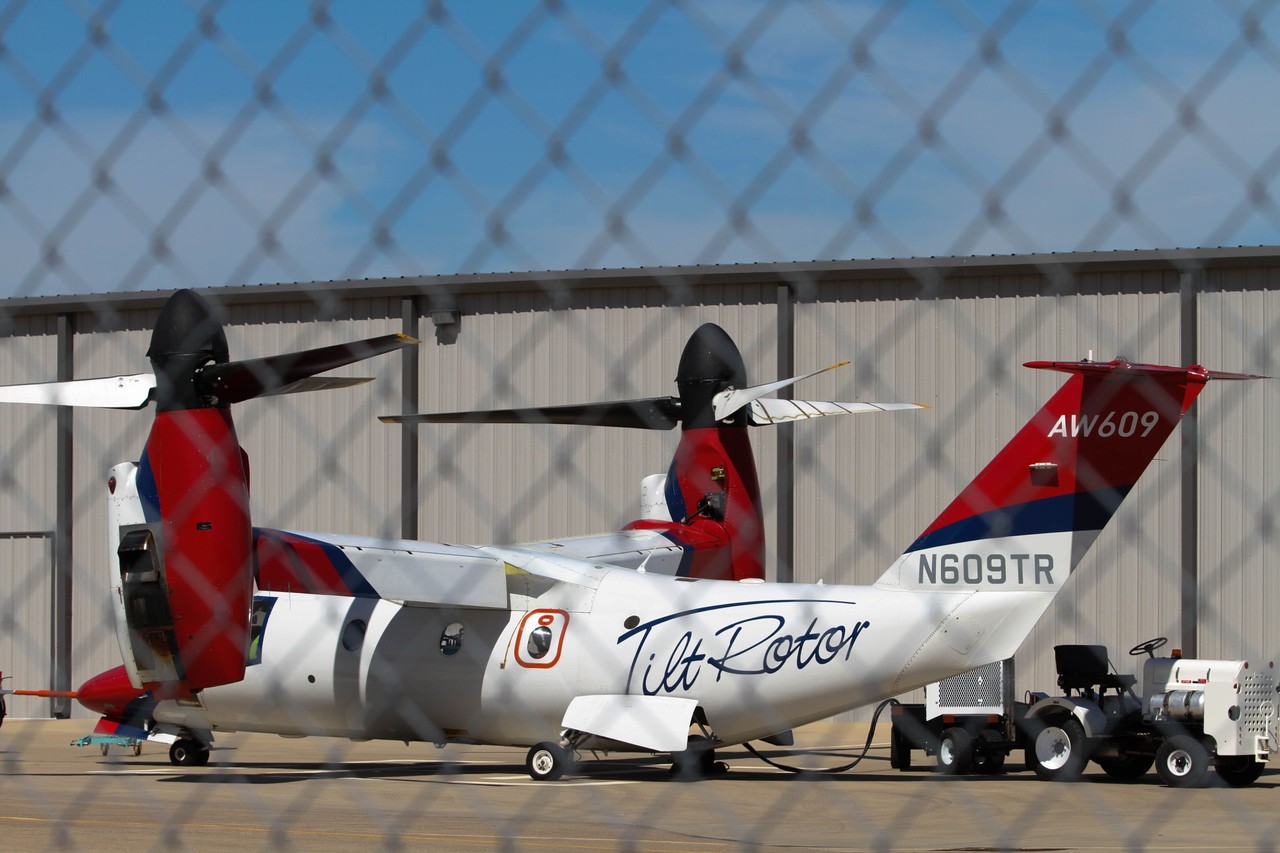
Test pilots Roy Hopkins and Dwayne Williams conducted the BA-609's maiden flight on March 6, 2003, near Bell's Arlington, Texas headquarters using prototype AC1 (registration N609TR). The program achieved a critical milestone on July 22, 2005, when the aircraft successfully completed its first in-flight conversion from helicopter to airplane mode, demonstrating the core tiltrotor capability that distinguishes it from conventional aircraft.
Four prototypes have supported the development program, accumulating approximately 1,900 flight hours. The test fleet demonstrated impressive cross-country capability in 2015 when the AW609 flew 721 miles from Yeovil, England, to Milan, Italy, in just 2 hours and 18 minutes, showcasing the aircraft's potential for rapid business transportation.
Corporate Transitions
The program experienced significant ownership changes as development progressed. Bell withdrew from active development in 2009 while continuing certification support, and AgustaWestland assumed full program ownership during the 2011 Paris Air Show. When AgustaWestland rebranded as Leonardo in 2016, the aircraft was redesignated as the AW609, though it retains the BA-609 designation in aviation databases.
Manufacturing and Production
Leonardo established production at their Philadelphia facility, which also manufactures the AW139, AW119 KXe, and AW169 helicopters. The first production aircraft, designated AC5, completed its maiden flight on October 13, 2025, representing a major milestone after more than two decades of development. Initial production plans called for assembling two to three aircraft beginning in 2017, though certification delays pushed actual production into the mid-2020s.
Technical Innovation
The BA-609 represents a significant technological achievement as only the second tiltrotor aircraft type to reach advanced development, following the military Bell Boeing V-22 Osprey. The aircraft's twin Pratt & Whitney Canada PT6C-67A turboshaft engines power 25-foot diameter rotors that tilt from horizontal helicopter mode to vertical airplane mode. This configuration enables vertical takeoff and landing in spaces as small as helicopter landing zones while achieving fixed-wing cruise speeds exceeding 300 mph.
The pressurized cabin accommodates 6 to 9 passengers depending on configuration, with executive transport representing the primary market focus. Maximum gross weight reaches 16,800 pounds for vertical operations, nearly 25 percent heavier than the experimental XV-15 that proved the tiltrotor concept.
Market Reception and Challenges
Initial market enthusiasm generated 77 confirmed orders by 1999, though this figure declined to approximately 60 orders by 2015 as certification delays extended the development timeline. Bell originally estimated a market for 1,000 aircraft in 2001, while AgustaWestland later projected sales of 700 aircraft over 20 years. Unit pricing estimates have ranged from $24 million to $30 million, positioning the aircraft to compete with high-end business jets.
The program suffered a significant setback on October 30, 2015, when prototype AC2 crashed near AgustaWestland's Vergiate facility in Italy, killing both test pilots. This accident prompted additional safety reviews and contributed to certification delays that pushed entry into service from original 2010s targets to the mid-2020s.
Certification Progress
The AW609 entered final flight certification stages in 2023, with Leonardo projecting certification completion as early as 2025. The aircraft must meet both Federal Aviation Administration and European Union Aviation Safety Agency standards for civilian tiltrotor operations, establishing new certification precedents for this aircraft category.
Leonardo's Philadelphia facility serves as the primary production center, reflecting the company's strategy to manufacture the AW609 in the United States market where many potential customers are located. The facility's experience with conventional helicopter production provides manufacturing expertise while the company develops tiltrotor-specific assembly processes.
Strategic Significance
The BA-609 program represents a pivotal moment in aviation history as the first civilian application of tiltrotor technology. Success could establish a new aircraft category bridging helicopters and conventional aircraft, potentially revolutionizing business aviation and specialized transport missions requiring both vertical lift capability and high-speed cruise performance. The aircraft's ability to access helicopter landing sites while matching business jet speeds addresses longstanding limitations in executive transportation.