
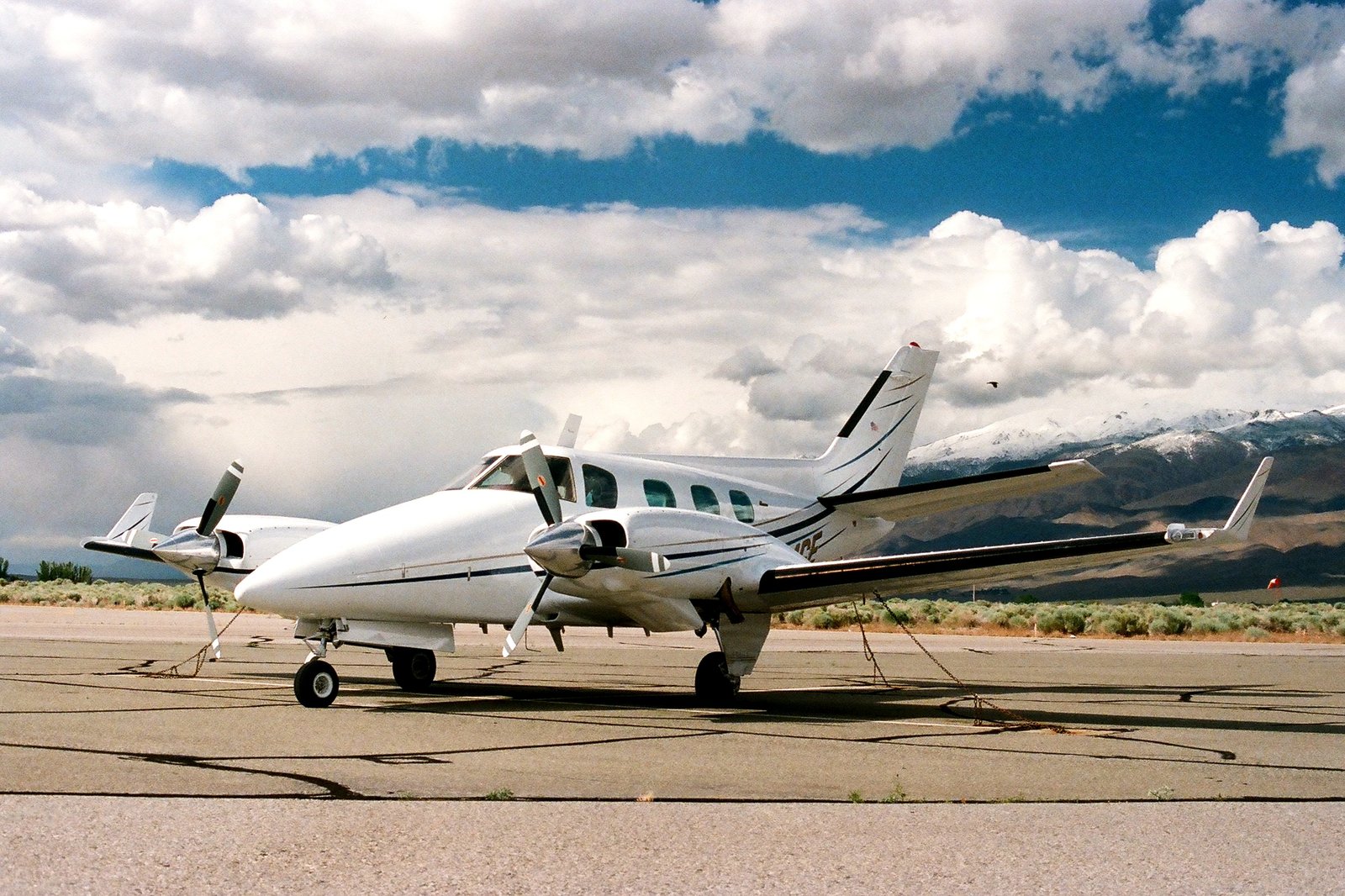
Development and Original Design
Beechcraft launched the Duke program in early 1965 to bridge the performance gap between their Baron and Queen Air models. The company sought to create a pressurized twin that could compete directly with Piper's P-Navajo and Cessna's 414/421 series. Following its first flight on December 29, 1966, the Duke received its FAA Type Certificate on February 1, 1968, with customer deliveries beginning in July of that year.
The original Duke incorporated advanced manufacturing techniques unusual for general aviation aircraft of the 1960s, including skin bonding, honeycomb panels, chemical milling, and extensive use of magnesium in the empennage. These innovations reflected Beechcraft's commitment to producing a sophisticated pressurized twin that could operate effectively at high altitudes.
Production History
Beechcraft manufactured 596 Dukes across three variants during the aircraft's 15-year production run from 1968 to 1983. The Model 60 and A60 combined accounted for approximately 246 aircraft through 1973, while the improved B60 model represented the bulk of production with 350 units built between 1974 and 1982. Only B60 models are eligible for the Royal Turbine conversion, making it applicable to the largest segment of the Duke fleet.
The A60 variant introduced in 1970 featured significant improvements including pressurization systems identical to the King Air C90, lighter and more efficient turbochargers, and enhanced elevator design. These refinements addressed early operational challenges but could not overcome the aircraft's reputation for complex maintenance requirements.
Engine Evolution and the Royal Turbine Conversion
The original Duke's Lycoming TIO-541 engines produced 380 horsepower each and featured integral turbochargers designed as primary components rather than add-on accessories. While innovative, these powerplants initially carried a 1,200-hour TBO that increased to 1,600 hours in 1976 following extensive field testing and more than 20 engine improvements.
Rocket Engineering's Royal Turbine conversion replaces the troublesome piston engines with proven Pratt & Whitney Canada PT6A-21 or PT6A-35 turboprops producing 525 horsepower each. The modification increases fuel capacity by 28 gallons to 267 total gallons and adds 400 pounds to the maximum useful load. The conversion delivers a maximum cruise speed of 290 knots at FL270 with approximately 1,000-mile range and 3.5-hour endurance.
Performance and Market Position
When introduced, Beechcraft marketed the Duke as "the best performing, lowest priced, IFR equipped, pressurized twin available." The aircraft featured club seating accessed through a port-side airstair door and pressurization capability that enabled comfortable high-altitude flight. However, the Duke achieved only moderate sales success due to its complex systems and demanding maintenance requirements.
The Royal Turbine conversion addresses many operational concerns while dramatically improving performance. The PT6A engines burn approximately 75 gallons per hour at maximum cruise and 23,000 feet while operating on readily available jet fuel rather than increasingly expensive avgas. The conversion's 290-knot cruise speed represents a significant improvement over the original aircraft's capabilities.
The Manufacturer Legacy
Beechcraft, originally the Beech Aircraft Corporation, established itself as a premium general aviation manufacturer known for sophisticated designs and quality construction. The company produced numerous successful aircraft including the Bonanza, Baron, and King Air series before various corporate acquisitions eventually led to its current status as part of Textron Aviation.
The Duke represented Beechcraft's attempt to capture the high-performance pressurized twin market but proved too complex for its intended role. While the aircraft demonstrated advanced engineering, its maintenance demands limited market acceptance and contributed to production ending in 1983.
Current Operations and Values
Most of the 350 B60 Dukes remain in service with their original piston engines, typically selling for $150,000 to $300,000 depending on condition and equipment. The Royal Turbine conversion significantly increases both capability and value, though Rocket Engineering's modification represents a substantial investment requiring careful economic analysis.
The conversion extends the Duke's operational life while transforming its performance envelope. With jet fuel availability and PT6A reliability, converted aircraft operate more like light turboprops than complex piston twins, appealing to operators seeking King Air-like performance in the proven Duke airframe.
Pilot Perspective
Pilots generally praise the Duke's solid construction and pressurized comfort but criticize the original engines' maintenance requirements and complexity. The Royal Turbine conversion addresses these concerns while providing turboprop simplicity and performance. The aircraft's club seating and airstair door continue to appeal to business operators seeking passenger comfort and operational flexibility.
The conversion's 290-knot cruise speed and 1,000-mile range position it competitively against other turboprop conversions and factory-built turboprops. However, the substantial modification cost requires careful consideration against purchasing factory-built alternatives.