
Service History
The 737-500 entered commercial service on February 28, 1990, following FAA certification on February 12, with launch customer Southwest Airlines operating the first revenue flights. Southwest Airlines had ordered 20 aircraft in 1987 and eventually operated 25 of the type, using them primarily on short-haul routes where the aircraft's compact size and efficient operations proved ideal. The variant filled a crucial niche in Boeing's lineup, offering airlines a modern replacement for their older 737-200s while providing 25% better fuel efficiency through its advanced CFM56 engines.
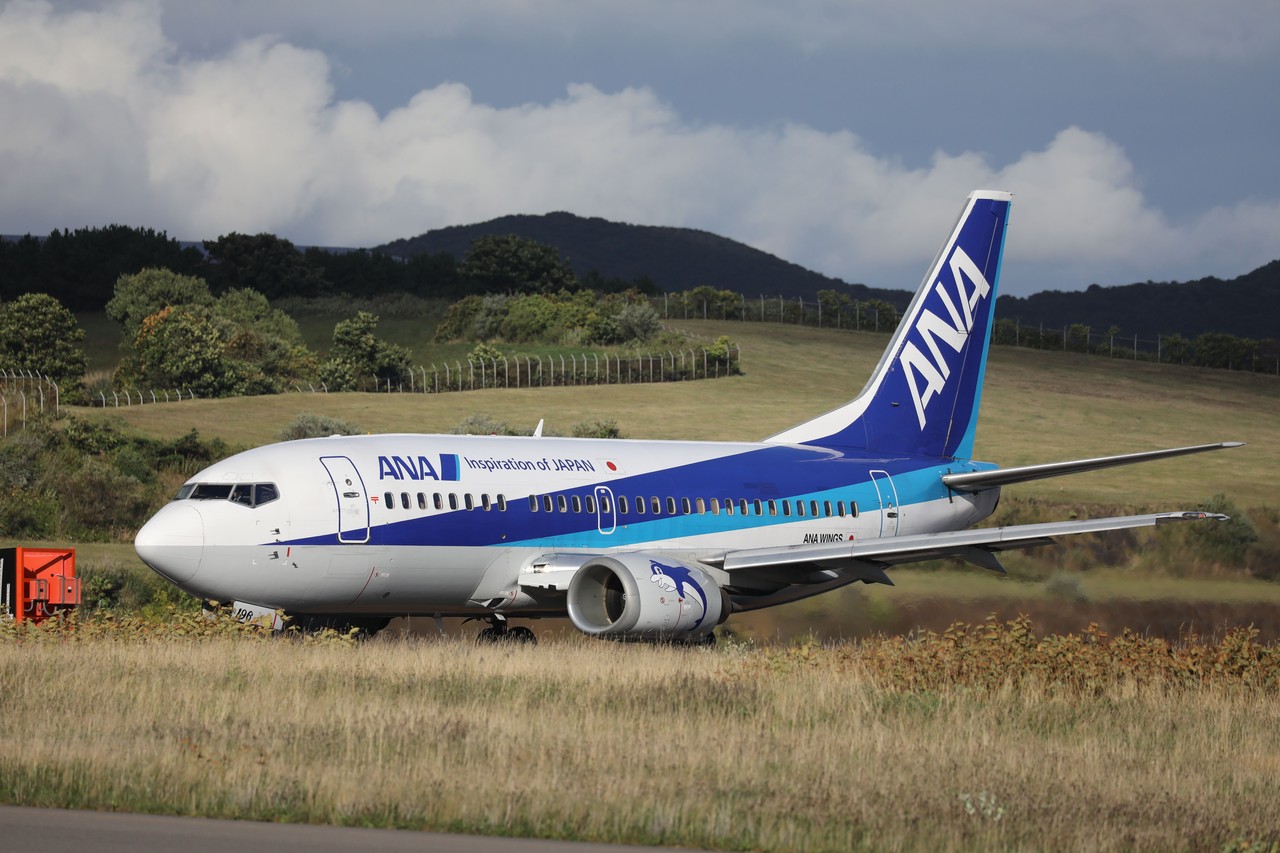
Major operators included All Nippon Airways, which received the final 737-500 delivered on July 26, 1999, along with USAir, Piedmont Airlines, and Continental Airlines. The aircraft served airlines worldwide on high-frequency short-haul routes, competing against the McDonnell Douglas MD-80 series and early Airbus A320 family aircraft. Its typical two-class configuration accommodated 122 passengers, though high-density layouts could seat up to 132.
The Manufacturer
Boeing Commercial Airplanes, a division of The Boeing Company, manufactured all 389 aircraft at their Renton plant near Seattle, Washington. Founded in 1916, Boeing had evolved from building wooden seaplanes to creating the world's most successful commercial airliner family. The original 737 launched in 1967, and by the 1990s, Boeing had received orders for over 10,000 aircraft across all 737 variants.
The company underwent significant changes during the 737-500's production run, merging with McDonnell Douglas in 1997 to enhance its commercial aviation portfolio. This acquisition brought together two of America's largest aerospace manufacturers, with Boeing continuing to operate under The Boeing Company name and maintaining its position as a global leader in commercial aviation.
Engine & Technical Innovation
The aircraft's two CFM International CFM56-3 series high-bypass turbofan engines represented a major technological advancement over the JT8D engines used in earlier 737 variants. CFM International, a joint venture between GE Aerospace and Safran Aircraft Engines established in 1974, had developed the CFM56 family into one of the most successful commercial engines ever produced, with over 35,000 units manufactured across all variants.
Each CFM56-3 engine produced up to 23,500 pounds of thrust and featured advanced technologies including dual annular combustors for reduced emissions and noise levels. The engines earned ETOPS (Extended Twin Operations) certification, allowing the 737-500 to operate on extended overwater routes previously restricted to three or four-engine aircraft. Boeing's engineering team incorporated upgraded avionics systems derived from the larger 737-300 and 737-400, while later offering optional winglets to further improve fuel efficiency.
Design Philosophy
Boeing's design team, building on the foundation established by chief project engineer Joe Sutter's work on earlier 737 models, focused on creating the most compact member of the Classic series. The 737-500's 101-foot 9-inch length made it 9 feet shorter than the 737-300, while maintaining the same 94-foot 9-inch wingspan and 35-foot 4-inch height. This configuration provided airlines with maximum flexibility in route planning and airport operations.
The prototype, registered N73700, completed its maiden flight on June 30, 1989, demonstrating the aircraft's capabilities with a maximum cruise speed of Mach 0.785 and a service ceiling of 37,000 feet. The two-pilot flight deck incorporated modern glass cockpit technology while maintaining commonality with other 737 Classic variants, reducing training costs for airlines operating mixed fleets.
Operational Performance
Pilots praised the 737-500 for its responsive handling characteristics and efficient cruise performance. The aircraft typically climbed at approximately 3,000 feet per minute and cruised at 521 mph, covering its maximum range of 2,375 nautical miles with full passenger loads. Its compact dimensions allowed operations at airports with shorter runways while maintaining the reliability and dispatch rates that made the 737 family successful.
The type's operational efficiency made it particularly attractive to low-cost carriers and regional airlines seeking to replace older, less fuel-efficient aircraft. Southwest Airlines operated their 737-500 fleet for 26 years before retiring the final aircraft on September 5, 2016, demonstrating the variant's long-term reliability and cost-effectiveness.
Legacy and Current Status
Production of the 737-500 concluded in 1999 as airlines increasingly favored larger aircraft and Boeing prepared to launch the Next Generation 737 series. As of the early 2020s, fewer than 50 examples remain in active passenger service, primarily with smaller operators in developing markets. Many retired aircraft have been converted to freighter configuration or scrapped as more modern, fuel-efficient aircraft became available.
Notable preserved examples include Southwest Airlines' final 737-500, registration N387SW, which is displayed at the Pima Air & Space Museum in Tucson, Arizona. The aircraft appeared in the 2016 film Sully, representing the 737 Classic series and its role in commercial aviation history. As part of the 1,988 Boeing 737 Classic aircraft built between 1984 and 2000, the 737-500 helped establish Boeing's dominance in the narrow-body market and paved the way for subsequent 737 developments that continue flying today.