
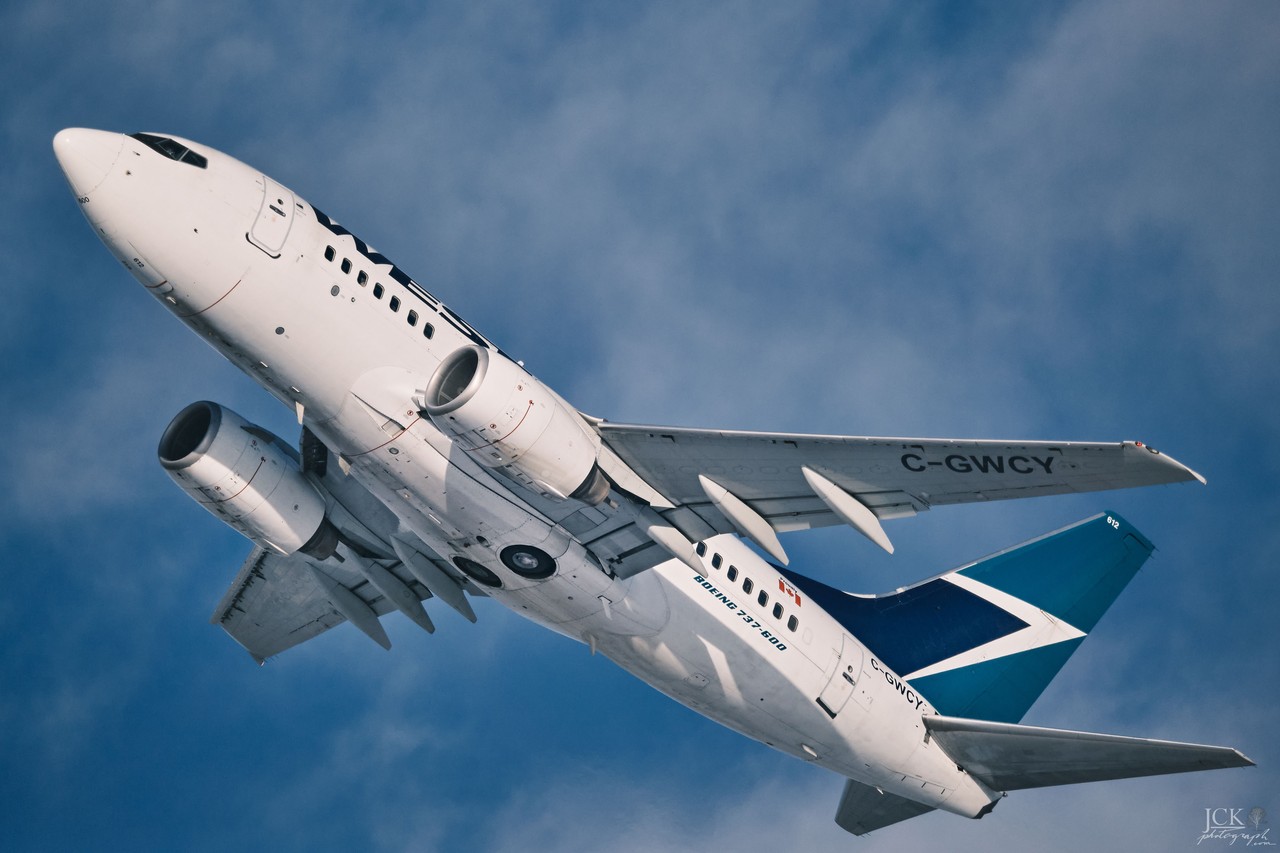
Commercial Struggle
Despite being part of Boeing's highly successful 737 Next Generation program, the 737-600 achieved only modest commercial success with 69 total deliveries between 1998 and 2006. The aircraft was specifically designed to replace the poorly-selling 737-500, but ironically suffered a similar fate in the marketplace. While its larger siblings—the 737-700 with 1,289 deliveries and the 737-800 with over 4,000 units—dominated airline fleets worldwide, the 737-600 found limited acceptance among carriers seeking smaller narrow-body aircraft.
Scandinavian Airlines System launched the program with an order for 35 aircraft placed on March 15, 1995, followed by six additional units in October of that year. SAS took delivery of the first production aircraft in September 1998, becoming the type's primary operator. Canada's WestJet became another significant customer, operating 13 Boeing 737-600s before eventually placing all of them in long-term storage. The final 737-600 was delivered to WestJet in 2006, marking the end of the program after just eight years of deliveries.
The Boeing Company Heritage
The Boeing Company designed and manufactured the 737-600 at its Wichita plant, where the first fuselage was completed in summer 1997. Founded in 1916 by William Boeing, the company had evolved from a small Pacific Northwest aircraft manufacturer into one of the world's dominant aerospace corporations. Boeing's 737 program, launched in the 1960s, had become the most successful commercial aircraft family in aviation history by the time the Next Generation variants entered development in the mid-1990s.
Boeing continues operations today as a major aerospace manufacturer, having survived numerous industry consolidations and economic challenges. The company's portfolio spans commercial aviation, defense systems, and space exploration, with the 737 family remaining its most important commercial product line. The 737-600's commercial failure stood in stark contrast to Boeing's overall success with the Next Generation program, which revitalized the entire 737 family.
Advanced Powerplant Technology
The 737-600 featured CFM56-7 turbofan engines manufactured by CFM International, a joint venture between General Electric of the United States and Snecma of France. These powerplants delivered 10 percent higher thrust capability compared to the CFM56-3C engines powering earlier 737 variants, while providing improvements in noise reduction, fuel consumption, and overall performance. For the 737-600 application, the engines were derated to 19,500 pounds of thrust, providing adequate power for the aircraft's lighter weight and passenger capacity.
The CFM56-7 represented a significant technological advancement in commercial aviation propulsion, incorporating advanced materials and design techniques developed during the 1990s. The engine's reliability and fuel efficiency helped establish CFM International as the dominant supplier for narrow-body commercial aircraft, competing successfully against offerings from Pratt & Whitney and Rolls-Royce.
Design Innovation and Limitations
Engineers developed the 737-600 as a stretched version of the 737-400, incorporating a new and larger wing design, higher cruise speeds, and extended range capability. The aircraft featured no winglets in its original configuration, distinguishing it from some later 737 variants. In terms of size and market positioning, the 737-600 competed directly with the Airbus A318, the smallest member of the A320 family.
The design philosophy emphasized commonality with other Next Generation 737 variants, allowing airlines to achieve pilot training efficiencies and maintenance cost reductions across their fleets. However, this approach may have compromised the aircraft's optimization for its specific market segment, as airlines increasingly preferred the economics of larger aircraft for most routes.
Operational Performance
The 737-600 accommodated between 108 and 132 passengers depending on cabin configuration and seat pitch selected by individual airlines. The aircraft's two-person flight crew requirement aligned with industry standards for modern commercial aircraft, eliminating the flight engineer position that characterized earlier generation jetliners. While specific performance data varies by configuration and operating conditions, the 737-600 delivered cruise speeds and range capabilities consistent with airline requirements for short to medium-haul operations.
Operators appreciated the aircraft's commonality with other 737 Next Generation variants, as pilots could transition between the -600, -700, -800, and -900 models with minimal additional training. This flexibility proved valuable for airlines operating mixed 737 NG fleets, though it could not overcome the fundamental market preference for larger aircraft.
Legacy and Current Status
Today, many 737-600 aircraft remain in storage or have been scrapped, reflecting the type's limited commercial appeal and the general trend toward larger, more economical aircraft in airline service. The program's failure highlighted the challenges facing smaller narrow-body aircraft in an industry increasingly focused on operational efficiency and cost reduction. While the 737 Next Generation family as a whole succeeded brilliantly, the 737-600's poor sales performance demonstrated that even aircraft from successful programs could struggle when market conditions and airline preferences shifted.
The 737-600 represents a notable example of how aircraft manufacturers must balance technical capability with market demand, as superior engineering alone cannot guarantee commercial success in the competitive airline industry.