
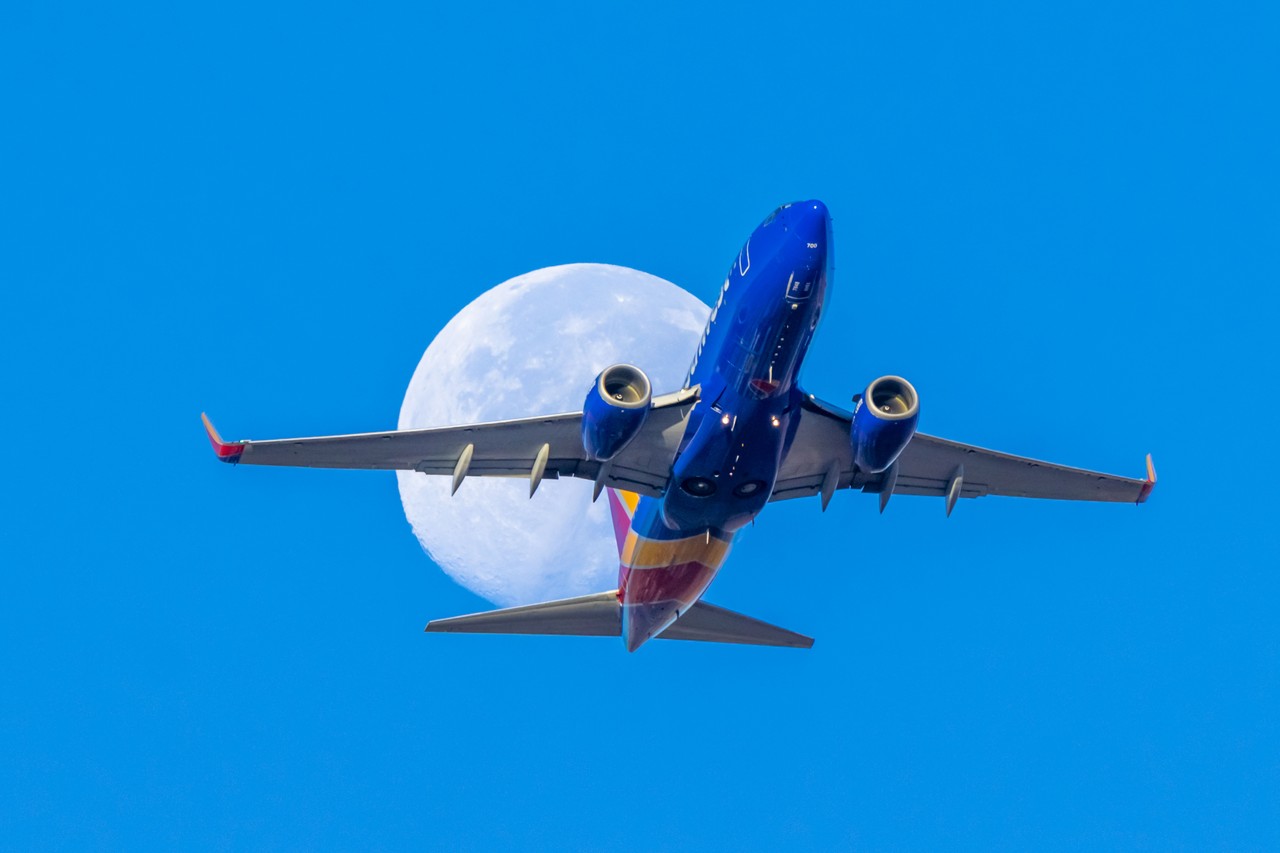
Service History
The 737-700 transformed commercial aviation by enabling the low-cost carrier revolution that reshaped air travel in the late 1990s and 2000s. Southwest Airlines, the launch customer with 63 aircraft ordered in November 1993, operated approximately half of the 1,000 737-700s in service by June 2018, using the type to dominate high-frequency domestic routes across the United States. The aircraft's efficient point-to-point capability allowed carriers to bypass traditional hub-and-spoke models, making air travel accessible to millions of passengers previously served only by less convenient connecting flights.
By 2018, major operators included WestJet with 56 aircraft serving Canadian and international routes, United Airlines with 39 units, and All Nippon Airways, which received the first 737-700ER in 2007 configured with 48 premium seats. The type's versatility extended beyond passenger service through specialized variants: 120 Boeing Business Jets based on the -700 platform, 20 -700C convertible freighters, and 14 -700W winglet-equipped aircraft were delivered alongside the 1,128 standard passenger variants.
The Manufacturer
The Boeing Company, founded in 1916 by William E. Boeing, developed the 737-700 through its commercial airplanes division as part of a continuous evolution spanning over a century of aircraft manufacturing. The company's heritage includes pioneering bomber production with aircraft like the B-17 Flying Fortress in the 1930s and strategic acquisitions such as McDonnell Douglas in 1997, which enhanced both commercial and military portfolios. Boeing's Renton Factory near Seattle served as the final assembly point, while fuselages arrived from Spirit AeroSystems in Wichita, Kansas, representing the distributed manufacturing approach that characterized modern commercial aircraft production.
The company achieved remarkable production efficiency with the Next Generation family, completing one aircraft every 10 days by 2016. This manufacturing capability enabled Boeing to deliver all 1,282 737-700 variants between 1997 and the program's conclusion in January 2020, when the final Next Generation 737s rolled off the production line.
Engine & Technical Innovation
The 737-700's CFM56-7B turbofan engines, manufactured by CFM International—a joint venture between GE Aerospace and Safran Aircraft Engines—provided the thrust and reliability that enabled the aircraft's operational flexibility. These high-bypass ratio engines delivered significantly improved hot-and-high performance compared to the JT8D powerplants of earlier 737 generations, while dual-channel Full Authority Digital Engine Control (FADEC) systems optimized fuel efficiency and reduced pilot workload.
The powerplant selection proved crucial for the aircraft's Extended-range Twin-engine Operational Performance Standards (ETOPS) certification, achieved on September 1, 1999, for 180-minute operations. This certification opened transoceanic routes previously restricted to four-engine aircraft, enabling carriers to operate flights such as Honolulu to Los Angeles with twin-engine efficiency and economics.
Performance Characteristics
Pilots praised the 737-700 for its handling characteristics and operational versatility, with the aircraft capable of reaching a maximum speed of Mach 0.82 (544 mph) and a service ceiling of 41,000 feet. The standard variant offered a range of 3,115 nautical miles, extended to 6,200 nautical miles in the -700ER configuration, while maintaining climb rates of approximately 2,500 feet per minute that facilitated efficient airport operations.
The flight deck accommodated two pilots using modern glass cockpit technology, while the cabin typically required two to four flight attendants depending on passenger configuration and regulatory requirements. Airlines could configure the 126-passenger aircraft in various layouts, from Southwest's high-density single-class arrangements to premium configurations with 12 business-class and 114 economy seats.
Production Legacy
Boeing's 737-700 production program, spanning from the December 8, 1996 rollout through 2019, demonstrated remarkable market success with peak annual deliveries reaching 236 aircraft in 2002. The program's conclusion in January 2020 marked the end of Next Generation 737 production, succeeded by the 737 MAX family that incorporated advanced engine technology and aerodynamic improvements while maintaining pilot commonality.
The aircraft's cultural significance extends beyond operational statistics, representing Boeing's narrowbody market dominance within the broader 737 family that surpassed 17,000 total deliveries by the program's end. As the bridge between Classic 737s and the MAX generation, the -700 established efficiency standards and operational practices that continue to influence single-aisle aircraft design and airline route planning strategies worldwide.