
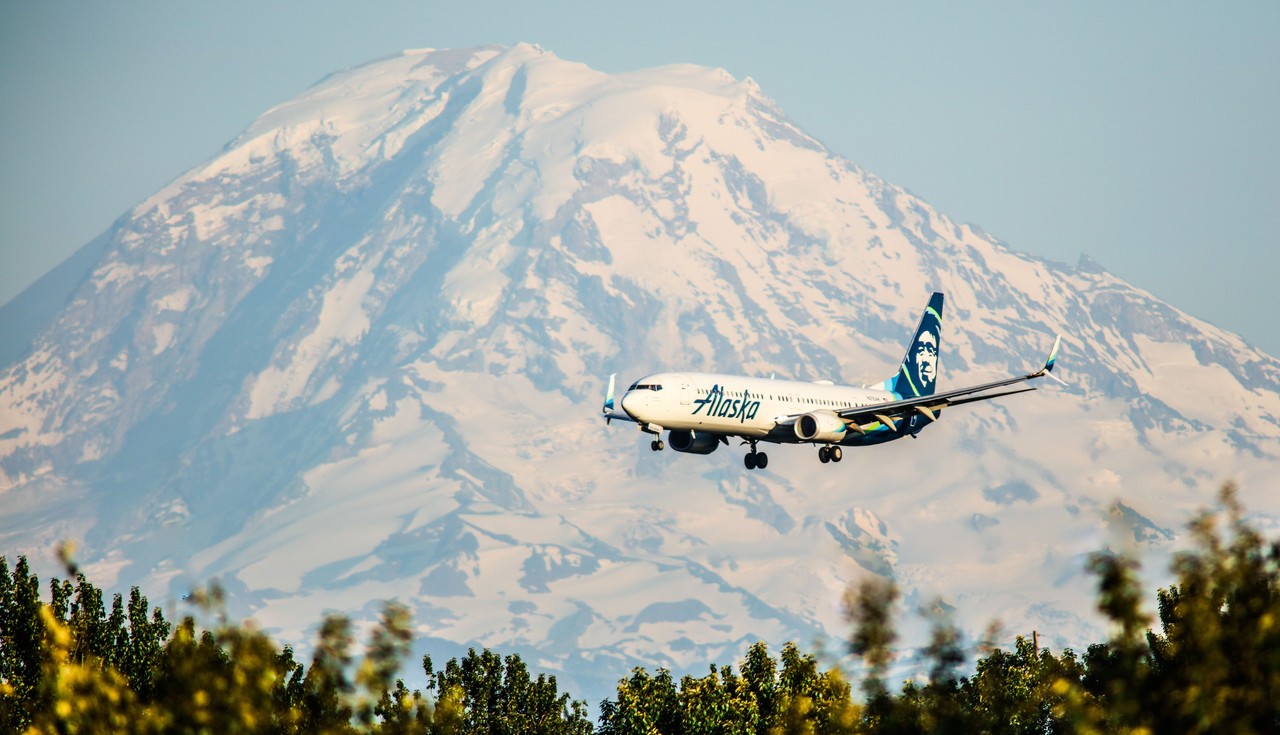
Commercial Service Dominance
The 737-900 carved out a specialized niche in American commercial aviation despite its limited production run. Alaska Airlines, the launch customer, ordered 10 aircraft in 1997 with additional options, becoming the type's largest operator. The aircraft entered service on March 1, 2001, with inaugural flights from Seattle to both San Diego and Los Angeles. United Airlines emerged as the second major operator, utilizing the type for high-density domestic routes where the extra capacity over the 737-800 proved valuable.
In typical two-class configuration, the 737-900 accommodated 177-189 passengers, though high-density layouts exceeded 180 seats. This capacity bridged the gap between Boeing's 737-800 and the need for larger narrowbody aircraft on popular domestic routes. The aircraft's range of 3,300 nautical miles and maximum cruise speed of Mach 0.82 made it well-suited for transcontinental operations within the United States.
The Boeing Legacy
Boeing Commercial Airplanes manufactured all 737-900s at their Renton Factory near Seattle, Washington, the primary production site for 737 variants since 1970. The company, founded in 1916, had built its reputation through decades of innovation, including America's first production bomber during World War I and significant expansion through acquisitions like the 1997 McDonnell Douglas merger. The 737 program itself began in 1964-1967, with the Next Generation family launching in 1993 to compete with Airbus's growing A320 family.
Boeing's engineering team designed the 737-900 without a single named lead designer, instead relying on the collaborative expertise developed through the original 737 program. The design philosophy emphasized fleet commonality, allowing airlines operating earlier 737 variants to minimize training and maintenance costs while gaining additional passenger capacity.
Engine Technology and Performance
Two CFM56-7B turbofan engines, manufactured by CFM International—a joint venture between GE Aviation and Safran Aircraft Engines—powered the 737-900. These engines delivered between 27,300 and 30,000 pounds of thrust, incorporating advanced features like double-annular combustors that reduced emissions and noise levels. The CFM56 series, produced from 1974 to 2020, achieved remarkable reliability with dispatch rates exceeding 99.99 percent across more than 33,000 engines built.
The aircraft's performance specifications included a service ceiling of 41,000 feet and a climb rate of approximately 3,000 feet per minute. With a two-pilot crew requirement, the 737-900 maintained operational simplicity while delivering enhanced capacity. The engines' ETOPS certification allowed extended overwater operations, though the type primarily served domestic and shorter international routes.
Production and Market Position
Production of the 737-900 began in 1998 and concluded in 2019, with final deliveries completed in January 2020. The limited production run of exactly 52 aircraft reflected the challenging market position between the popular 737-800 and Boeing's eventual development of the 737 MAX 9, which offered improved fuel efficiency and extended range.
The 737-900's market competition primarily came from the Airbus A321, which offered similar capacity but different operational characteristics. Airlines often chose between the types based on existing fleet composition and route requirements, with the 737-900's advantage lying in its commonality with existing 737 operations.
Current Operations and Safety Record
As of recent records, 38 of the 52 737-900s produced remain in active service, primarily with Alaska Airlines and United Airlines. The type has maintained an exemplary safety record with no major hull-loss accidents recorded throughout its operational history. This safety performance enhanced the broader reputation of the 737 Next Generation family, which became one of commercial aviation's most trusted aircraft series.
The 737-900's role in aviation history extends beyond its limited numbers. As part of the 737 family—aviation's best-selling commercial aircraft with over 17,000 total examples built since 1967—it contributed to Boeing's dominance in the narrowbody market. The type's operational success demonstrated the value of aircraft family commonality and helped inform Boeing's development of the subsequent 737 MAX series.
Legacy and Historical Significance
The 737-900 represents the final evolution of the 737 Next Generation concept, stretching the basic design to its practical limits while maintaining the operational economics that made the 737 family successful. Its production end in 2020 marked the conclusion of over two decades of Next Generation 737 manufacturing, as Boeing transitioned entirely to the more fuel-efficient MAX variants.
While no specific museum examples have been preserved, the type's continuing commercial service ensures its accessibility to aviation enthusiasts and industry professionals. The 737-900's contribution to the 737 legacy remains significant, proving that even limited production aircraft can successfully serve specialized market segments when designed with operational efficiency and fleet commonality as primary objectives.