
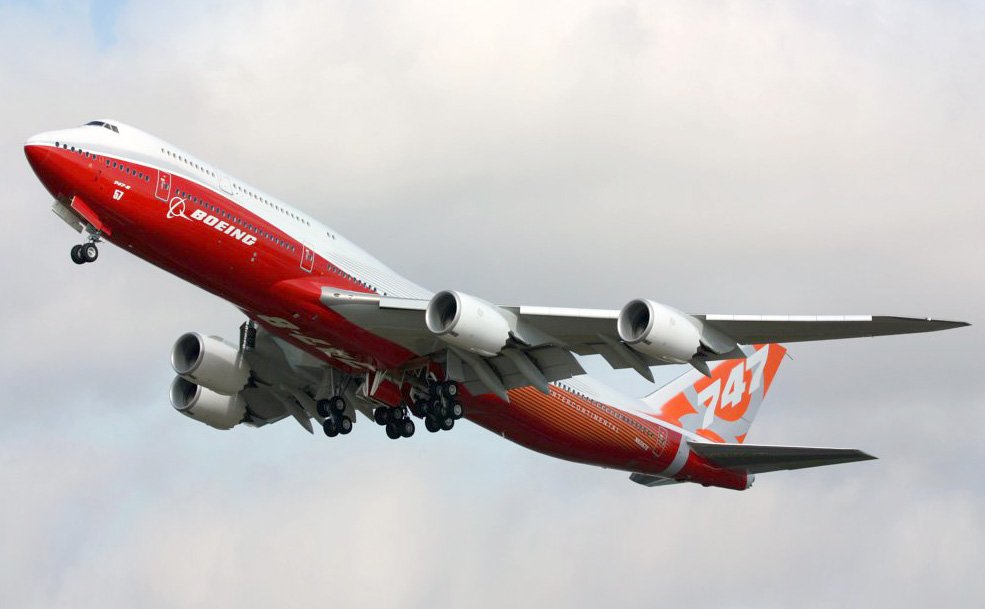
Service History
The 747-200 entered commercial service with Lufthansa in February 1971, immediately establishing itself as the backbone of international long-haul aviation. By the mid-1970s, major carriers including Pan Am, KLM, Japan Airlines, and Northwest Airlines had built their intercontinental route networks around the aircraft's unprecedented passenger capacity and range capabilities. The variant's ability to carry 442 passengers compared to earlier jets' typical 100-150 seat configurations fundamentally transformed airline economics, making international travel accessible to middle-class passengers for the first time.
Japan Airlines operated a specialized high-density version starting in 1973, cramming 498 passengers into domestic routes, while other operators focused on the aircraft's 5,000-6,000 nautical mile range for transcontinental services. Iran Air became the last passenger operator, finally retiring their 747-200s in May 2016 after 45 years of service, though five freighter variants remained operational as of 2019.
The Manufacturer
Boeing Commercial Airplanes developed the 747-200 as part of The Boeing Company, which had been pioneering aviation since its 1916 founding with the B&W Seaplane. The company had already established itself as a commercial jet leader with the 707 in 1958, but the 747 program represented an enormous financial gamble that nearly bankrupted the firm. Despite major mergers with Rockwell International in 1996 and McDonnell Douglas in 1997, Boeing's commercial division retained its identity and continues operations today as the world's largest aerospace manufacturer.
Production occurred at Boeing's Everett Plant near Seattle, constructed starting in June 1966 and recognized as the world's largest building by volume. This massive facility was built specifically to accommodate 747 assembly, with each aircraft requiring coordination of over six million parts from suppliers worldwide.
Engine & Technical Details
The 747-200 was powered by four Pratt & Whitney JT9D turbofan engines, representing the first application of high-bypass turbofan technology to wide-body aircraft. The JT9D-7W variant produced 47,900 pounds of thrust, providing the power necessary to lift the aircraft's maximum takeoff weight of 775,000 pounds. These engines, manufactured by Pratt & Whitney (now part of RTX Corporation), suffered initial reliability problems that delayed early deliveries but ultimately proved dependable throughout the variant's service life.
The aircraft required a flight crew of two pilots plus cabin attendants, with the flight deck positioned above the main passenger compartment in the distinctive "hump" that became the 747's signature feature. Key design innovations included the first wide-body passenger cabin, structural reinforcements to the landing gear to handle increased weights, and expanded fuel capacity in the wing center section.
Design Evolution
Chief engineer Joe Sutter led Boeing's 747 design team in developing the -200 variant to address performance limitations of the original 747-100. The improvements focused on increased fuel capacity and structural strengthening to achieve higher maximum takeoff weights and extended range capabilities. This development stemmed from lessons learned during Boeing's unsuccessful bid for the US Air Force CX-HLS logistics contract, which they lost to Lockheed's C-5A on September 30, 1965.
The -200's enhanced performance allowed airlines to operate profitable services on routes that were previously marginal, including transpacific services from the US West Coast to Asia and transatlantic routes from secondary cities.
Production & Legacy
Boeing manufactured 393 aircraft in the 747-200 series between 1970 and 1991, including 225 passenger 747-200B variants, 73 dedicated freighters, 78 combination passenger-cargo models, 13 convertible variants, and 4 military aircraft. This production run established the -200 as the most numerous 747 variant and cemented the aircraft's reputation as the "Queen of the Skies."
The 747-200's cultural impact extended far beyond aviation, appearing in countless films and becoming synonymous with international travel itself. The aircraft's distinctive silhouette and massive size captured public imagination in ways that purely technical achievements rarely accomplish.
While passenger operations have largely ended, the 747-200's legacy continues through its role in establishing the wide-body airliner category and proving that very large aircraft could operate profitably in commercial service. The final 747 of any variant rolled out of the Everett plant on January 31, 2023, ending more than 50 years of continuous production that began with the 747-200's development. Boeing retains the original 747 prototype, dubbed "City of Everett," as a testament to the program that transformed both the company and commercial aviation worldwide.