
Market Position and Strategic Vision
The 747-8 emerged from Boeing's November 14, 2005 launch announcement as a direct response to Airbus's A380 superjumbo, though it pursued a fundamentally different philosophy. Where Airbus built the A380 as a double-decker giant for hub-to-hub routes, Boeing stretched the proven 747 design to create two distinct variants: the 747-8I Intercontinental for passengers and the 747-8F freighter. This dual approach proved prescient, as the cargo variant dominated its market segment while passenger sales struggled against changing airline preferences for smaller, more efficient twin-engine aircraft.
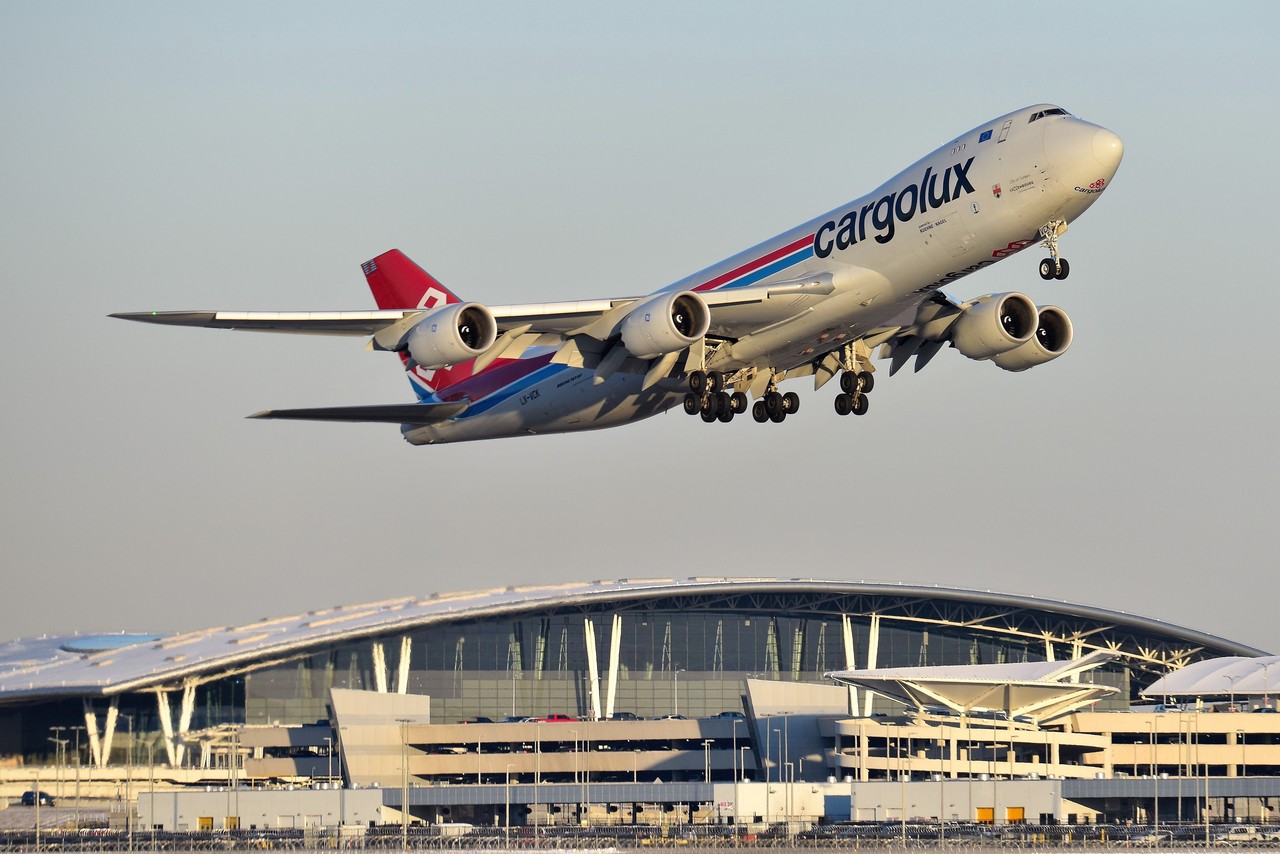
Cargolux became the launch customer, ordering the first 747-8F freighters alongside Nippon Cargo Airlines. The freighter variant entered final assembly in August 2008 and achieved commercial service on October 12, 2011, with Cargolux operating the inaugural flight. This timing gave Boeing a crucial advantage in air freight, where the 747-8F became the undisputed capacity leader with no comparable Airbus competitor.
Technical Innovation and Performance
The 747-8's most significant advancement came through its General Electric GEnx-2B67 engines, selected in April 2005 after extensive evaluation. These high-bypass turbofan engines delivered remarkable efficiency gains: 15 percent improvement in CO2 emissions and double-digit fuel efficiency increases compared to the 747-400. During Lufthansa's inaugural passenger flight on June 1, 2012, the engines operated at 80 percent thrust for takeoff, demonstrating their substantial power reserves.
Beyond propulsion improvements, the 747-8's 5.6-meter fuselage stretch created significant capacity advantages. The passenger variant offered 4.5 additional tons of cargo capacity over the 747-400, while the freighter version became the world's highest-capacity cargo aircraft. The design also achieved a 30 percent reduction in noise footprint, addressing increasingly strict airport noise regulations worldwide.
The Boeing Company Legacy
Boeing's development of the 747-8 represented over four decades of continuous jumbo jet evolution, building on the original 747 program launched in 1966. The company's Everett, Washington facility, purpose-built for 747 production, manufactured the 747-8 at a steady rate of two aircraft per month - significantly lower than the 747-400's peak production of five monthly units during the 1990s boom, reflecting the changed market dynamics.
Throughout the 747 family's production run from 1967 to 2023, Boeing delivered 1,574 aircraft across all variants to more than 100 customers worldwide. These aircraft accumulated over 118 million flight hours and nearly 23 million flight cycles, establishing an unmatched operational record in commercial aviation.
Service History and Operators
Lufthansa emerged as the 747-8I's primary champion, receiving 20 aircraft by 2015 and operating the historic inaugural passenger flight LH416 from Frankfurt to Washington Dulles - exactly 42.5 years after Pan Am's first 747-100 service. The German carrier's confidence in the type provided crucial validation for the passenger variant.
Other significant operators included Korean Air and Transaero, though the Russian carrier's later financial difficulties highlighted the challenging market conditions facing the 747-8I. Air China ordered five aircraft, subject to government approval, while Atlas Air became a major freighter operator, receiving the final 747-8 cargo aircraft in October 2022.
Production Challenges and Market Reality
Despite its technical excellence, the 747-8 achieved the lowest commercial sales of any major 747 variant generation. With only 155 aircraft produced, it fell far short of the 747-400's nearly 700 units, the combined 747-200/300's nearly 400 aircraft, and even the original 747-100's 200-plus deliveries. This sales performance reflected fundamental shifts in airline operations toward point-to-point routes favoring smaller aircraft over hub-and-spoke networks requiring maximum capacity.
The passenger market's tepid response contrasted sharply with freighter success, where the 747-8F's unmatched cargo capacity created genuine competitive advantage. Airlines increasingly preferred twin-engine aircraft like the 777-300ER and A350-1000, which offered similar passenger capacity with lower operating costs and greater route flexibility.
Enduring Impact
As Boeing delivered the final 747-8 in 2023, the aircraft marked the end of over five decades of jumbo jet production at Everett. While the passenger variant failed to achieve commercial success, the program succeeded strategically by establishing Boeing's dominance in air freight and providing a bridge technology demonstrating advanced engine and systems integration later applied to other Boeing programs.
The 747-8 fleet is expected to serve operators well into the 2030s, particularly in cargo operations where its capacity advantages remain unmatched. For Boeing, the 747-8 represented both an ending and a technological stepping stone, closing the jumbo jet era while advancing innovations that continue benefiting the company's current aircraft programs.