
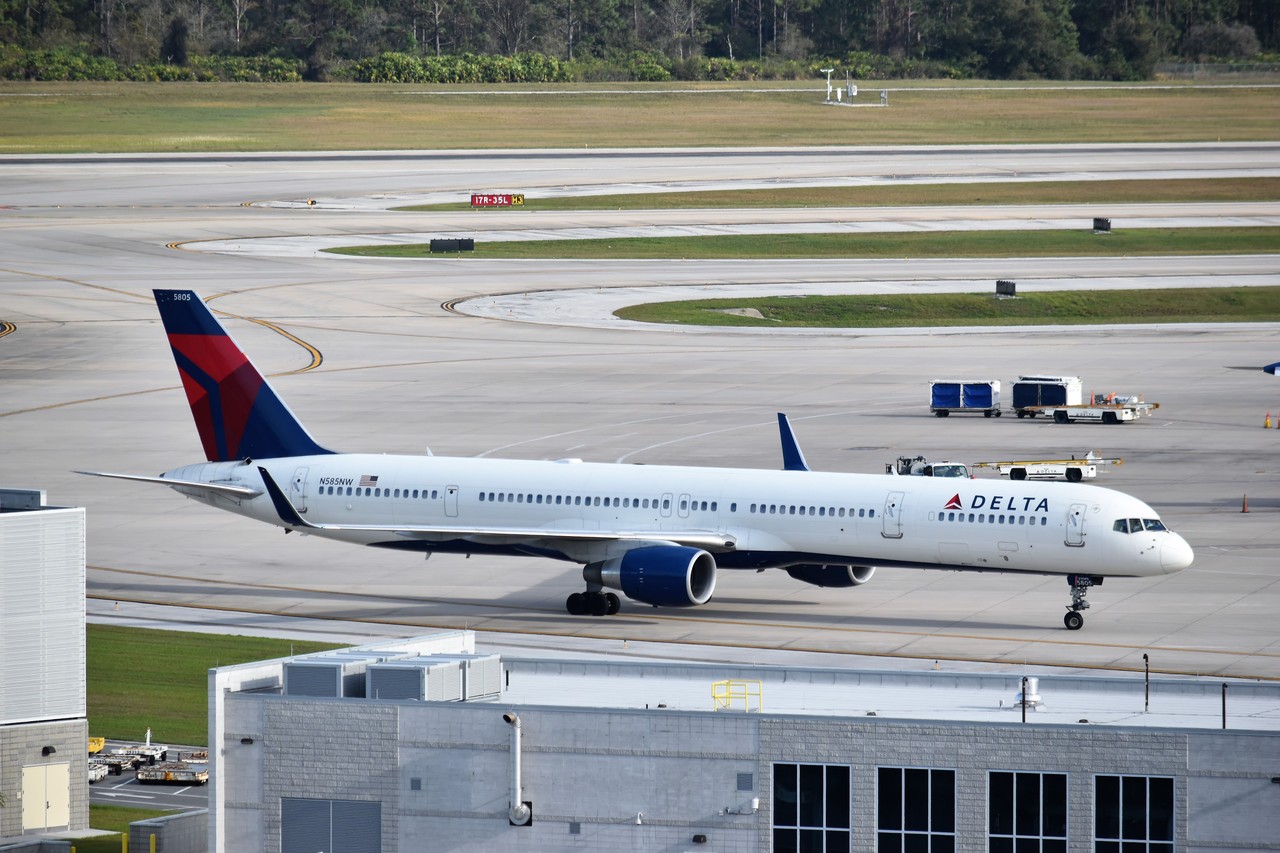
Commercial Service and Market Position
The 757-300 entered revenue service on March 19, 1999, with German charter carrier Condor Flugdienst as the launch customer. Despite Boeing's engineering success in creating the world's longest narrowbody aircraft, the variant struggled commercially, attracting only seven customers: Condor, American Trans Air, Arkia, Continental Airlines, Icelandair, and Northwest Airlines. The aircraft filled a unique niche for airlines requiring 50 percent more passenger capacity than the standard 757-200 while maintaining the operational economics of a single-aisle design.
Technical Development and Innovation
Boeing's engineering team developed the 757-300 by stretching the proven 757-200 fuselage by 23 feet 4 inches, creating space for an additional 50 passengers while retaining the existing wing, engine, and avionics systems. This approach accelerated certification and reduced development costs, with the Federal Aviation Administration granting type certification in January 1999, just five months after first flight. The aircraft maintained the 757 family's reputation for hot-and-high performance, crucial for operations at airports like Denver International.
Engine Options and Performance
Operators could choose between two powerplant options: the Rolls-Royce RB211 delivering 37,400 pounds of thrust or the Pratt & Whitney PW2037 producing 38,200 pounds of thrust. Both engines were high-bypass turbofans optimized for fuel efficiency and noise reduction compared to the earlier Boeing 727 trijet the 757 family was designed to replace. The aircraft achieved a maximum speed of Mach 0.86 and a service ceiling of 42,000 feet, with a range of approximately 3,395 nautical miles carrying a typical passenger load.
The Boeing Company Legacy
The Boeing Company, founded in 1916, had established itself as a commercial aviation pioneer with successful models including the 707 in 1958 and the 747 in 1969. During the 757-300's development period, Boeing merged with McDonnell Douglas in 1997, acquiring additional manufacturing assets and expertise. The company continues operations today as The Boeing Company, headquartered in Arlington, Virginia, though 757 production ended permanently in October 2004 with the delivery of the 1,050th aircraft in the family to Shanghai Airlines in 2005.
Production Challenges and Market Reality
All 55 Boeing 757-300s were manufactured at Boeing's Renton factory near Seattle, Washington, with the final aircraft rolling out on March 23, 2004. The limited production run reflected challenging market conditions, as airlines increasingly favored the smaller Boeing 737-800 or larger widebody aircraft for routes the 757-300 was designed to serve. Continental Airlines, one of the type's larger customers, cancelled remaining orders in 2003 and converted them to 737-800s, citing changing route structures and passenger demand patterns.
Current Status and Legacy
Fewer than 55 Boeing 757-300s remain in active service today, with many examples retired as airlines simplified their fleets around more common aircraft types. The 757-300 represents the final evolution of Boeing's 757 family, demonstrating both the potential and limitations of stretching narrowbody designs beyond optimal proportions. While the aircraft proved the technical feasibility of creating extremely long single-aisle airliners, market forces ultimately favored the flexibility of smaller narrowbodies and the capacity of widebody aircraft.
The 757-300's brief production run and limited fleet size have made it a relatively rare sight in commercial aviation, though it played an important role in advancing narrowbody airliner design concepts. Its development experience influenced Boeing's approach to later aircraft programs, particularly in understanding market demand for high-capacity single-aisle aircraft that would eventually lead to larger variants of the 737 MAX family.