
Service History
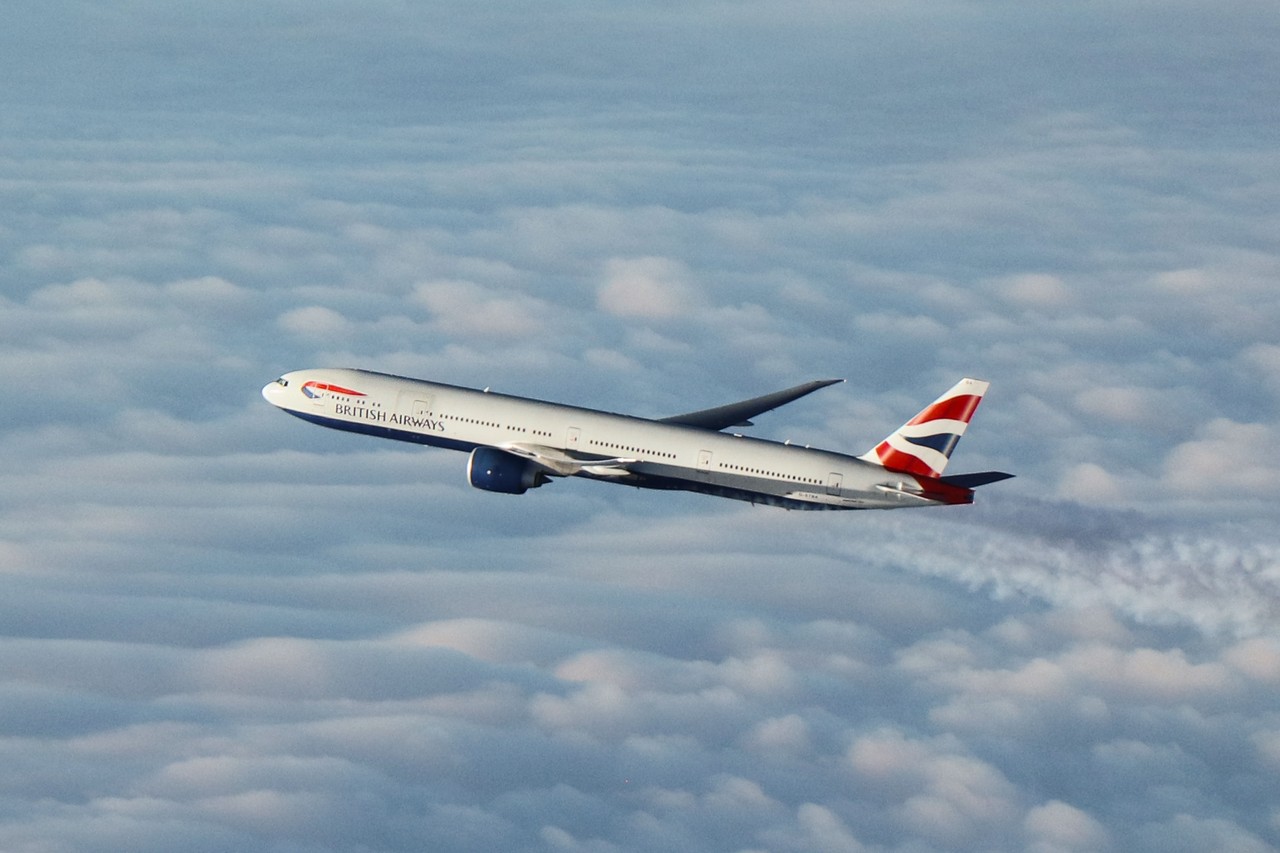
The 777-200ER fundamentally reshaped international air travel, becoming the backbone of long-haul operations for major carriers worldwide. By the mid-2010s, Boeing 777 variants operated more than half of all scheduled transpacific flights, with the 777-200ER serving as a cornerstone of this dominance. British Airways launched commercial service with the type in February 1997, followed by major operators including United Airlines, Emirates, Qatar Airways, and Air France. The aircraft's extended range capability of 8,555 nautical miles enabled airlines to establish new non-stop routes that were previously impossible with twin-engine aircraft, dramatically reducing operating costs compared to four-engine alternatives like the Boeing 747.
The Manufacturer
Boeing developed the 777 program through unprecedented collaboration with eight major airlines: All Nippon Airways, American Airlines, British Airways, Cathay Pacific, Delta Air Lines, Japan Airlines, United Airlines, and Qantas. This partnership approach, launched in October 1990 with United Airlines' initial order, represented a revolutionary shift in aircraft development methodology. To accommodate production, Boeing invested nearly $1.5 billion (approximately $2.93 billion in 2024 dollars) to double the size of their Everett facility, adding two new assembly lines specifically for widebody aircraft manufacturing. The company remains active today, continuing to produce commercial aircraft at the same Washington State facility that has manufactured all Boeing widebody aircraft prior to the 787 Dreamliner.
Engine & Technical Innovation
General Electric's GE90 turbofan engines powered the 777-200ER, representing cutting-edge high-bypass turbofan technology specifically developed for the 777 family. The aircraft incorporated revolutionary production methods, including specialized turn machines that could rotate fuselage subassemblies 180 degrees, providing workers unprecedented access to upper body sections during assembly. United Airlines' demanding requirements drove the design specifications: the aircraft needed capability for Chicago to Hawaii, Chicago to Europe, and non-stop Denver to Hawaii routes, with ETOPS (Extended-range Twin-engine Operations) certification enabling extended overwater flights previously restricted to multi-engine aircraft.
Design Requirements and Development
The 777-200ER emerged from specific operational needs identified by US airlines for long-range twin-engine service. Denver's high altitude and temperature conditions created particular challenges, requiring the aircraft to maintain full performance capability from hot and high airports while carrying maximum passenger loads across Pacific distances. The prototype aircraft rolled out in April 1994, completing its maiden flight on June 12, 1994. The extended-range variant built upon the successful foundation of the original 777-200, which entered service with United Airlines on June 7, 1995, extending range capability from 5,240 nautical miles to 8,555 nautical miles.
Production Legacy and Impact
Production of the 777-200ER continued through the early 2000s as part of Boeing's broader 777 program, which achieved remarkable commercial success with over 1,738 aircraft built by the mid-2010s and more than 2,300 orders by 2018. By March 2018, the 777 family had surpassed the Boeing 747 as the world's most-produced widebody aircraft, with 1,988 total orders making it the most successful long-range twin-engine airliner in aviation history. The 777-200ER's combination of extended range and efficient twin-engine operation proved so successful that it effectively redefined airline route planning, enabling carriers to abandon less efficient four-engine aircraft on many international routes.
Current Operations
The 777-200ER remains active in commercial service with major international carriers, continuing to serve as a workhorse for long-haul operations decades after its introduction. Its typical three-class configuration accommodating 301 to 368 passengers provides airlines with optimal capacity for high-demand international routes, while its extended range capability maintains relevance in an increasingly connected global aviation network. The aircraft's enduring operational success validated Boeing's collaborative development approach and established design principles that influenced subsequent widebody aircraft development, cementing its position as one of the most significant commercial aircraft designs of the late 20th century.