
Development and Design Innovation
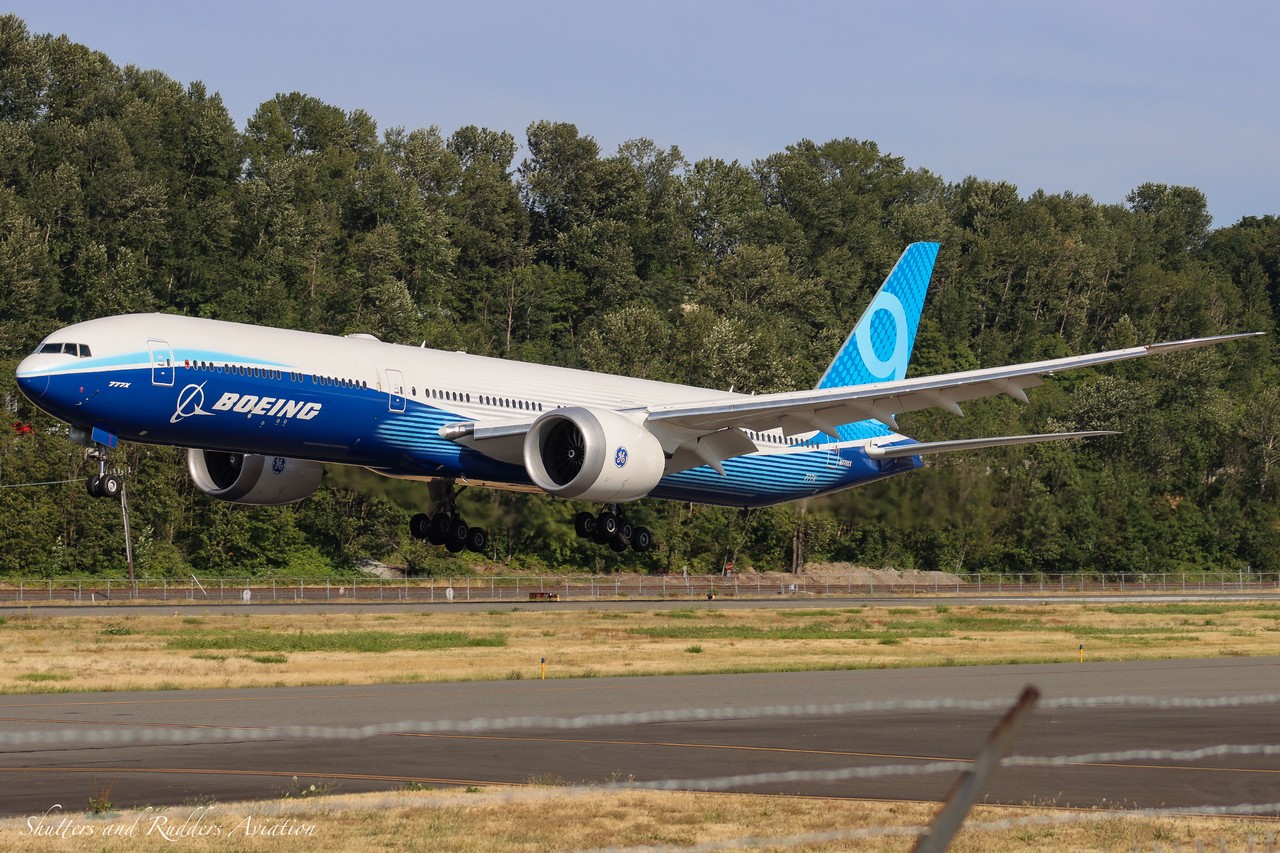
The Boeing 777-9 emerged from Boeing's ambitious 777X program as a technological tour de force in commercial aviation. Launched to compete directly with the Airbus A350-1000, the aircraft incorporates revolutionary design elements including the world's first folding wingtips on a commercial airliner. This engineering marvel allows the 777-9 to maintain a 235-foot wingspan for optimal aerodynamic efficiency while folding down to 212 feet 9 inches to fit existing airport gates, eliminating the need for costly infrastructure modifications.
The aircraft's development timeline has been marked by significant challenges and delays. Originally scheduled to enter service in 2020, the program encountered a major setback following an uncommanded pitch event during flight testing that same year. This incident triggered extensive design reviews and modifications that pushed certification and service entry back by several years. Boeing paused production for much of 2022 and 2023, a decision that cost the company approximately $1.5 billion but was deemed necessary to address certification requirements.
Manufacturing Excellence
Production takes place at Boeing's massive Everett facility in Washington state, where the company has assembled 26 Boeing 777X aircraft as of late 2025. The fifth 777-9 test aircraft achieved a significant milestone on August 5, 2025, when it departed Paine Field at 11:03 a.m. PDT, marking the first time in nearly five years that Boeing's team had built, prepared, and flown a new 777-9. This flight represented a crucial step in the program's recovery from its extended production hiatus.
The manufacturing process incorporates advanced composite materials and precision assembly techniques that reflect decades of wide-body aircraft production experience. Boeing's Everett facility, already home to 747, 767, and earlier 777 variants, required specific modifications to accommodate the 777X's unique folding wingtip mechanism and larger overall dimensions.
Powerplant Revolution
The 777-9's performance capabilities stem largely from its revolutionary GE9X engines, manufactured by GE Aerospace. These powerplants hold the distinction of being the largest commercial aircraft engines ever produced, representing a quantum leap from the GE90 engines that powered earlier 777 variants. Each GE9X engine delivers exceptional fuel efficiency while maintaining the reliability standards demanded by long-haul international operations.
The engine's massive size contributes significantly to the aircraft's impressive performance specifications, enabling the 777-9 to achieve a cruise range of 7,285 nautical miles while carrying up to 426 passengers in typical two-class configuration. This combination of capacity and range positions the aircraft perfectly for high-density long-haul routes between major international hubs.
Environmental and Operational Performance
Boeing engineered the 777-9 with ambitious environmental targets that reflect the aviation industry's growing focus on sustainability. The aircraft achieves 20 percent lower fuel consumption and emissions compared to the aircraft it replaces, while generating a 40 percent smaller noise footprint than predecessor models. These improvements translate directly into 10 percent lower operating costs compared to competing aircraft, providing airlines with compelling economic incentives alongside environmental benefits.
The 777-9's operational capabilities extend beyond mere efficiency metrics. Its 76.7-meter length makes it one of the longest commercial aircraft in service, while its 19.5-meter height ensures compatibility with existing airport infrastructure worldwide. The aircraft's advanced aerodynamics, including the innovative folding wingtips, contribute to exceptional fuel economy on long-haul routes where every gallon of fuel saved translates into significant cost reductions.
The Boeing Legacy
The Boeing Company's development of the 777-9 builds upon more than three decades of wide-body aircraft expertise dating back to the original 777 program launch in October 1990. United Airlines' initial order marked the beginning of what would become one of aviation's most successful wide-body families. Boeing continues as a major aerospace and defense contractor, with the 777X program representing a critical component of the company's commercial aviation strategy.
The 777-9 made its public debut at the Singapore Airshow in 2022, where industry professionals and potential customers could examine firsthand the aircraft's revolutionary design features. This showcase highlighted Boeing's commitment to maintaining technological leadership in the competitive wide-body market segment.
Current Status and Future Prospects
As of January 2026, the 777-9 remains in certification and testing phases, with Boeing working systematically toward commercial service entry. The extended development timeline, while challenging financially, has allowed engineers to refine every aspect of the aircraft's performance and safety systems. Airlines worldwide await the aircraft's entry into service, with orders already placed by major international carriers seeking the 777-9's combination of capacity, range, and efficiency for their most demanding long-haul routes.