
Commercial Dominance
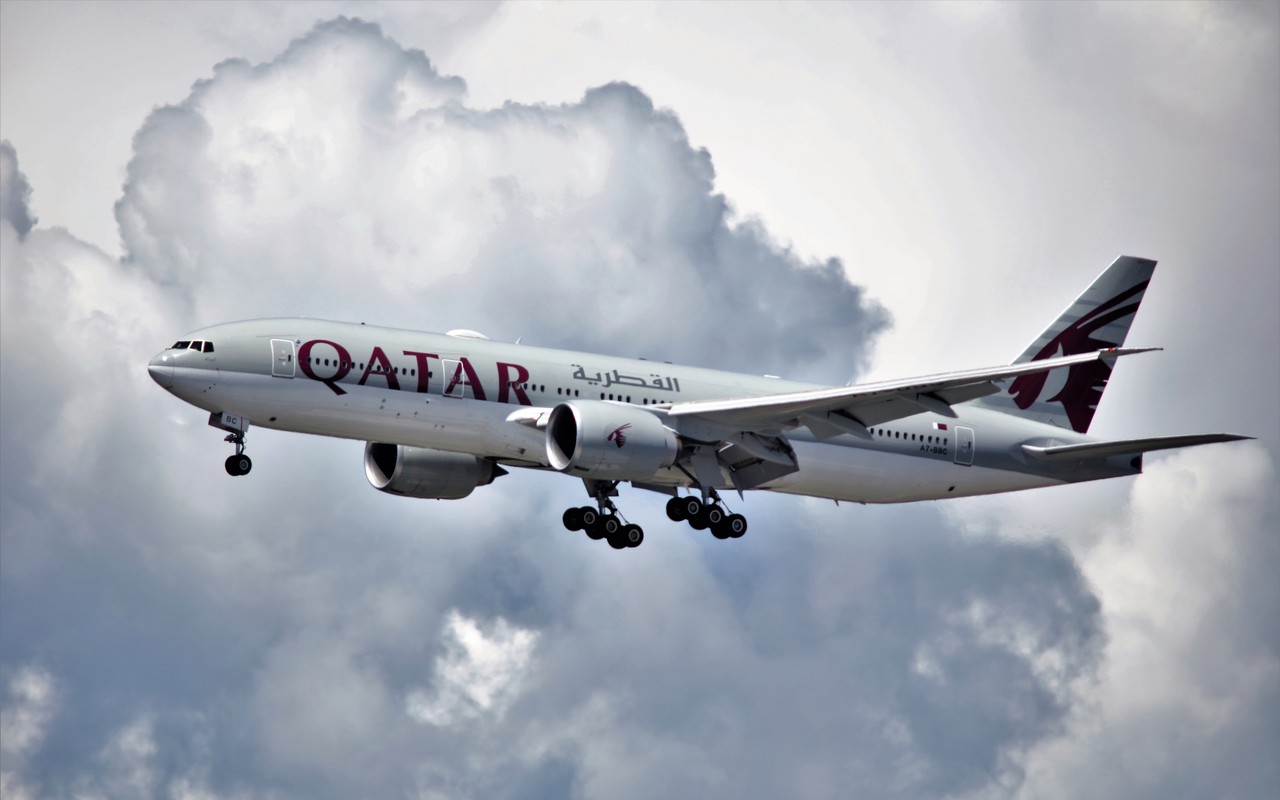
The 777-200LR filled a unique niche in commercial aviation, connecting previously unreachable city pairs with direct service. Qatar Airways operated the world's longest scheduled passenger route using the type, flying 9,032 miles between Doha and Auckland. Emirates deployed the aircraft on its Dubai-Los Angeles route spanning 8,339 miles, while Delta Air Lines utilized the extra range and payload capacity on London-Mumbai services, generating an additional $10 million in annual revenue compared to the standard 777-200ER.
Record-Breaking Performance
In November 2005, a 777-200LR set an aviation milestone by flying 13,423 miles nonstop from Hong Kong to London, demonstrating the aircraft's exceptional capability. This ultra-long-range performance was achieved through advanced aerodynamics including raked wingtips, lightweight materials, and the most powerful commercial jet engines ever built. The aircraft could carry 20 percent more passengers and 12 percent more cargo while consuming 25 percent less fuel per seat than competitors like the Airbus A340-500.
The Boeing Company Legacy
Boeing, founded in 1916, developed the 777-200LR as part of its Commercial Airplanes division at the Everett, Washington facility. The company had pioneered computer-aided design with the original 777 family, marking the first commercial airliner fully designed using digital tools. After acquiring McDonnell Douglas in 1997 and Rockwell's aerospace division in 1996, Boeing continued expanding its technological capabilities. The Boeing 777 program team, led by figures including Lars Andersen who served as program vice president and manager in 2005, created the -200LR variant without a single individual credited as sole designer.
Engine Excellence
The aircraft was powered exclusively by two General Electric GE90-110B1L turbofan engines, manufactured by GE Aircraft Engines (now GE Aerospace). These high-bypass turbofan powerplants represented the pinnacle of commercial jet engine technology, enabling the 777-200LR's remarkable 8,555 to 9,420 nautical mile range while maintaining exceptional fuel efficiency. GE produced over 2,900 GE90 series engines across all variants by 2020, with each of the 61 777-200LRs receiving the -110B1L variant specifically designed for ultra-long-haul reliability.
Operational Characteristics
Pilots appreciated the 777-200LR's robust construction and performance capabilities at high altitudes and short runways. The aircraft cruised at approximately Mach 0.84 with a service ceiling of 43,100 feet, requiring a crew of two pilots and up to 13 flight attendants. In high-density configuration, the cabin could accommodate up to 396 passengers, though most operators configured it for 301 passengers in three-class layout to maximize comfort on ultra-long routes.
Production and Market Reality
Production began following the February 2002 launch, with the first flight occurring on March 8, 2005, from Everett, Washington. Certification was completed in the fourth quarter of 2005, enabling deliveries to begin in January 2006 with launch customer Pakistan International Airlines. However, market demand shifted toward other variants like the 777-300ER, leading to production ending around 2012 after exactly 61 units were manufactured.
Current Status and Legacy
Fewer than 61 aircraft remain in active service today, with Qatar Airways and Emirates among the primary operators still utilizing the type. The first Boeing 777-200 prototype, later modified and operated by Cathay Pacific until June 2018, found preservation at the Pima Air & Space Museum in Tucson, Arizona, arriving in September 2018. The 777-200LR's technological innovations, particularly the GE90 engine efficiency and ultra-long-range capability, directly influenced the development of Boeing's next-generation 777X series, cementing its place in aviation history as the aircraft that proved market viability for nonstop global routes.