
Service History
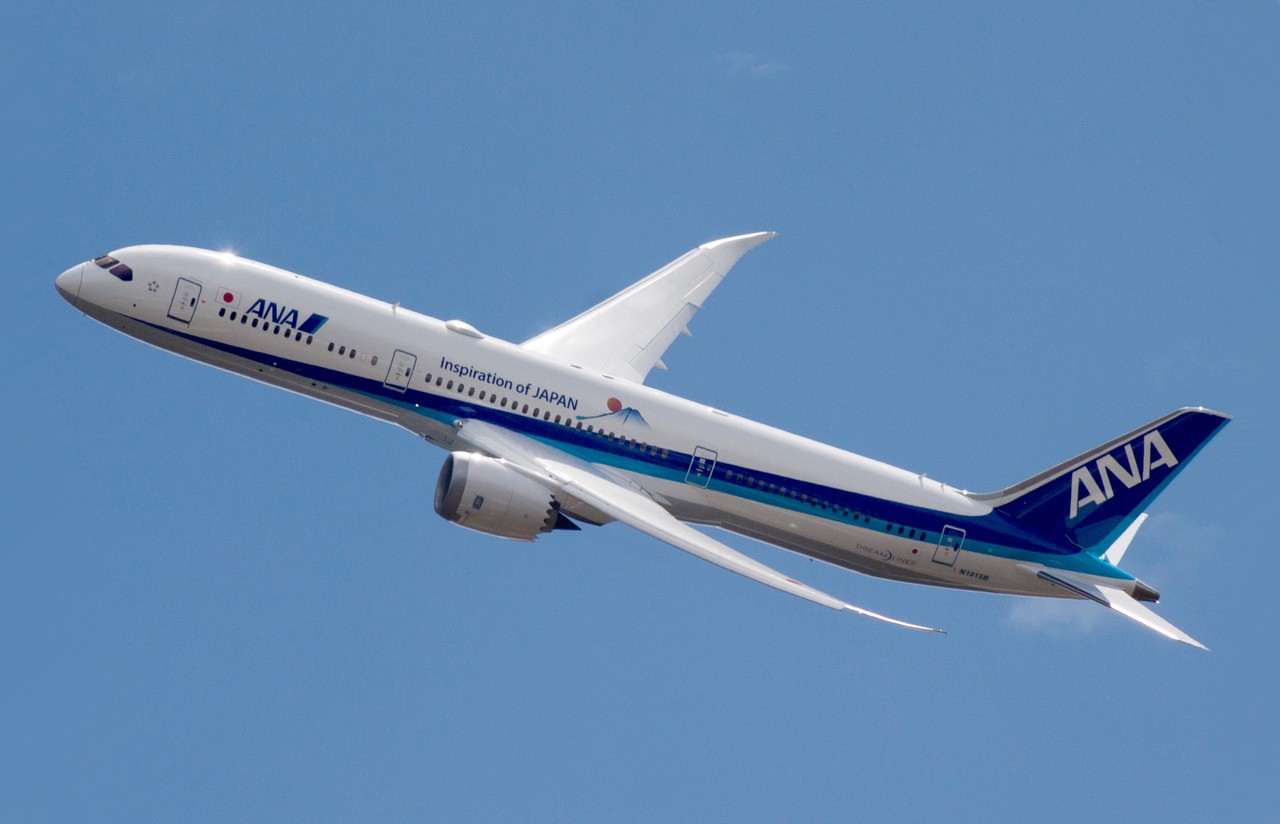
The 787-10 entered commercial service as part of Boeing's ambitious Dreamliner program, which has delivered over 1,000 aircraft across all variants as of 2025. All Nippon Airways became the launch customer for the 787 family, receiving their first delivery on September 25, 2011, and operating the inaugural revenue flight on October 26, 2011, from Tokyo Narita to Hong Kong. Tickets for this historic flight commanded premium prices, with some auctioned for up to $34,000.
United Airlines emerged as the largest 787 operator with orders totaling 221 aircraft across all variants. The type has found particular success with Asian carriers, including Air China, China Eastern, China Southern, Hainan Airlines, Shanghai Airlines, and Xiamen Airlines, which collectively ordered 60 aircraft on January 28, 2005. The 787-10's extended range capabilities have enabled airlines to launch new non-stop routes across the Atlantic and Pacific, fundamentally changing route economics.
The Manufacturer
The Boeing Company traces its origins to 1916 when William E. Boeing founded the enterprise that would become one of aviation's most significant manufacturers. Through strategic acquisitions, Boeing absorbed Rockwell International in 1996, McDonnell Douglas in 1997, and Hughes Space and Communications in 2000, consolidating much of America's aerospace industry under one roof.
Boeing pioneered the commercial jet age with the 707 in 1958 and subsequently dominated the wide-body market. The 787 program, however, marked a dramatic departure from Boeing's traditional manufacturing approach. Rather than building most components in-house, Boeing orchestrated a global supply chain involving 800 to 1,200 final assembly workers who joined together major subassemblies manufactured worldwide. This revolutionary approach initially caused significant challenges but ultimately became an industry model.
Engine & Technical Details
The 787-10 operates with two high-bypass turbofan engines, offering customers a choice between the General Electric GEnx-1B, producing approximately 74,000 pounds of thrust, or the Rolls-Royce Trent 1000. The GEnx incorporates advanced composite fan blades and represents significant efficiency improvements over previous generations. The Trent 1000, despite early developmental challenges including a dramatic test engine failure in 2010, provides alternative performance characteristics through its geared design elements.
Both powerplants contribute to the aircraft's remarkable 20 percent fuel efficiency improvement over the Boeing 767, which it effectively replaced in many airline fleets. The aircraft requires a two-person flight crew and incorporates revolutionary electric systems that replace traditional bleed air systems, reducing maintenance requirements and improving efficiency.
Revolutionary Design
Boeing's internal design team, initiated in January 2003, established ambitious objectives for the 787 program. The aircraft became the first major commercial airliner constructed with 50 percent composite materials by weight, utilizing carbon fiber barrel sections manufactured by global suppliers. This construction technique reduced structural weight while enabling larger windows and higher cabin pressurization.
The 787-10 maintains a cabin altitude of 6,000 feet compared to 8,000 feet in conventional aircraft, while providing higher humidity levels for enhanced passenger comfort. These innovations, combined with windows 65 percent larger than traditional designs, created a new standard for passenger experience in commercial aviation.
Production & Development
Boeing officially launched the 787-10 variant on June 18, 2013, at the Paris Air Show, completing the Dreamliner family lineup. The overall 787 program had begun on April 26, 2004, with the first prototype rollout occurring on July 8, 2007. By that rollout date, Boeing had accumulated 677 orders, demonstrating unprecedented market confidence.
The program faced substantial challenges, experiencing eight delivery delays between 2007 and 2011 due to supply chain complications, fastener problems, software issues, and labor strikes. These setbacks resulted in a $2.5 billion write-off on test aircraft, but Boeing persevered through the difficulties.
Manufacturing initially occurred at Boeing's Everett, Washington facility, announced as the assembly site on December 16, 2003. A second production line opened in North Charleston, South Carolina, in 2011, with Boeing announcing complete consolidation to the South Carolina facility on October 1, 2020.
Performance Specifications
The 787-10 achieves a maximum cruise speed of Mach 0.85, approximately 590 knots, with a service ceiling of 43,100 feet. Its maximum range of 11,910 kilometers enables most long-haul routes while carrying between 242 and 336 passengers depending on cabin configuration. The aircraft provides 137.8 cubic meters of cargo volume, supporting both passenger and freight operations.
Legacy and Impact
Aviation industry analysts have characterized the 787 as "the most revolutionary aircraft of the last 20 years," fundamentally changing commercial aviation through its composite construction, efficiency gains, and manufacturing processes. The program demonstrated both the potential and perils of global aerospace collaboration, ultimately succeeding despite unprecedented developmental challenges.
As production continues in South Carolina, the 787-10 represents the culmination of Boeing's vision for next-generation commercial aviation, combining passenger comfort improvements with operational economics that enable airlines to serve previously unviable routes profitably.