
Service History
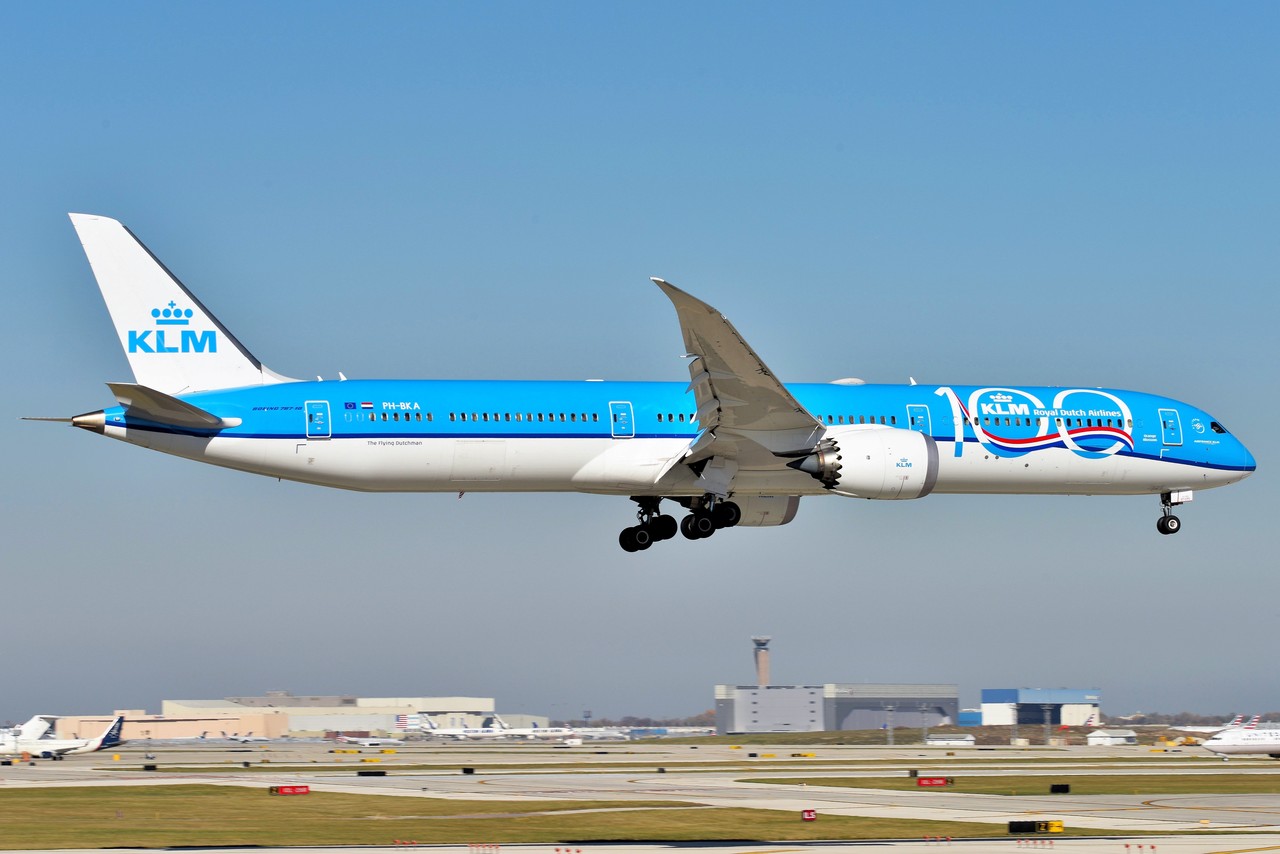
The 787-10 carved its niche in commercial aviation by addressing airlines' need for increased capacity on popular medium-haul routes without sacrificing the fuel efficiency that defined the Dreamliner family. Singapore Airlines became the launch customer, taking delivery of the first production aircraft in March 2018, followed by rapid adoption by major carriers including Emirates, KLM, British Airways, and American Airlines. By 2023, over 170 examples had been delivered to more than 20 airlines worldwide, with the variant proving particularly popular on high-density routes between major metropolitan areas where its 330-passenger capacity and 6,430-nautical-mile range proved optimal.
The aircraft immediately distinguished itself in airline fleets by offering 25 percent better fuel efficiency per passenger compared to previous generation aircraft, while providing operators with the flexibility to serve both transcontinental and medium-haul international routes from the same platform. Airlines reported significant cost savings on routes such as London-Boston, Tokyo-Bangkok, and Dubai-Frankfurt, where the 787-10's capacity perfectly matched market demand.
The Manufacturer
The Boeing Company developed the 787-10 as the culmination of its Dreamliner program, which began in 2003 with the original 787-8 variant. Founded in 1916, Boeing had evolved from a small Seattle-based manufacturer into the world's largest aerospace company by the time the 787 program launched. The company's revolutionary approach to the 787 family involved a global supply chain of major subcontractors, including Kawasaki Heavy Industries producing forward fuselage sections, Leonardo manufacturing the central fuselage, and Spirit AeroSystems building the rear fuselage sections.
Boeing's decision to stretch the basic 787 design into the -10 variant reflected lessons learned from the earlier variants' market success and customer feedback. The company maintains production at two final assembly lines, with the Everett facility handling initial 787-10 production before adding the variant to the South Carolina line in 2021. Despite financial challenges with the broader 787 program, including production delays and initial cost overruns exceeding $32 billion, Boeing successfully positioned the 787-10 as a premium product commanding list prices approaching $340 million per aircraft.
Engine & Technical Details
The 787-10 exclusively uses either General Electric GEnx-1B74/75 or Rolls-Royce Trent 1000 TEN turbofan engines, each producing between 74,000 and 76,100 pounds of thrust. These advanced powerplants feature ceramic matrix composites and advanced cooling technologies that contribute significantly to the aircraft's exceptional fuel efficiency. The engines incorporate large-diameter fans and high bypass ratios optimized for the cruise altitudes and speeds typical of the 787-10's mission profile.
The aircraft requires a flight crew of two pilots and typically carries four to twelve cabin crew members depending on passenger configuration and airline standards. Boeing's innovative fly-by-wire flight control system reduces pilot workload while maintaining the responsive handling characteristics that pilots appreciate. The flight deck features five large LCD displays and incorporates advanced systems that reduce pilot training requirements for crews transitioning from other Boeing aircraft.
Notable design innovations include the extensive use of carbon fiber reinforced plastic throughout the fuselage and wing structure, larger passenger windows with electrochromic dimming, and a cabin pressurization system that maintains the equivalent of 6,000 feet altitude rather than the traditional 8,000 feet. These features combine to reduce passenger fatigue on long flights while enabling the structural weight savings essential to the aircraft's performance targets.
Pilot Perspective
Pilots consistently praise the 787-10 for its smooth handling characteristics and advanced automation systems that reduce workload during critical flight phases. The aircraft's fly-by-wire system provides consistent control responses across all weight and balance configurations, while the large flight displays offer exceptional situational awareness. Many pilots note the aircraft's relatively quiet cockpit environment and excellent visibility through the large cockpit windows.
Performance specifications include a maximum cruise speed of Mach 0.85, a service ceiling of 43,100 feet, and a maximum range of 6,430 nautical miles with typical passenger loads. The aircraft demonstrates exceptional fuel efficiency, consuming approximately 20 percent less fuel per passenger-mile than comparable aircraft in its class. Pilots appreciate the aircraft's predictable approach characteristics and effective autobrake system, which contribute to consistent landing performance across varying runway conditions.
Production & Legacy
Boeing has delivered over 170 examples of the 787-10 since beginning production deliveries in 2018, with firm orders totaling more than 240 aircraft by 2024. The variant succeeded by filling a specific market niche between the smaller 787-9 and larger wide-body aircraft like the 777-300ER, offering airlines the optimal balance of capacity and efficiency for high-density medium to long-haul routes.
The 787-10's success validated Boeing's strategy of offering multiple variants within the Dreamliner family, allowing airlines to match aircraft capacity precisely to route demand while maintaining commonality in pilot training, maintenance procedures, and spare parts inventory. Current examples serve routes across six continents, with particularly strong utilization on trans-Pacific, trans-Atlantic, and intra-European services.
Today, 787-10 aircraft can be observed at major airports worldwide, with significant concentrations at hubs operated by Singapore Airlines, Emirates, KLM, and British Airways. The aircraft's distinctive swept wings, noise-reducing chevron engine nacelles, and elegant proportions make it easily recognizable on airport ramps, representing the current state of the art in commercial aviation efficiency and passenger comfort.