
Service History
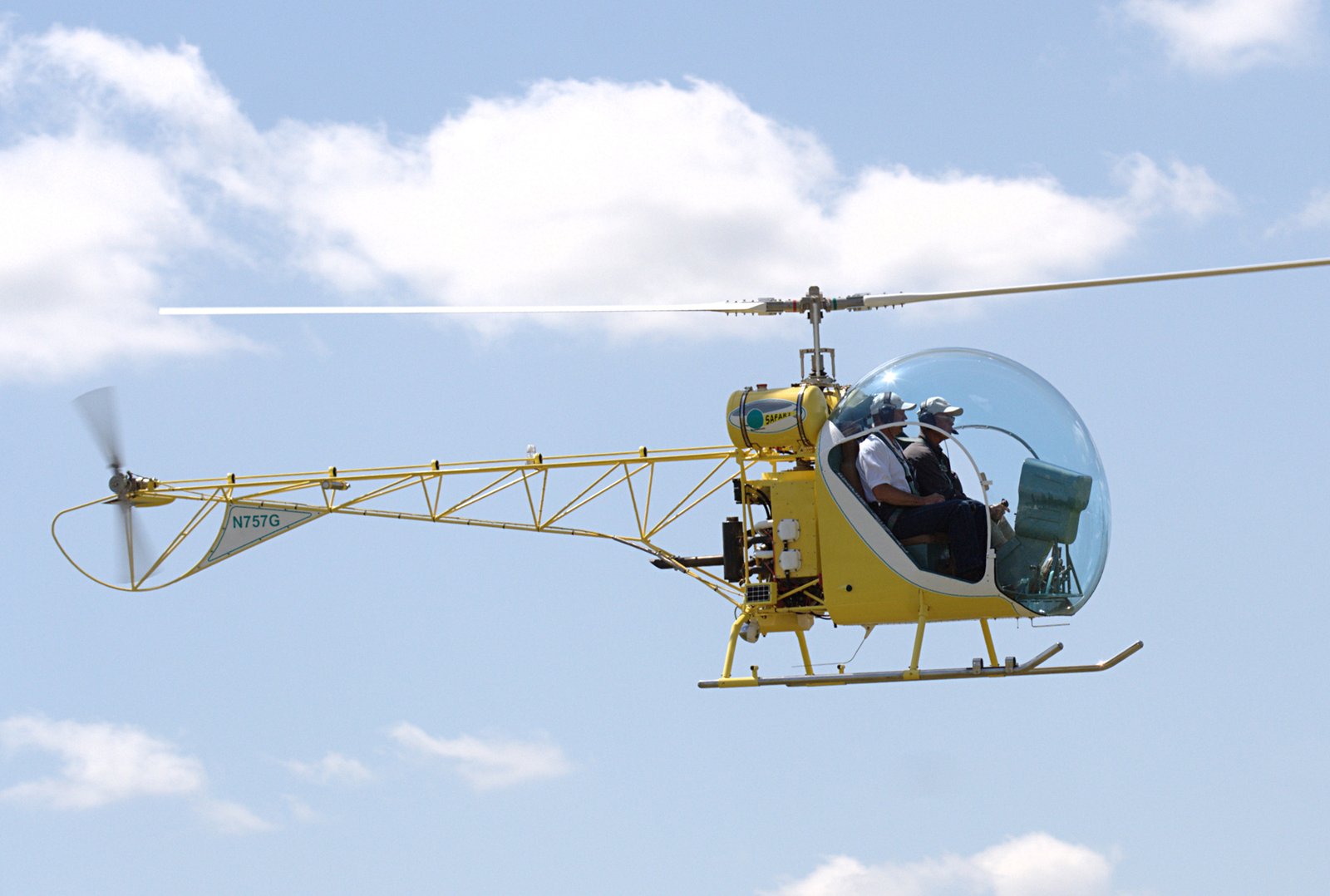
The Baby Belle carved out a unique niche in experimental aviation, with more than 90 aircraft flying from 264 total kits sold by 2023. By 2005, builders had completed 120 examples, demonstrating the design's appeal to homebuilt enthusiasts seeking rotorcraft experience. The helicopter found particular popularity in New Zealand, where multiple examples received civil registrations including ZK-HXJ2, ZK-HOK3, ZK-ISH, and ZK-HIV2 between 2001 and 2004.
The Manufacturer
Canadian Home Rotors originated in 1986 when machinist Murray Sweet and vice president Doug Fulford acquired rights to Harold Emigh's Helicom H-1 design. Operating initially from Ear Falls, Ontario, Sweet refined the original 1950s concept into the Commuter II B derivative that became the Baby Belle. The company relocated to Marianna, Florida in 2001 under Bobby Baker's direction, eventually becoming CHR International by 2009 when Baker and Delane purchased the operation.
The design faced legal challenges when Bell Helicopters objected to the "Baby Belle" name, forcing a rebrand to "Safari." CHR International introduced the updated Safari 400 model in 2011, incorporating governor-compatible engines and enhanced instrumentation panels while maintaining the original's fundamental characteristics.
Engine & Technical Details
The Baby Belle utilized proven Lycoming powerplants, primarily the 180-horsepower O-360-C2C four-cylinder air-cooled engine. Alternative configurations included the 160-horsepower O-320-B2B and Superior XP320 and XP360 variants. This powerplant selection provided aircraft-grade reliability with dual ignition systems and carburetor heating capabilities essential for helicopter operations.
Sweet's engineering innovations focused on simplicity and durability. The helicopter featured all-gear-driven systems eliminating troublesome belts and chains, automatic clutch engagement, and corrosion-resistant 4130 chromoly steel tubing construction. The main rotor system incorporated an 8-inch chord with NACA 0012 airfoil profile, while stainless steel tail rotor blades reduced maintenance requirements.
Design Philosophy
The Baby Belle deliberately evoked the classic Bell 47's aesthetic appeal while incorporating modern safety features. Sweet designed the aircraft for excellent autorotation characteristics, a critical safety consideration in single-engine helicopters. The 28-gallon fuel capacity provided reasonable endurance for recreational flying, while the 950-pound empty weight allowed a useful load of 650 pounds at maximum gross weight.
Construction emphasized homebuilder-friendly techniques, with pre-machined components and detailed assembly manuals. The design attracted builders seeking the nostalgic "MAS*H" helicopter appearance combined with contemporary engineering standards.
Production Legacy
Manufacturing began in earnest following the 1992 Oshkosh debut, with kit deliveries commencing in 1991. The production run of exactly 264 kits spanned over two decades, representing sustained demand in the experimental helicopter market. One Baby Belle achieved recognition by winning the Oshkosh Grand Champion award, validating the design's engineering excellence and construction quality.
The helicopter's development traced back to Harold Emigh's original 1950s Helicom H-1 Commuter Jr., which underwent continuous refinement through the 1960s and 1980s before Sweet's final improvements. This evolutionary approach allowed incorporation of decades of rotorcraft experience while maintaining the original concept's simplicity.
Current Status
CHR International continues Baby Belle production under the Safari designation, offering both Safari 400 and Safari 500 variants. The company relocated operations multiple times, reflecting changing ownership and market conditions, but maintained technical support for existing aircraft. Modern examples incorporate engine governors and updated avionics while preserving the fundamental design characteristics that attracted original buyers.
The Baby Belle's significance extends beyond its production numbers, demonstrating that sophisticated aircraft could emerge from the homebuilt community. Its success encouraged other manufacturers to develop kit helicopters, expanding recreational rotorcraft options. Today's flying examples represent a bridge between aviation's pioneering era and contemporary experimental aircraft construction, preserving classic helicopter aesthetics in modern implementations.