
Service History
The CA-3 Sport Airsedan carved its niche in aviation history through remarkable record-setting achievements rather than widespread commercial adoption. The most spectacular demonstration came on August 15, 1929, when pilot Nick Mamer and Art Walker flew their CA-6 variant Spokane Sun-God (registration NC9628) on the first nonstop transcontinental roundtrip flight in American aviation history. The 7,200-mile journey from Spokane to New York and back required 120 hours of flight time and eleven aerial refuelings, proving the aircraft's reliability and endurance capabilities.
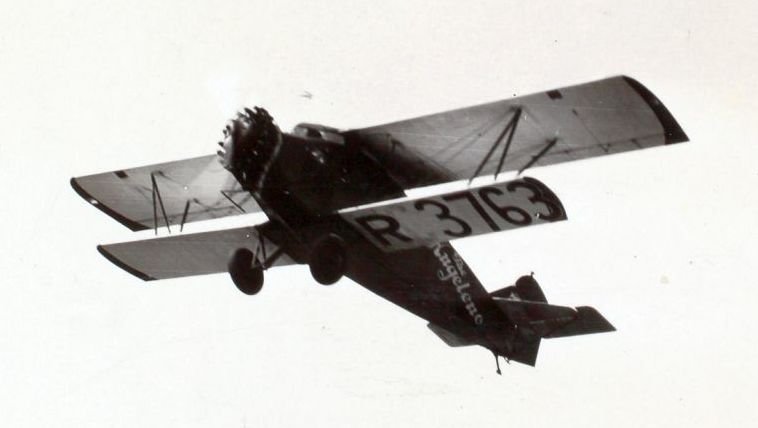
Just weeks earlier, on July 12, 1929, pilots Loren Mendell and R.B. Reinhart pushed aviation endurance limits in their CA-5A Angeleno (NR3763), remaining aloft for 246 hours and 43 minutes. These dramatic achievements showcased the Airsedan's exceptional reliability and fuel efficiency, capabilities that attracted operators like Mamer Air Transport, which operated five examples of various Airsedan variants.
International Operations
The aircraft gained international recognition through several notable deployments. Aeroposta Argentina acquired at least one CA-3E variant in 1931, demonstrating the type's appeal for South American operations. Most remarkably, CA-3E NC8451 achieved unique historical significance in 1934 when it carried Cardinal Eugenio Pacelli, the future Pope Pius XII, on a ceremonial flight over Buenos Aires - marking the first time a future Pope had flown in an aircraft.
Between 1935 and 1937, the Ontario Provincial Air Service operated four CA-6M variants from Sault Ste. Marie, Canada, for fire spotting missions, proving the design's utility in government service long after American production had ceased.
The Manufacturer
Buhl Aircraft Company operated from 1925 to 1933, producing approximately 185 aircraft total before succumbing to Great Depression economics. Founded in Detroit as part of the Buhl family's industrial holdings, the company achieved early prominence when its Buhl-Verville CA-3 Airster received the first U.S. Approved Type Certificate (#1) in March 1927, establishing the company's regulatory credibility.
The manufacturer's engineering leadership transitioned in 1927 when Etienne Dormoy replaced Alfred Verville as chief designer. Under Dormoy's direction, the company focused on the sesquiplane Airsedan family, moving away from Verville's earlier conventional designs. When Buhl closed in 1932, the company sold its drawings and manufacturing jigs to the Ontario Provincial Air Service, enabling limited Canadian production through 1937.
Engine & Technical Innovation
The CA-3 Sport Airsedan's technical sophistication centered on its sesquiplane wing configuration, featuring a smaller upper wing that reduced drag while maintaining structural strength. This design philosophy prioritized speed and aerodynamic efficiency over the conventional equal-span biplane approach prevalent in the era.
Powerplant options reflected the rapid engine development of the late 1920s. The standard CA-3 utilized the reliable 225-horsepower Wright J-5 Whirlwind, the same engine family that powered Charles Lindbergh's Spirit of St. Louis. Upgraded CA-3D variants featured the more powerful 300-horsepower Wright J-6 Whirlwind, while experimental installations included 300-horsepower Pratt & Whitney Wasp radials and even a Packard DR-980 diesel engine in the CA-3E variant, though the diesel proved impractical and was later replaced.
The enclosed cabin represented advanced thinking for 1928, providing weather protection and comfort that distinguished the Airsedan from open-cockpit contemporaries. The aircraft's capacity for three to five passengers made it suitable for early commercial passenger service and executive transportation.
Production & Legacy
Buhl manufactured approximately 20 CA-3 variants between 1928 and 1929, part of the broader Airsedan family that totaled more than 62 aircraft across all variants (including 14 CA-5s, 23 CA-6s, and five CA-8s). While production numbers remained modest, the aircraft's technical innovations and record-setting performances established important precedents for cabin aircraft development.
Today, at least three Airsedan variants remain airworthy or restored. NC5860, a CA-3C first built in June 1928 and raced in the 1928 National Air Tour, returned to flight status in 2011. NC5861, the original prototype converted to CA-3C configuration, achieved restoration to flying condition in 2012. The historically significant NC8451, which carried the future Pope Pius XII, resides at the Golden Wings Museum in Blaine, Minnesota, representing the type's unique place in both aviation and religious history.
The CA-3 Sport Airsedan's legacy extends beyond its modest production numbers through its pioneering role in American cabin aircraft development and its demonstration that properly designed aircraft could achieve extraordinary endurance and reliability - principles that would guide commercial aviation development throughout the 1930s.