
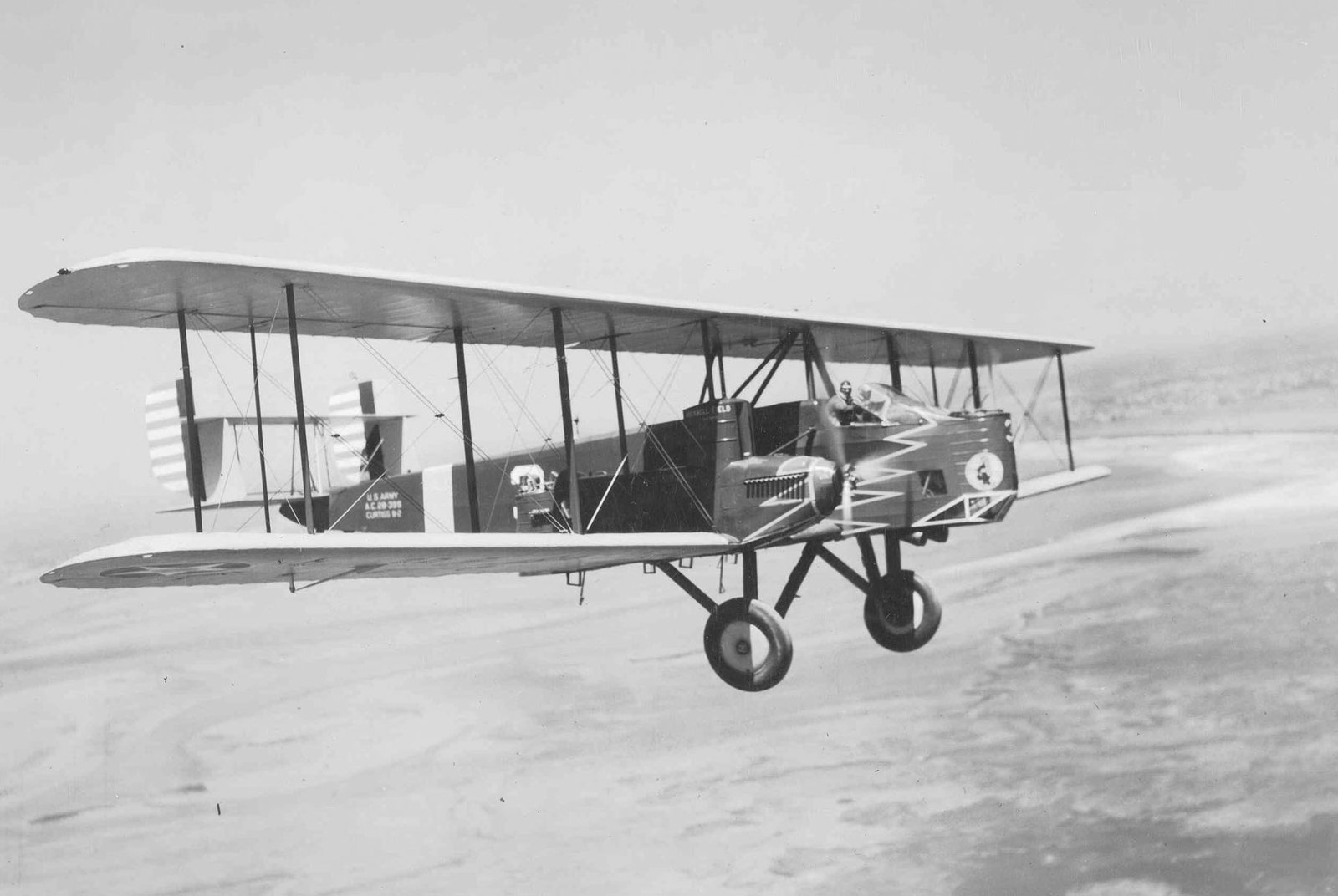
The Curtiss B-2 Condor was a large twin-engine heavy bomber biplane developed for the U.S. Army Air Corps during the interwar period. Produced by the Curtiss Aeroplane and Motor Company in the United States, the B-2 served as an ambitious example of late-1920s aviation design, bridging the gap between early biplane bombers and the all-metal monoplanes that would eventually succeed them.
Production of the B-2 Condor took place between 1929 and 1930, with the twelve production aircraft being delivered to the military between May 1929 and January 1930. The aircraft was notable for its immense scale, featuring a wingspan of 90 feet, a length of 47 feet 4 inches, and a height of 16 feet 6 inches. To manage its weight and improve efficiency, the design incorporated retractable landing gear, a sophisticated feature for its era. The bomber was designed to carry a crew of five.
Power was provided by two water-cooled V-12 Curtiss GV-1570-7 Conqueror piston engines. Research regarding the power output of these engines is conflicting, with sources listing the output as either 600 hp or 650 hp each. These engines propelled the B-2 to a maximum sea-level speed of 132 mph and a cruising speed of 105.5 mph. The aircraft possessed a service ceiling of 17,100 feet and a rate of climb of 850 feet per minute, with a total operational range of 805 miles.
In terms of combat capability, the B-2 Condor was armed with six .30-06 Lewis machine guns. Its bomb-carrying capacity was typically 2,508 lb, although this could be increased to 4,000 lb for shorter flight durations. The aircraft's weight specifications included an empty weight of 9,300 lb and a gross weight of 16,951 lb.
Despite its impressive specifications, the B-2 Condor had a brief operational history. It was removed from service in 1934, and the final aircraft in the fleet was surveyed in July 1936. While the Condor name was later associated with the T-32/AT-32 transport line, the B-2 remained a dedicated military bomber. No examples of the B-2 Condor are known to have survived to the present day.