
Service History
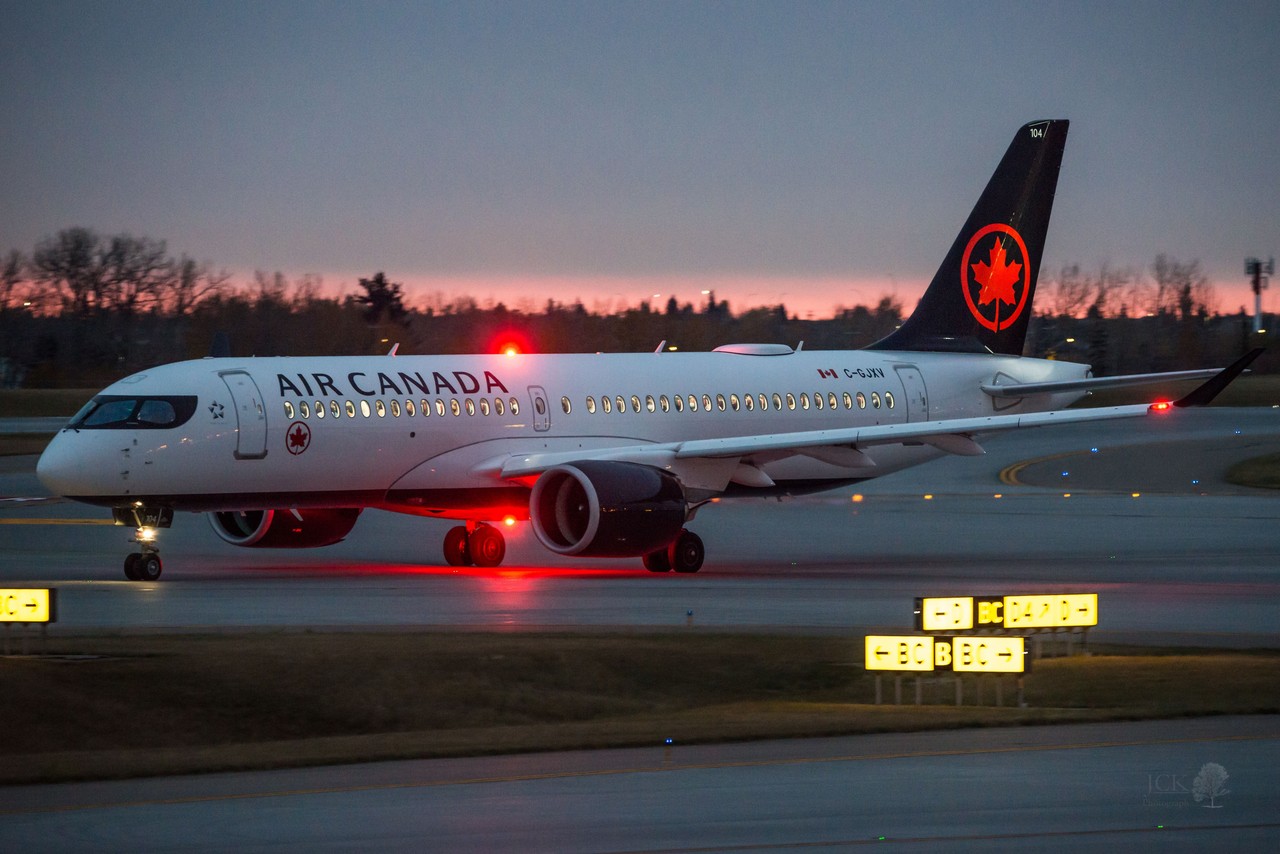
The A220-300 has rapidly established itself as a game-changer in the narrow-body market since entering commercial service. Launch operator airBaltic received the first aircraft on 14 December 2016, with tail number YL-CSA. By July 2019, the program had secured over 500 firm orders plus 80 additional commitments, demonstrating strong market confidence in the design. Major operators include Delta Air Lines, which ordered 75 CS100s and 50 options in April 2016, JetBlue Airways with 60 A220-300s ordered in July 2018, and Breeze Airways, which committed to 80 aircraft by September 2021.
The aircraft has proven its operational superiority with 40% lower fuel consumption per seat compared to the Embraer E190, filling a critical gap in the market for efficient regional jets. Airlines have reported better-than-expected fuel burn performance and high dispatch reliability, validating the advanced design philosophy.
The Manufacturer
Bombardier Aviation, the original developer, entered aerospace in the 1980s after decades as a snowmobile and railcar manufacturer founded in 1942. Through strategic acquisitions including Canadair in 1986 and de Havilland Canada in 1986, Bombardier became a major force in business jets and regional aircraft production. However, the ambitious CSeries program, launched on 13 July 2008, nearly bankrupted the company due to massive development costs and production delays.
Facing financial distress, Bombardier partnered with Airbus on 1 July 2018, transferring a 50.01% majority stake to the European manufacturer without upfront payment. Airbus assumed control of the program, renaming it the A220, while Bombardier retained approximately 34% ownership and the Quebec government held 16%. This partnership transformed a near-failed program into a commercial success, with Airbus providing the financial backing and global sales network necessary for market penetration.
Engine & Technical Details
The A220-300 exclusively uses two Pratt & Whitney PW1500G geared turbofan engines, part of the revolutionary PW1000G family that entered service in 2016. Manufactured by Pratt & Whitney, a division of RTX Corporation founded in 1925, these engines deliver 15% better fuel efficiency than conventional turbofans through innovative geared technology. The geared design allows the fan to operate independently of the turbine speed, enabling smaller engines with higher bypass ratios.
The aircraft features a two-pilot crew configuration and incorporates advanced composite wings manufactured in Belfast, Northern Ireland. Design innovations include lightweight materials and optimized aerodynamics that contribute significantly to the aircraft's exceptional fuel economy. The design freeze occurred in January 2010, leading to the first prototype flight five years later.
Performance Characteristics
Pilots praise the A220-300 for its modern flight deck and responsive handling characteristics. The aircraft achieves a maximum speed of Mach 0.82 (approximately 871 km/h) with an impressive range of 6,400 kilometers. Its service ceiling reaches 12,200 meters, providing operational flexibility for various route structures. The combination of fuel efficiency and performance has made it particularly attractive to airlines seeking to optimize their narrow-body operations.
Early operators consistently report fuel burn figures exceeding manufacturer promises, a rare achievement in commercial aviation. The aircraft's reliability has also exceeded expectations, with high dispatch rates contributing to airline operational efficiency.
Production & Legacy
Production occurs at two facilities: the primary final assembly line at Mirabel, Quebec, Canada, employing 2,200 workers, and a secondary facility in Mobile, Alabama, USA. The Alabama plant began production on 5 August 2019, achieving its first flight on 2 June 2020. Breeze Airways received the 100th U.S.-assembled A220-300 on 23 July 2025, demonstrating the program's growing momentum.
By early 2024, at least 131 A220-300s had received serial numbers, with production ramping to 14 aircraft per month by the mid-2020s. The program has achieved what many considered impossible – reviving a near-bankrupt aircraft program and turning it into a commercial success. Sub-assembly operations were added in 2022 to support increased production rates.
The A220-300's significance extends beyond its operational success. It proved that innovative design could still disrupt established markets, forcing Boeing and other manufacturers to reconsider their narrow-body strategies. The aircraft's entry into the U.S. market through major carriers like Delta and JetBlue validated European confidence in the program and established it as a legitimate competitor to the Boeing 737 and Airbus A320 families. As production continues into 2025 with no announced end date, the A220-300 stands as a testament to successful international aerospace collaboration and the power of advanced technology in commercial aviation.