
The Promise and Peril of Revolutionary Design
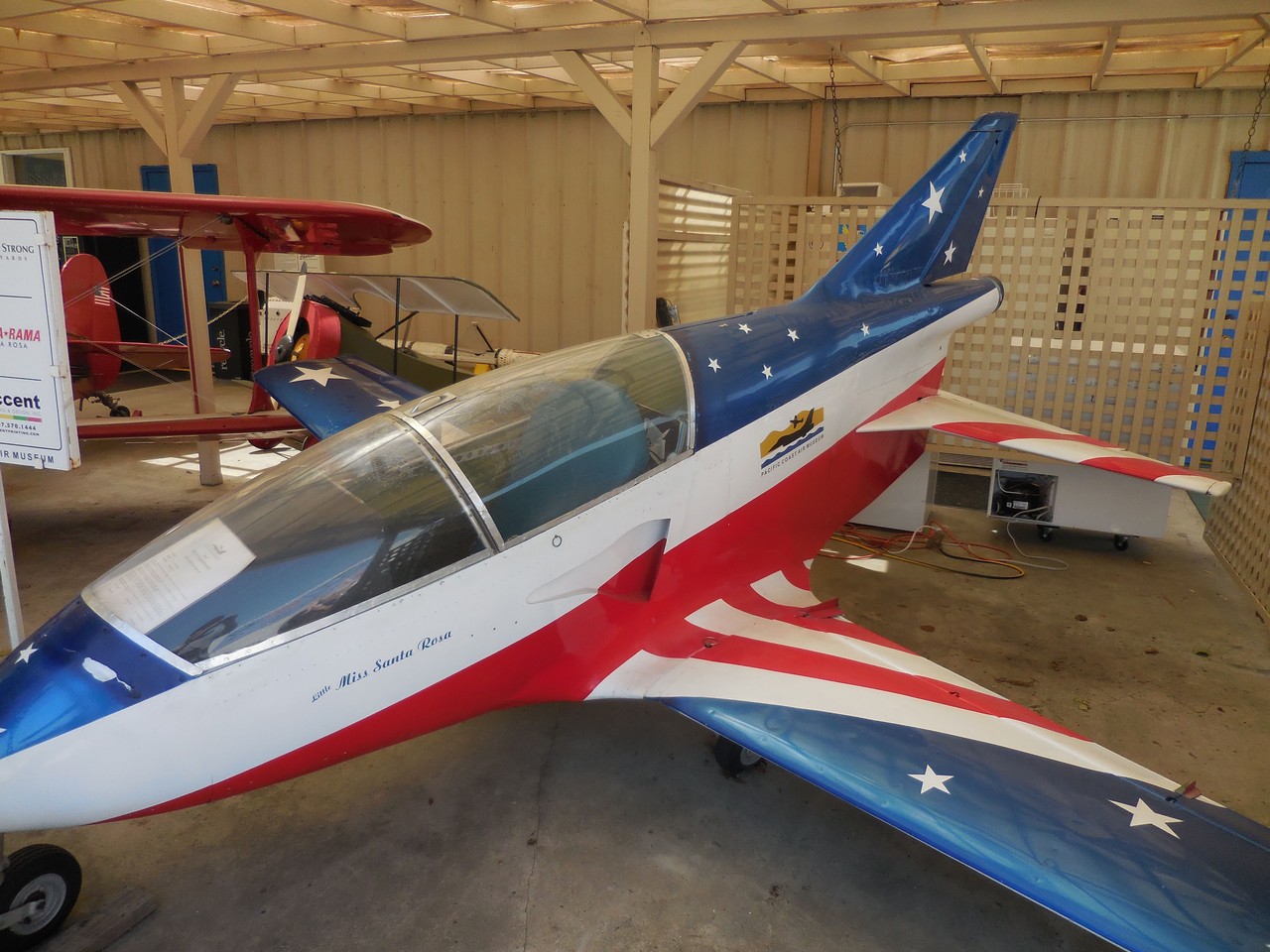
The BD-5 Micro generated unprecedented enthusiasm in the homebuilt aircraft community, accumulating over 5,000 pre-orders and becoming what many considered the most popular general aircraft project in modern history. By August 1971, before the prototype had even completed high-speed taxi tests, 800 deposits of $200 each had been collected. This extraordinary market response reflected the revolutionary nature of Jim Bede's design, which looked more like a jet fighter than a conventional general aviation aircraft.
Designer and Development
Jim Bede, building on the success of his earlier BD-4 design, began serious work on the BD-5 in 1970. His vision was to revolutionize personal aviation through an ultra-light, high-performance aircraft that departed radically from conventional designs. The prototype N501BD completed its maiden flight on July 11, 1972, launching a test program that would reveal both the aircraft's potential and its fundamental problems.
The initial design featured innovative construction methods, including Bede's patented panel-rib wing fabrication technique and a bolt-together fuselage assembly. The pilot sat in a semi-reclined position mere inches below the large fighter-style canopy, creating an unprecedented flying experience for civilian aviation.
Technical Challenges and Redesigns
Flight testing exposed critical design flaws that demanded extensive modifications. The original swept horizontal stabilizer caused severe pitch stability problems, forcing engineers to redesign the tail with a conventional one-piece all-flying horizontal stabilizer. More dramatically, the shorter "A" wing configuration proved catastrophically inadequate—all four aircraft completed with these wings crashed on their first flights, killing three of the four pilots involved.
Of the first 25 BD-5s completed with both "A" and "B" wing variants, 14 crashed with 9 fatalities. These sobering statistics forced Bede Aircraft to abandon the "A" wing entirely after testing revealed unacceptably high stall speeds and poor performance characteristics.
The Engine Crisis
Engine availability became the program's most critical bottleneck. The original design called for a 40-horsepower two-cylinder air-cooled engine driving a pusher propeller, but securing reliable powerplants proved impossible. Factory prototypes used various engines including Hirth 650cc and 720cc units, plus a Kiekhaefer Aeromarine engine. When Kiekhaefer promised to manufacture 3,000 engines for Bede after completing a snowmobile production run, the cancellation of the snowmobile order eliminated the aviation engines as well.
This engine shortage prevented factory production of the "D" models and severely delayed kit deliveries. Later variants eventually used Rotax 618UL 74-horsepower two-stroke engines, while the remarkable BD-5J jet variant employed turbojet engines to become the world's smallest jet aircraft at just 358.8 pounds.
Production and Market Reality
Kit shipments began in 1973, with approximately 5,100 kits eventually delivered. However, only a few hundred were actually completed by builders, reflecting the complexity of construction and ongoing technical issues. By mid-1973, the basic design was finalized and production tooling established, but Bede Aircraft Corporation filed for bankruptcy in the mid-1970s before completing the ambitious production program.
The company never manufactured complete aircraft, operating exclusively as a kit and plans supplier. This business model, combined with the technical challenges and engine supply problems, prevented the BD-5 from achieving its revolutionary market potential.
Performance and Records
Despite its troubles, the BD-5 demonstrated impressive performance capabilities. A BD-5A equipped with a Rotax 618UL engine captured the FAI C-1a/0 class speed record for aircraft weighing under 660 pounds, achieving 351.39 kilometers per hour (218.34 mph). This record stood from 1999 until 2010, when the Brazilian CEA-308 reached 360.13 kilometers per hour.
Legacy and Current Status
Many completed BD-5s remain airworthy today, testament to the basic soundness of the final design iteration. The BD-5J variant found success on the air show circuit and served as a cruise missile simulator for military training purposes. One example, built in 1983 and registered in 1989, was donated to the Experimental Aircraft Association's AirVenture Museum in Oshkosh, Wisconsin.
The BD-5 Micro represents both the promise and peril of the 1970s homebuilt aircraft movement. While it demonstrated innovative design principles and generated unprecedented market enthusiasm, it ultimately became a cautionary tale about overambitious production planning, inadequate supply chain management, and the critical importance of thorough testing before market introduction. The project's legacy continues to influence homebuilt aircraft design and serves as a reminder of aviation entrepreneurship's potential rewards and risks.