
Development and Design
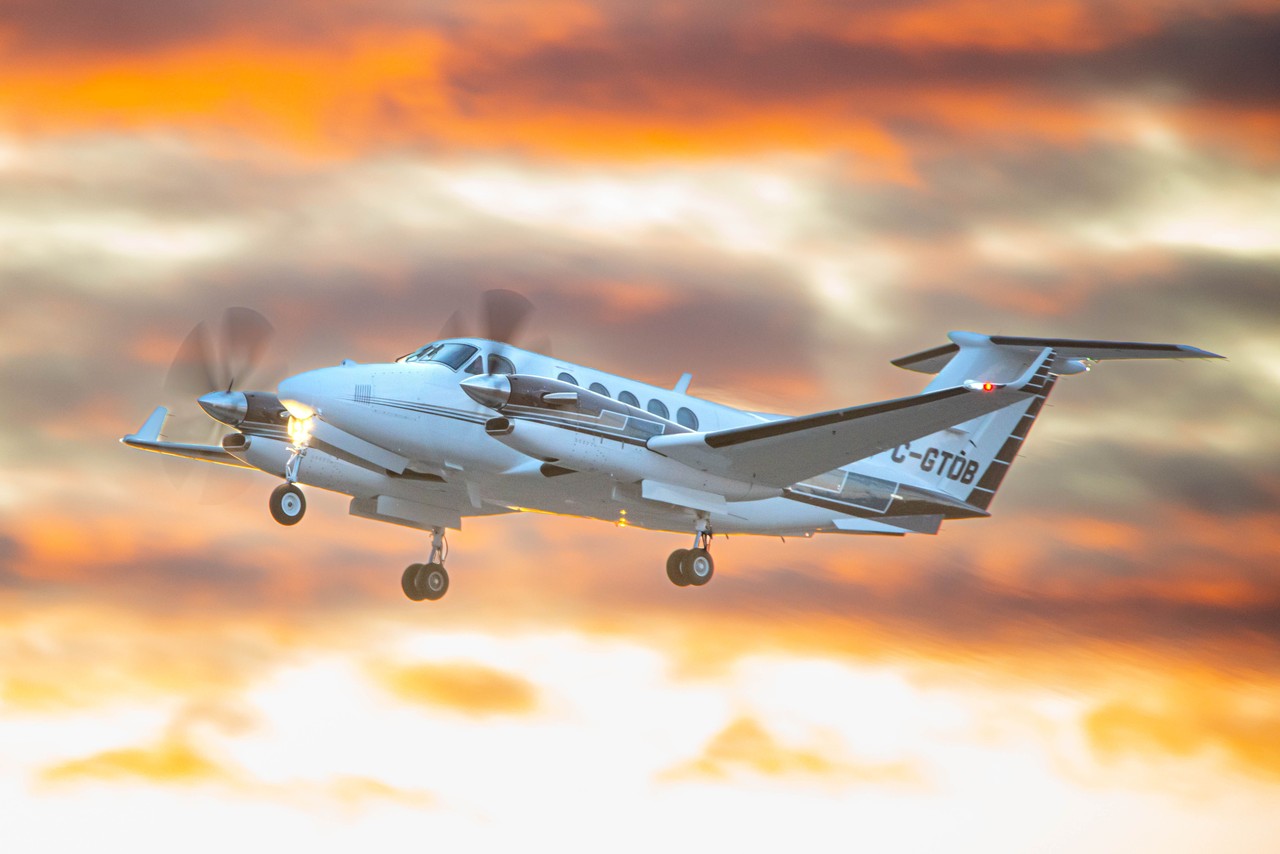
The Super King Air 300 emerged from Beech Aircraft's ambitious plan to create a heavyweight variant of their successful Model 200 series. Engineering teams led by chief test pilot Bud Francis began modifications to a Model 200 airframe (serial number BB-343) in the early 1980s, focusing on increased power and payload capacity. The prototype took flight on October 6, 1981, with Francis and George Bromley at the controls, demonstrating the viability of scaling up the proven King Air design.
Beech engineers redesigned the engine nacelles to accommodate the more powerful Pratt & Whitney Canada PT6A-60A engines, each delivering 1,050 shaft horsepower compared to the Model 200's 850-horsepower PT6A-42 powerplants. The aircraft featured distinctive "pitot cowlings" and new exhaust stack configurations that improved both performance and visual distinction from earlier variants. Four-blade propellers replaced the three-blade units of smaller King Airs, optimizing the increased power output.
Certification and Production
FAA certification arrived on January 1, 1984, under Approved Type Certificate A24CE, amended from the Model 200's original certificate. Initial deliveries commenced immediately, with 27 aircraft completed in the first production year. Peak manufacturing occurred in 1985 when Beech delivered 60 Model 300s from their Wichita facility at Beech Field.
Production continued through seven years, ultimately reaching 205 total aircraft when the final unit rolled off the line on October 17, 1991. The production run included 19 special variants (serial numbers FF-1 through FF-19) built for the Federal Aviation Administration's airway inspection fleet between 1987 and 1988. Manufacturing ceased due to the expiration of SFAR 41C regulations, which had permitted certain operational characteristics specific to the Model 300's design.
Technical Specifications and Performance
The PT6A-60A engines positioned the Model 300 as the most powerful King Air variant available at the time. These proven turboprops featured Pratt & Whitney Canada's reliable reverse-flow design, with the compressor section mounted behind the combustion chamber and power turbine. Flat-rated to 1,050 shaft horsepower, the engines maintained full power output in hot and high-altitude conditions where other aircraft experienced significant performance degradation.
With a maximum takeoff weight of 14,000 pounds, the Model 300 exceeded its Model 200 predecessor by nearly 2,000 pounds, translating to increased payload capacity and operational flexibility. Typical configurations accommodated one or two crew members plus nine passengers in executive seating arrangements, though the spacious cabin could be reconfigured for various mission requirements.
The Manufacturer's Legacy
Beech Aircraft Corporation, founded in 1932 by Walter H. and Olive Ann Beech, had established itself as America's premier manufacturer of high-quality general aviation aircraft by the 1980s. The company's reputation rested on iconic designs like the 1934 Model 17 Staggerwing and the post-World War II Bonanza series. The King Air family, launched with the Model 90 in 1964, represented Beech's successful entry into turboprop aviation.
Raytheon Company acquired Beech Aircraft in 1980, continuing production under the Beech nameplate before reorganizing as Raytheon Aircraft in 1994. The division changed hands multiple times, becoming Hawker Beechcraft in 2006 following a management buyout, then returning to corporate ownership when Textron purchased the assets in 2014. Today, the Beechcraft brand continues under Textron Aviation, maintaining the King Air production line that began more than six decades ago.
Operational Service and Variants
The Model 300 found its primary market among corporate flight departments requiring greater capacity than smaller King Airs could provide. The 19 FAA aircraft served as flying laboratories for airway and approach system certification, equipped with specialized navigation and communication equipment for flight inspection duties across the United States.
A lightweight variant designated Model 300LW entered limited production after 1991, featuring a reduced maximum takeoff weight of 12,500 pounds to meet specific international certification requirements. This version targeted non-U.S. markets through conversion kits applied to standard Model 300 airframes, though exact production numbers remain integrated with the main production count.
Legacy and Impact
The Super King Air 300's seven-year production run established crucial design principles that influenced subsequent King Air development. Its success validated the market demand for heavyweight twin-turboprop aircraft, directly contributing to the later B300 and 350 series that continue in production today. The Model 300 demonstrated that the King Air platform could scale effectively beyond its original light-twin origins while maintaining the reliability and operational economics that defined the family.
While production numbers remained modest compared to smaller King Air variants, the Model 300 served as an important bridge between the popular Model 200 series and the modern B300/350 aircraft that followed. Many of the 205 aircraft built remain in active service worldwide, testament to the robust design and quality construction that characterized Beech Aircraft's approach to turboprop aviation.