
A Strategic Market Position
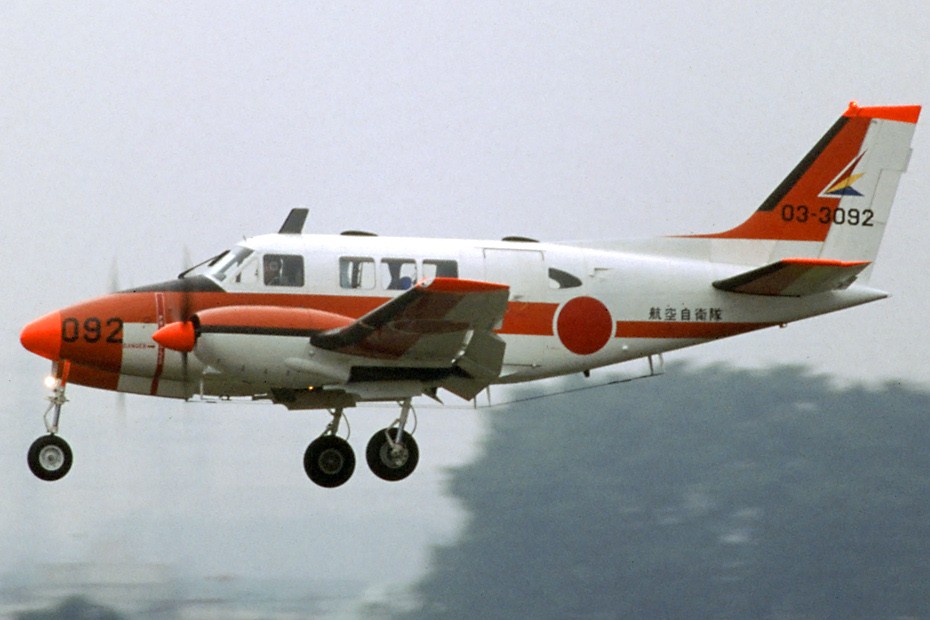
The Model 70 occupied a carefully calculated niche in the competitive twin-engine market of the late 1960s. By marrying the economical A65 fuselage with the larger B80 wing, Beechcraft created an aircraft that could carry heavier loads than the standard Model 65 while consuming less fuel than the full-sized B80. This hybrid approach appealed to operators seeking maximum utility from their aircraft investment, though the limited production run of just three years suggests the market for this specific configuration remained relatively small.
Beechcraft's Engineering Heritage
Beechcraft Corporation had established itself as a premier manufacturer of twin-engine aircraft by the time the Model 70 entered production. Founded in 1932 by Walter and Olive Ann Beech, the company built its reputation on the distinctive Model 17 Staggerwing before transitioning to conventional designs during World War II. The Queen Air series, which began development in the late 1950s, represented Beechcraft's entry into the growing commuter and business transport market. The original Queen Air prototype achieved its first flight on August 28, 1958, and demonstrated the design's capabilities by setting a class altitude record of 34,862 feet on February 8, 1960.
Power and Performance
The Model 70's twin Lycoming IGSO-480-A1E6 engines provided 340 horsepower each from their six-cylinder, horizontally-opposed configuration. These air-cooled powerplants, identical to those used in the A65, delivered reliable performance with a time between overhauls of 1,400 hours and typical overhaul intervals of 12 years. Lycoming's reputation for robust piston engines, built through decades of aviation experience since the company's founding in 1845, made these engines a trusted choice for commercial operators who demanded consistent availability and reasonable operating costs.
Operational Capabilities
With a gross weight of 8,200 pounds and useful loads reaching 2,400 pounds, the Model 70 could accommodate substantial passenger and cargo combinations. The standard configuration seated up to 9 passengers plus crew, while specialized Queen Airliner versions offered high-density arrangements for commuter service with 1-2 crew members and 9-10 passengers. This flexibility made the aircraft attractive to diverse operators, from corporate flight departments to small airlines serving regional routes.
Limited Production Run
The Model 70's production story reflects the challenges of serving a narrow market segment. Between 1968 and 1971, Beechcraft completed only 35 to 42 examples, making it significantly rarer than other Queen Air variants. The Model 65, by comparison, had enjoyed much longer production runs and broader market acceptance since its introduction in 1960. The timing of the Model 70's introduction coincided with increasing competition from turboprop aircraft, which offered superior performance and greater passenger appeal despite higher operating costs.
International Operations
Despite its limited numbers, the Model 70 found operators worldwide. Australian carrier Masling Airlines operated VH-CLH (construction number LB-20) from Bankstown, New South Wales, using the aircraft for regional passenger service until its registration was cancelled on December 16, 2014. Such international operations demonstrated the aircraft's capability to serve diverse markets and operating conditions, from corporate shuttles to scheduled airline service.
Design Legacy
The Model 70's hybrid approach to aircraft design illustrated Beechcraft's willingness to experiment with unconventional solutions to market demands. Rather than developing an entirely new aircraft, the company leveraged existing components from two successful models to create a third variant with distinct performance characteristics. This engineering philosophy would continue to influence Beechcraft's approach to aircraft development throughout the company's evolution under Raytheon Aircraft, later Hawker Beechcraft, and ultimately Textron Aviation following the 2014 acquisition.
End of an Era
Production of the Model 70 concluded in late 1971, coinciding with the end of Model 65 manufacturing. The B80 variant continued production until 1978, ultimately becoming the longest-running Queen Air model and the final chapter in the series that had served operators for nearly two decades. The Model 70's brief production run represents a fascinating footnote in aviation history, demonstrating both the innovation and market realities that shaped general aviation aircraft development during the jet age transition.