
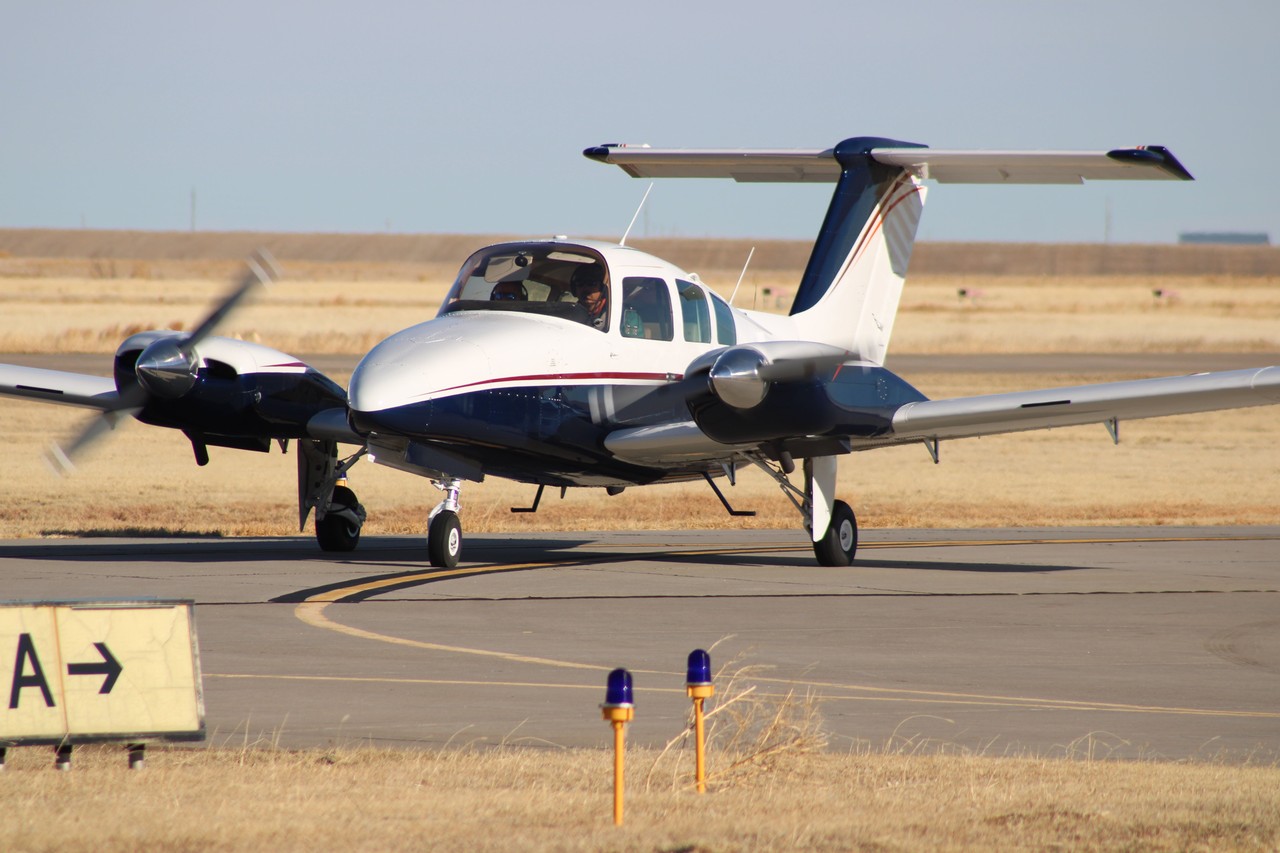
Market Positioning and Design Philosophy
The Duchess emerged from Beechcraft's strategic vision to create what engineers called "an essentially single-engine size airframe with two engines instead of one." This concept targeted three specific markets: personal flying, light charter operations, and multi-engine training. The aircraft competed directly with the Piper Seminole and Grumman American Cougar in the light-light twin category, offering twin-engine safety margins without the complexity and cost of larger aircraft.
Beechcraft developed the Duchess primarily for its Beech Aero Centers network, recognizing the growing demand for affordable multi-engine training aircraft. The design team extensively modified the wing spar from their Sierra model to accommodate engine mounting loads while incorporating a more robust cabin structure featuring two entry doors.
Production History and Market Challenges
The first production Duchess took flight on May 24, 1977, entering a market that would soon face unprecedented challenges. Manufacturing commenced in 1978, with peak production occurring in 1979 when 213 aircraft rolled off the assembly line. However, the timing proved catastrophic for sales.
The Duchess encountered what aviation historians consider one of the worst periods in general aviation history. Industry-wide aircraft production plummeted from nearly 17,000 units in 1978 to just a few thousand by the early 1980s. The 1979 energy crisis further dampened enthusiasm for twin-engine aircraft as fuel costs soared. Despite sound engineering and competitive performance, Beechcraft terminated production in 1982 after manufacturing just 437 examples.
Engineering and Construction
Beechcraft engineers employed innovative construction techniques to control manufacturing costs while maintaining structural integrity. The airframe utilized extensive bonded construction methods, reducing traditional riveted assembly time and weight. The wing design required complete redesign from the Sierra's structure to handle the additional loads imposed by wing-mounted engines.
The selection of carbureted Lycoming O-360-A1G6D engines reflected deliberate cost-consciousness. These horizontally-opposed, four-cylinder powerplants delivered 180 horsepower each while maintaining reputation for reliability and reasonable maintenance expenses. Each engine featured a 2,000-hour overhaul interval with typical 12-year lifespans before major work.
Performance Characteristics
Pilots appreciated the Duchess's forgiving flight characteristics and practical performance envelope. At its maximum gross weight of 3,900 pounds, the aircraft achieved a cruise speed of 158 knots at 10,000 feet while burning 19.7 gallons per hour at 75 percent power. The 100-gallon fuel capacity provided range between 780 and 843 nautical miles depending on power settings and altitude.
Single-engine performance proved adequate for training purposes, with the aircraft maintaining a 6,170-foot service ceiling and 235 feet per minute climb rate on one engine. These characteristics made it suitable for multi-engine instruction while providing genuine safety margins for personal transportation.
Takeoff and landing performance suited operations from shorter fields, requiring only 1,017 feet for takeoff and 1,000 feet for landing under standard conditions. When clearing 50-foot obstacles, these distances extended to 2,119 feet for takeoff and 1,881 feet for landing.
The Manufacturer Legacy
Beech Aircraft Corporation, founded by Walter and Olive Ann Beech in 1932, built its reputation on premium general aviation aircraft. During the Duchess era, Beechcraft operated as a division of Raytheon Aircraft Company, maintaining manufacturing facilities in Wichita, Kansas.
The company's engineering philosophy emphasized quality construction and reliable performance over lowest-cost solutions. This approach served the Duchess well, as the type developed a reputation for durability that continues benefiting current owners. Today, Beechcraft operates as part of Textron Aviation following Textron's 2014 acquisition.
Training Role and Current Status
Flight training organizations quickly recognized the Duchess's value as a multi-engine trainer. Its relatively simple systems, predictable handling characteristics, and reasonable operating costs made it ideal for introducing pilots to twin-engine operations. The aircraft's size and performance closely matched what newly-rated multi-engine pilots would likely fly in entry-level positions.
Approximately 270 Duchess aircraft remain on the U.S. registry today, testament to the type's structural durability and continued utility. While production ended four decades ago, the surviving examples maintain strong resale values and active support from specialty maintenance facilities familiar with the type.
The Duchess's brief production run and subsequent market recognition created an interesting aviation paradox: an aircraft that failed commercially due to external market forces but succeeded operationally through superior engineering and practical design. Its influence on subsequent light twin development continues resonating in modern aircraft design philosophy, proving that sometimes the best aircraft arrive at the worst possible moment in aviation history.