
Development and Design Innovation
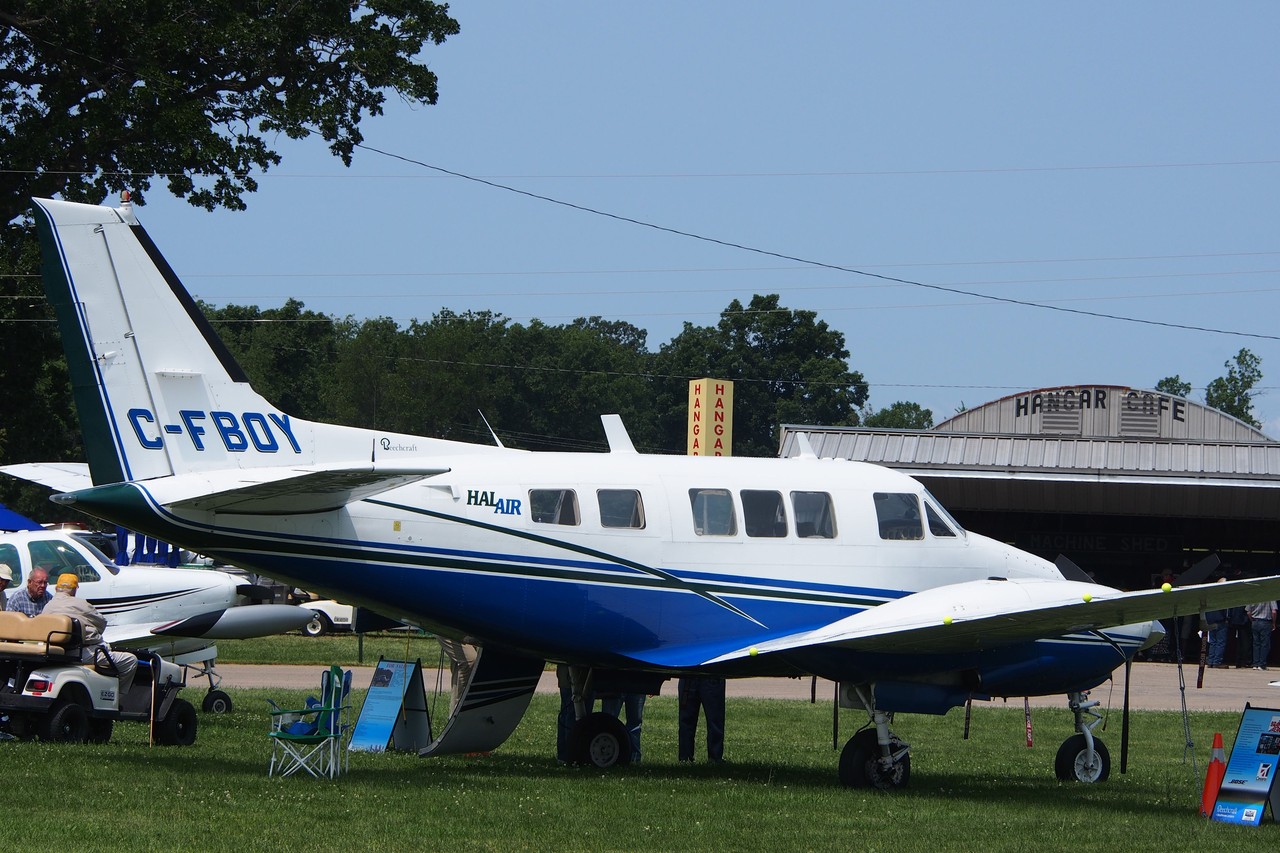
The Model 80 Queen Air emerged from Beechcraft's successful Twin Bonanza design, sharing its wings, engines, and tail surfaces while incorporating a significantly larger fuselage to increase passenger capacity. The aircraft received Federal Aviation Administration certification on February 20, 1962, marking the beginning of a new chapter in twin-engine general aviation.
The Model 80's most significant design advancement was its introduction of the swept tail configuration, the first Queen Air variant to feature this modern aerodynamic improvement. This innovation distinguished it from the earlier Model 65, though the Model 80 retained the shorter wing design of its predecessor. The swept tail would become a defining characteristic carried forward to subsequent Queen Air variants and ultimately to the King Air series.
Engine and Performance Specifications
Powering the Model 80 were two Lycoming IGSO-540-A1A engines, each producing 380 horsepower and representing a substantial upgrade from the Model 65's 340-horsepower IGSO-480 engines. These six-cylinder, horizontally opposed piston engines provided the aircraft with reliable performance suitable for both private ownership and small commercial operations.
The aircraft accommodated a crew of one or two pilots and up to nine passengers in high-density configurations. Its retractable tricycle landing gear and 8,000-pound gross weight made it suitable for operations from a variety of airfields while maintaining respectable payload capabilities.
Service Applications
The Queen Air series found its niche primarily in three market segments: private ownership, utility operations, and small commuter airline service. The nine-seat capacity positioned it perfectly for executive transport, air taxi operations, and regional connectivity routes that larger aircraft could not serve economically.
Unlike many aircraft of its era, the Model 80 established impressive performance credentials early in its career. On February 8, 1960, a Queen Air set a class altitude record of 34,862 feet, demonstrating the type's exceptional ceiling capabilities and robust engine performance at altitude.
Production Evolution
Beechcraft's limited production run of 148 Model 80 aircraft from 1962 to 1963 represented only the beginning of the Queen Air story. The design's success led directly to improved variants that addressed operational feedback and market demands.
The Model A80, introduced in 1964, featured significant improvements including an extended wing that increased wingspan to 50 feet 3 inches, a redesigned nose section, enhanced fuel capacity, and increased gross weight to 8,500 pounds. Beechcraft built 121 A80 variants between 1964 and 1966.
The Model B80, launched in 1966, became the most successful Queen Air variant with 242 aircraft produced over an impressive 12-year production run ending in 1977. The B80 incorporated further weight increases to 8,800 pounds, providing a useful load exceeding 3,000 pounds and making it highly attractive for cargo and passenger operations.
The Manufacturer Legacy
Beechcraft Corporation, founded by Walter and Olive Ann Beech, established itself as a premier general aviation manufacturer through aircraft like the Queen Air. The company's reputation for building robust, reliable aircraft made the Queen Air series particularly attractive to operators requiring dependable performance in demanding conditions.
Today, the Beechcraft legacy continues under Textron Aviation, which acquired the company in 2014. The engineering principles and design philosophy demonstrated in the Queen Air series continue to influence modern general aviation aircraft development.
Foundation for Future Success
The Model 80's most enduring legacy lies in its role as the developmental foundation for the King Air series. Beechcraft engineers used the Queen Air's proven airframe, systems, and operational characteristics as the starting point for turboprop conversion, leading to one of general aviation's most successful aircraft families.
The Queen Air series, including all variants, achieved total production of 511 aircraft across the 80-series models, with the broader Queen Air family reaching approximately 1,005 aircraft by the end of production in 1978. This 17-year production run demonstrated remarkable longevity for a general aviation design.
Operational Heritage
The Queen Air's bridge role between the piston and turboprop eras cannot be overstated. It provided operators with jet-age aesthetics and performance capabilities while maintaining the familiar operating characteristics and maintenance requirements of piston engines. This combination proved particularly valuable during the 1960s transition period when turboprop technology was still maturing and significantly more expensive.
The aircraft's contribution to aviation history extends beyond its own operational success to its fundamental role in developing the engineering and manufacturing processes that made the King Air series possible, ensuring the Queen Air's influence on general aviation would persist for decades beyond its own production lifecycle.