
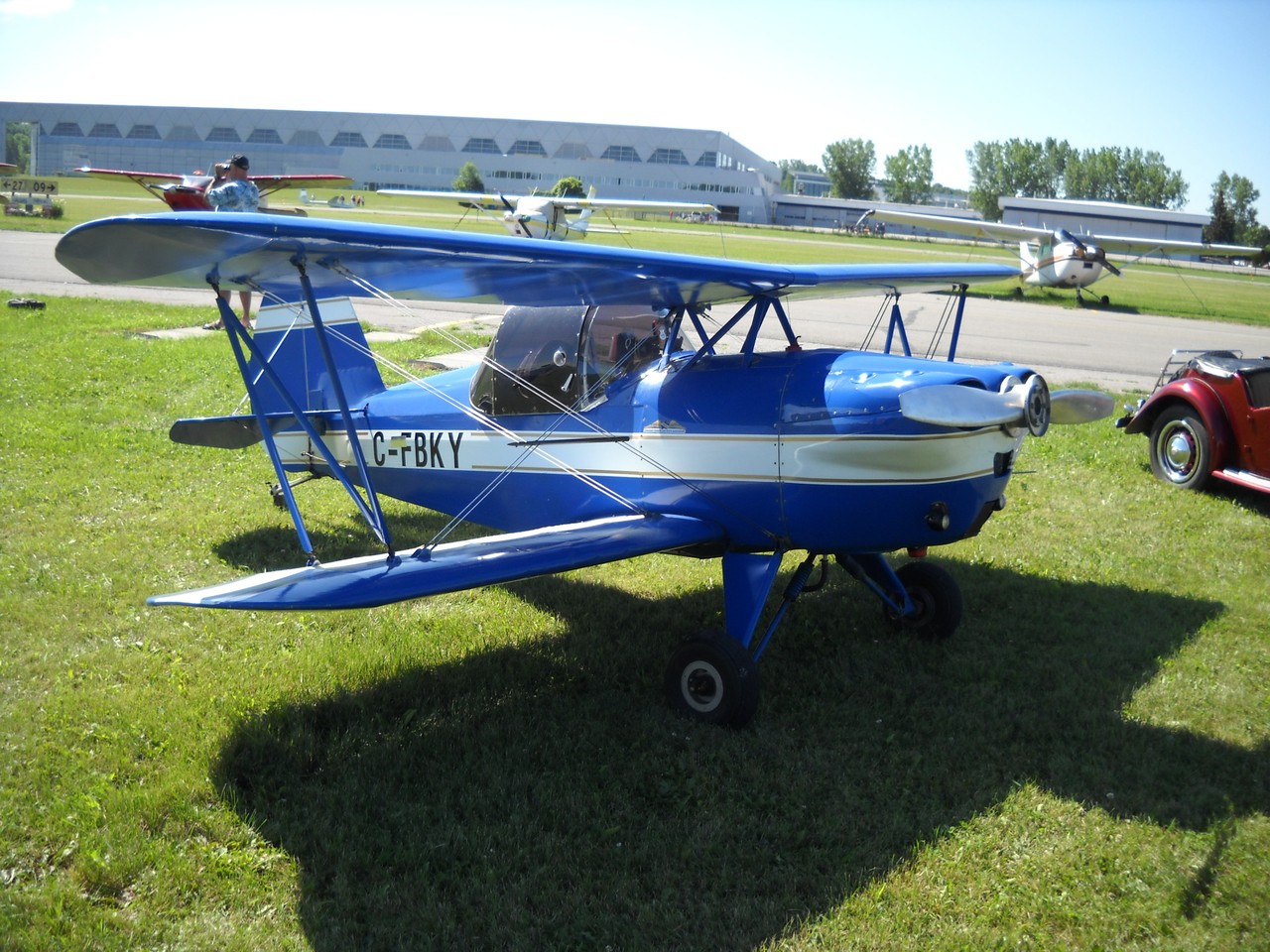
Design Origins and Development
Barney Oldfield conceived the Baby Lakes in the 1950s as an affordable alternative to the full-size Great Lakes Sport Trainer, creating a design that captured the classic biplane's aesthetic appeal in a more manageable package for homebuilders. Working alongside Richard "Dick" Lane, Oldfield constructed the original prototype using a Continental A-80 engine, achieving cruise speeds around 85 mph. The prototype's initial success generated unexpected demand from builders, prompting Oldfield to develop the design into a complete plans package for amateur construction.
The aircraft's construction methodology reflects traditional biplane building techniques, utilizing 136 feet of steel tubing for the fuselage framework with aircraft fabric covering. The wing structure employs wood spars and ribs, maintaining the authentic feel of golden-age aviation while remaining accessible to homebuilders with basic metalworking and woodworking skills. This hybrid construction approach balances structural integrity with buildability, contributing to the design's eventual popularity.
Technical Specifications and Performance
The Baby Lakes measures 13 feet 6 inches in length with a height of just 4 feet 6 inches, creating an exceptionally compact aircraft profile. Maximum takeoff weight reaches 850 pounds, with the diminutive biplane capable of achieving a remarkable 2,000 feet per minute rate of climb when properly configured. The open cockpit design provides pilots with an unobstructed view and authentic vintage flying experience.
Engine options range from the Continental A-65 producing 65 horsepower to the C-90 generating 90 horsepower, though some builders have experimented with Volkswagen air-cooled automotive conversions. Designer Harvey Swack discouraged the Volkswagen installation due to propeller size limitations and reduced thrust characteristics, despite some successful implementations by determined builders. The Continental A-80 remains the most popular powerplant choice, providing optimal performance within the aircraft's design parameters.
Variants and Adaptations
The design spawned several notable variants addressing different mission requirements. The Super Baby Lakes accommodates engines exceeding 100 horsepower, typically Continental O-200 or Lycoming O-235/O-290 powerplants, requiring extended landing gear to handle the additional weight and power. This variant appeals to builders seeking enhanced performance capabilities while maintaining the original's compact dimensions.
Dick Lane developed the Buddy Baby Lakes as a two-seat configuration, expanding the design's utility for training and recreational flying with passengers. These variants demonstrate the basic design's adaptability while preserving the essential character that made the original attractive to homebuilders seeking authentic biplane performance.
Aircraft Spruce Era and Modern Distribution
Aircraft Spruce & Specialty Co.'s acquisition of all Baby Lakes rights in May 1996 marked a significant transition in the design's availability and support structure. The company recognized the design's 25-year proven track record and established comprehensive support including complete plans, partial kits, and raw materials sourcing. This corporate backing provided stability and quality control previously unavailable to individual builders seeking plans and components.
Under Aircraft Spruce's stewardship, the Baby Lakes gained renewed popularity among experimental aircraft enthusiasts. The company's established distribution network and technical support capabilities addressed many obstacles that had previously limited the design's accessibility to amateur builders. Complete documentation and material specifications eliminated much of the guesswork inherent in earlier homebuilt projects.
Builder Experiences and Modern Examples
Shad Bell's restoration project exemplifies the typical builder experience with Baby Lakes construction. Acquiring an unfinished mid-1980s project in 2011, Bell invested five years completing the aircraft before achieving first flight in 2016. His example initially flew with an A-65 engine for 160 hours at approximately 85 mph cruise speed before receiving an A-85 upgrade for improved performance, demonstrating the design's upgrade potential.
The Planes of Fame Air Museum displays a 1999 Baby Lakes (registration N193TE, serial 001) as a static exhibit, preserving an example of modern construction techniques applied to Oldfield's original concept. This museum aircraft represents the continuing appeal of traditional biplane design in contemporary homebuilt aviation.
Legacy and Current Status
The Baby Lakes occupies a unique position in homebuilt aviation as a proven design combining classic biplane aesthetics with practical construction requirements. Its enduring popularity stems from achievable performance goals and reasonable build complexity, making vintage-style flying accessible to builders with modest workshops and budgets. The design continues attracting new builders seeking authentic open-cockpit experiences without the complexity and expense of full-scale classic aircraft restoration.
Aircraft Spruce maintains active support for the design through ongoing plans sales and component availability, ensuring the Baby Lakes remains viable for future builders. The aircraft's established track record and corporate backing provide confidence for builders embarking on multi-year construction projects, contributing to its sustained presence in the experimental aircraft community.