
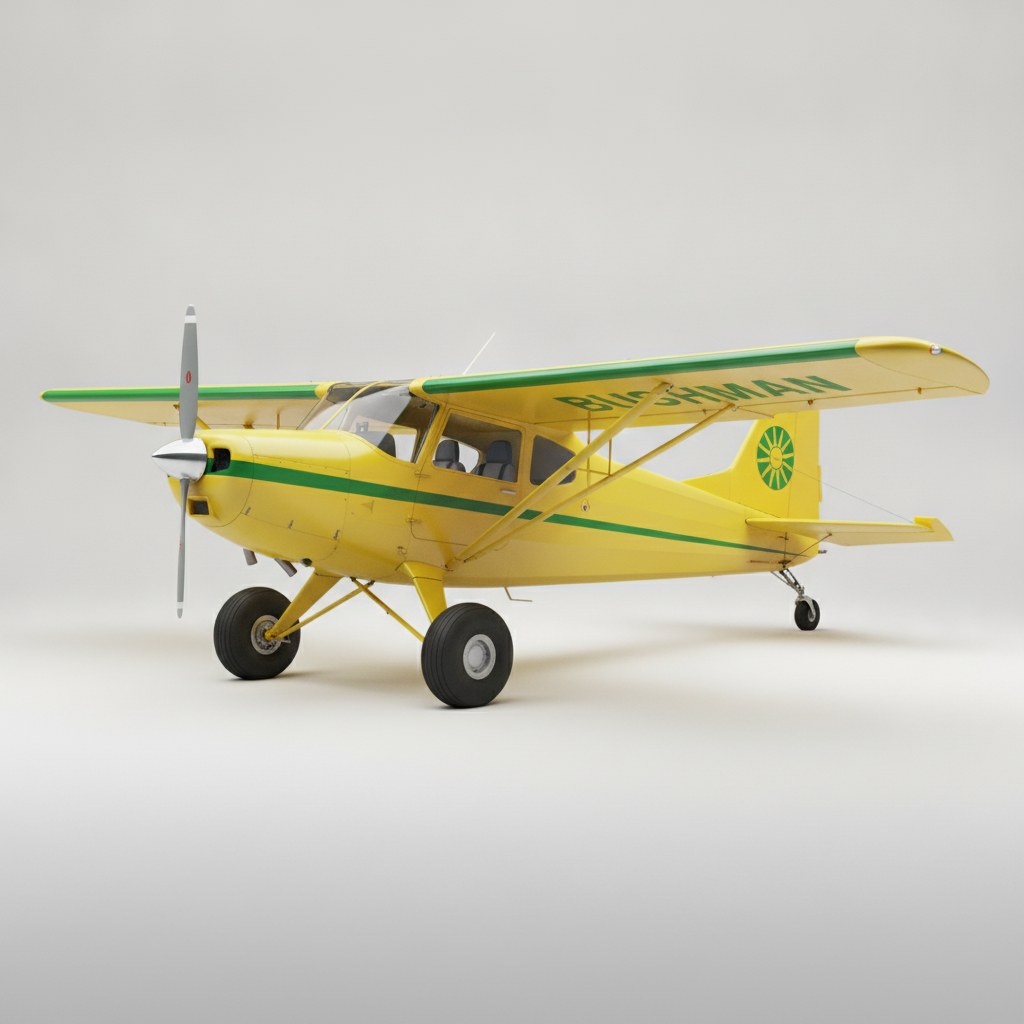
Design Philosophy and Origins
The Bushman emerged from the vision of Ole Hartmann, managing director and chief designer of Australian Aircraft Kits, who established his company in 2003 at Taree Regional Airport in New South Wales. Hartmann's design philosophy centered on creating an aircraft optimized for the demanding conditions of Australia's vast interior, where conventional aircraft often struggle with short, unprepared airstrips and harsh operating environments. The Bushman's development followed Hartmann's earlier success with the Hornet, which won the Most Innovative Ultralight Design award at Natfly in Narromine in 2004, providing the foundation for his company's growth.
The Manufacturer
Australian Aircraft Kits began as a home shed operation in 2003 under Hartmann's leadership, evolving into a specialized manufacturer of kit aircraft designed for Australian conditions. The company employs Brian Wood, a former British Aerospace employee, as operations manager, along with a third engineer who handles design, construction, test flying, training, and customer support for kit builders. Operating from Taree Regional Airport, the company produces not only the Bushman but also the Wasp, Hornet STOL, and Hornet AG/Utility variants. The company remains privately held under its original name, focusing on amateur construction kits and ready-to-fly light-sport aircraft while also providing repair services.
Technical Innovation
The Bushman incorporates several design features specifically engineered for extreme bush flying operations. Its all-aluminum construction provides durability in harsh environments while maintaining relatively light weight at 683 pounds empty. The high-wing configuration spans 29 feet 6 inches and employs both flaps and a sophisticated V-strut arrangement with jury struts for structural integrity. The aircraft's fixed conventional landing gear features a trailing idler-link design that works in conjunction with oversized tundra tires, enabling operations from unprepared surfaces common in remote Australian locations.
Powerplant and Performance
The standard powerplant consists of a Rotax 914 engine, a four-cylinder, four-stroke unit that combines liquid and air cooling with turbocharging to produce 115 horsepower. Manufactured by BRP-Rotax GmbH & Co. KG of Austria, this engine drives a three-bladed composite propeller in tractor configuration. The turbocharged design proves particularly valuable at the higher elevations and in the thin air conditions often encountered during Australian outback operations. With a maximum gross weight of 1,323 pounds, the Bushman provides a useful load of 640 pounds, accommodating pilot, passenger, and equipment necessary for extended bush operations.
Operational Role
The Bushman serves primarily in private ownership roles focused on recreational bush flying and practical outback utility missions. Cattle mustering represents a significant application, where the aircraft's STOL capabilities enable access to remote stations and monitoring of livestock across vast properties. The tandem seating arrangement places pilot and passenger in optimal positions for ground observation while maintaining the aircraft's streamlined profile. The enclosed cockpit provides protection from the elements during extended operations in Australia's challenging climate conditions.
Current Status and Legacy
Production of the Bushman began around 2010, approximately seven years after Australian Aircraft Kits' establishment. While exact production numbers remain undocumented, the aircraft continues in current production as part of the company's ongoing operations. The Bushman carries the ICAO designation BMAN and falls within the L1P landplane classification. As a modern kit aircraft, it represents the continuing evolution of amateur-built aviation, specifically adapted to meet the unique requirements of Australian bush flying operations where commercial aviation infrastructure remains limited or nonexistent.
The aircraft's significance lies not in revolutionary technological advancement but in its focused design approach, addressing the specific needs of pilots operating in one of the world's most challenging general aviation environments. Its legacy connects to the broader tradition of Australian aviation innovation, where practical solutions to geographic and operational challenges have consistently driven aircraft development.