
Design Philosophy and Development
Newby O. Brantly founded his helicopter company in 1945 with a singular vision: creating simple, affordable rotorcraft for private owners. After his complex coaxial-rotor B-1 prototype proved too complicated for commercial success, Brantly shifted focus to a conventional single-rotor design. The B-2's development philosophy emphasized simplicity over sophistication, targeting private buyers priced out of existing helicopter markets.
Captain Frank A. Erickson, the World War II Coast Guard helicopter pioneer, piloted the first prototype N9069H on its maiden flight February 21, 1953. An improved second prototype followed on August 14, 1956, incorporating refinements that would define the production aircraft. The Federal Aviation Administration awarded Type Certificate 2H2 on April 27, 1959, clearing the path for series production.
Production Success and Market Impact
Brantly Helicopter Corporation launched series production in 1959, initially building one aircraft per week. The company sold 24 helicopters that first year and 10 more by mid-1960, then doubled production rates to two per week as demand grew. On May 25, 1961, Brantly delivered the 100th B-2, marking a significant milestone for the small manufacturer.
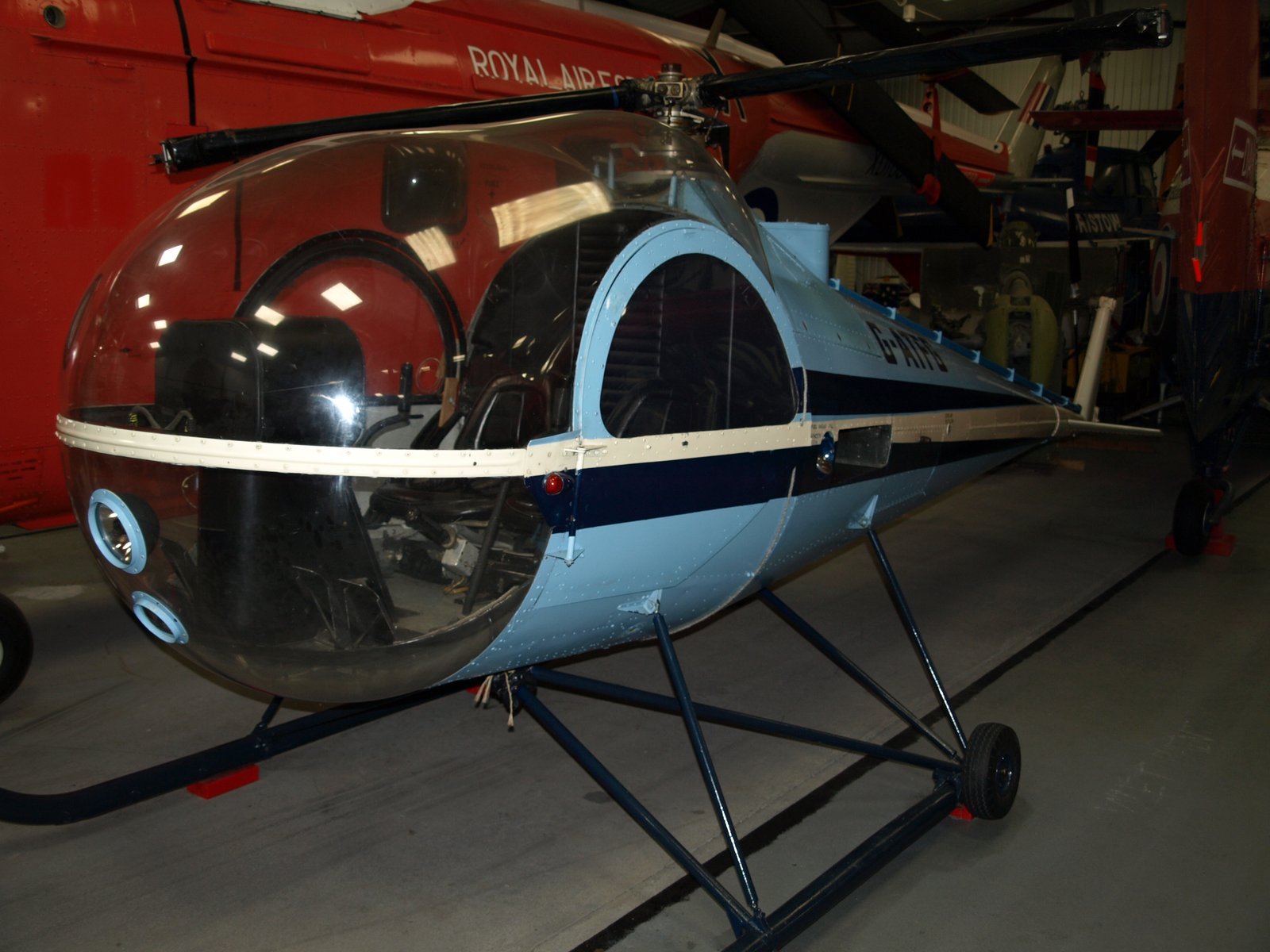
The aircraft's initial price of $19,950 revolutionized helicopter ownership, making rotorcraft accessible to private pilots previously excluded from the market. This affordability, combined with excellent pilot visibility through extensive nose glazing and straightforward maintenance requirements, established the B-2 as the benchmark for personal helicopters.
Manufacturing Evolution
Production occurred across multiple facilities as the company evolved. Early prototypes emerged from Brantly's Pennsylvania operations in Berwyn, while later production centered in Frederick, Oklahoma. The company maintained headquarters in Coppell, Texas, coordinating manufacturing that would span over 50 years.
Brantly Helicopter Corporation changed ownership multiple times throughout its history but maintained the B-2's essential design integrity. The company produced approximately 500 helicopters total, with the B-2 series comprising the vast majority. International expansion included a sales agency in Elkhart, Indiana, and planned but unrealized manufacturing facilities in England and Australia.
Technical Specifications and Variants
The B-2 featured a conventional single main rotor configuration with three blades, complemented by a two-bladed anti-torque tail rotor mounted on the port side. Its teardrop-shaped all-metal fuselage housed the pilot and one passenger, while the vertically-mounted piston engine provided reliable power.
Initial models used basic Lycoming piston engines, while the B-2A introduced cabin modifications in 1958. The definitive B-2B variant, introduced in the 1960s, featured an uprated 180-horsepower Avco Lycoming IO-360-A1A engine. This air-cooled, fuel-injected powerplant enabled maximum speeds of 100 miles per hour, cruise speeds of 90 miles per hour, and climb rates of 1,900 feet per minute. The aircraft achieved a service ceiling of 10,800 feet and range of 250 miles.
Later B-2B models incorporated metal rotor blades, simplifying maintenance compared to earlier fabric-covered designs and making the helicopter more suitable for private ownership.
Military Evaluation
The United States Army ordered five B-2s in 1958, designating them YHO-3 (later YOH-3B) for evaluation in the Light Observation Helicopter competition. Despite the aircraft's proven reliability and cost-effectiveness, the Army selected other designs for production contracts. An unmanned variant designated H-5T served as a target drone beginning in 1986, representing the type's only operational military service.
Production Numbers and Legacy
Exactly 334 B-2 series helicopters rolled off production lines during the design's remarkable five-decade run. The breakdown included 194 basic B-2 models, 18 B-2A variants produced between 1960 and 1963, and the remainder as B-2B aircraft. Production continued remarkably into 2024, making the B-2 one of the longest-produced helicopter designs in history.
Current Status and Preservation
Several B-2 series helicopters remain airworthy today, primarily in private hands. Recent registrations through 2024 confirm the type's continued operational status. The Crawford Auto-Aviation Museum in Cleveland, Ohio, displays B-2 N2143U, a pre-1962 aircraft with 2,108 flight hours that was retired in 2006.
Brantly International continues operating under the Brantly name, maintaining support for the aircraft that established affordable helicopter ownership as a practical reality for private pilots worldwide.