
Design Philosophy and Development
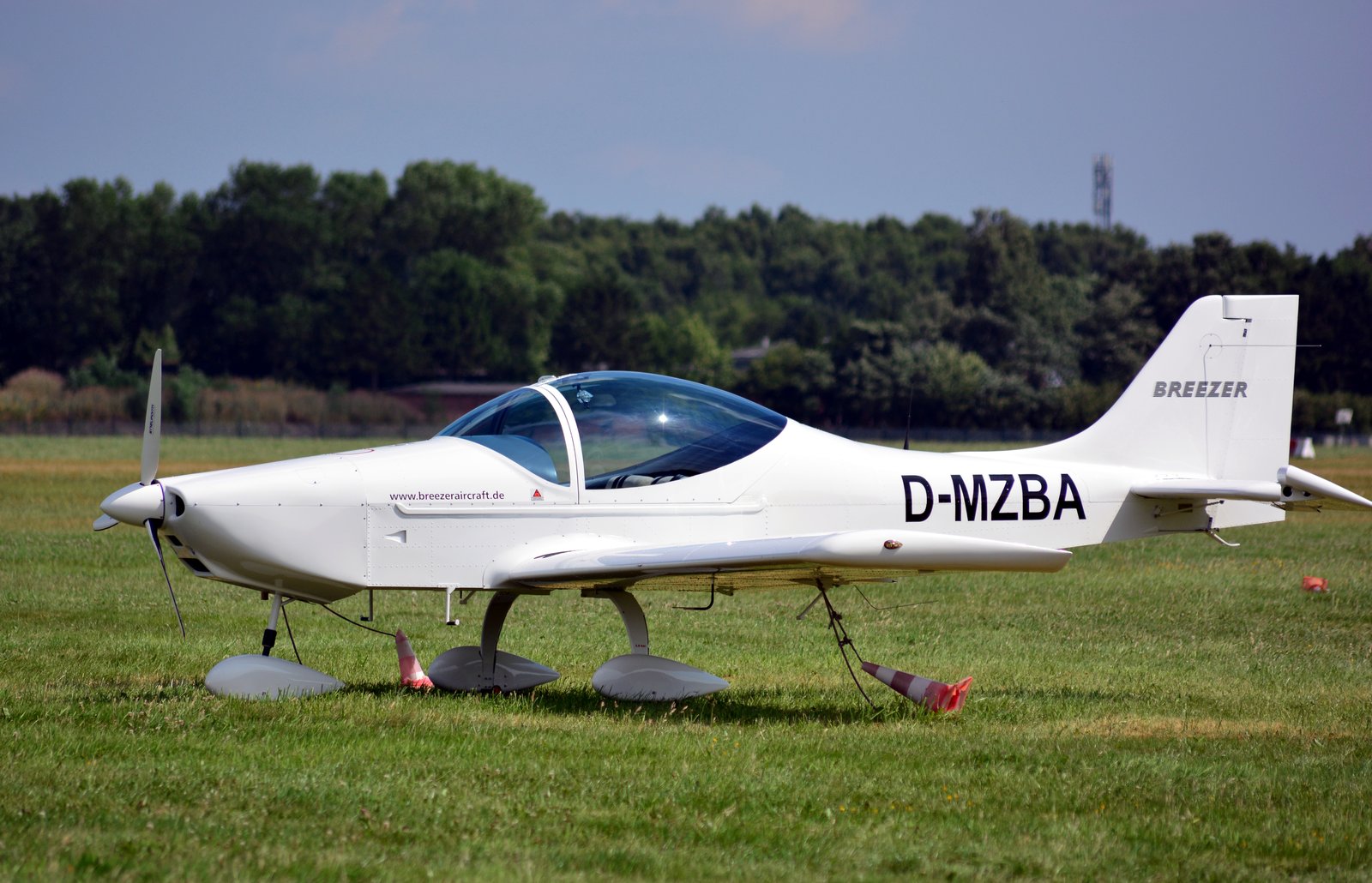
The Breezer emerged from designer Ralf Magnussen's mid-1990s vision in North Friesland, Germany, to create a robust, everyday ultralight that combined the superior characteristics of existing models. Unlike the composite construction common in ultralight aircraft, Magnussen chose riveted aluminum construction with composites limited to fairings and landing gear components. This decision reflected his emphasis on durability and repairability over weight savings.
The prototype D-MOOV was exhibited unflown at Aero '99 Friedrichshafen in April 1999 before completing its first flight in December 1999. Initial testing revealed the need for design refinements, particularly the replacement of the original castoring nosewheel with a steerable version after one year of prototype evaluation.
Manufacturing Evolution
Aerostyle Ultraleicht Flugzeuge began informal manufacturing in 1999 in northern Germany, with formal establishment in Bredstedt. The company operated through the early 2000s before transitioning to Breezer Aircraft GmbH in 2006. Production moved to a dedicated factory in Kamenz, Germany, where manufacturing continues today.
By the end of 2002, the company had sold 10 kits and 25 complete aircraft. The first marketed version, the Experimental, entered production in 2002 following German certification in summer 2001. European aircraft registers recorded 77 Breezers by mid-2010, with company profiles indicating over 130 owners across all variants.
Technical Innovation
The Breezer's design centered on the reliable Rotax 912 series engine, typically the 912 ULS producing 73.5 to 100 horsepower. This four-cylinder, horizontally opposed, air- and liquid-cooled powerplant provided the reliability essential for everyday ultralight operations while maintaining low fuel consumption of 17 liters per hour.
The aircraft featured a low constant-chord wing with NACA 4414 airfoil section and a distinctive sweptback fin. The wingspan of 8.6 meters was later reduced to 8.03 meters in the short-span C variant. Low-speed flaps enhanced lift characteristics for improved short-field performance.
Certification Achievements
The Breezer achieved multiple significant certifications that expanded its market reach. German ultralight certification came in summer 2001, followed by American light-sport aircraft approval in 2005. This LSA certification opened the crucial American market, with at least seven aircraft meeting US standards sold by 2008.
In January 2016, Breezer Aircraft achieved EASA CS-LSA certification for the B600 variant, representing the highest certification level for light sport aircraft in Europe. This certification validated the aircraft's engineering standards and manufacturing quality.
Variant Development
The original Experimental version gave way to multiple specialized variants. The Breezer Club was optimized for training operations and featured a ballistic parachute system for enhanced safety. The M400 variant incorporated a 100-horsepower Rotax engine and represented modern CAD/CAM design principles that eliminated the physical prototype development issues encountered with earlier models.
Design improvements included a strengthened canopy introduced in 2008 and various wingspan options. The B600 variant, certified under CS-LSA standards, featured the Rotax 912 ULS2 engine and represented the pinnacle of the design's evolution.
Propeller Integration
Breezer Aircraft expanded beyond airframe manufacturing by acquiring Neuform Composites' propeller line after that company ceased operations. The company retained Neuform's staff and facilities in Drensteinfurt to maintain certification and production of the three-blade ground and in-flight adjustable propellers. This vertical integration ensured continued availability of the Neuform T3 propellers that complemented the aircraft's performance characteristics.
Performance and Capabilities
The Breezer demonstrated impressive range capabilities, with the M400 variant achieving 530 nautical miles with its 76-liter fuel tank. The early Experimental version had an empty weight of 320 kilograms and maximum takeoff weight of 580 kilograms, reflecting the structural strength built into the aluminum construction.
The side-by-side seating configuration provided excellent visibility for both occupants and made the aircraft suitable for training operations. The steerable nosewheel, adopted after initial prototype testing, improved ground handling characteristics essential for everyday operations.
Current Status and Legacy
The Breezer continues in production today, with the prototype D-MOOV still operational in Bredstedt more than two decades after its first flight. The aircraft has appeared at multiple Aero Friedrichshafen exhibitions, including static displays in 1999, 2001, and 2009, demonstrating its continued relevance in the light aircraft market.
The Breezer's significance lies in proving that ultralight aircraft could achieve airline-level engineering standards while maintaining the simplicity and affordability that defined the category. Its successful navigation of multiple certification standards across continents established a template for modern light sport aircraft development.