
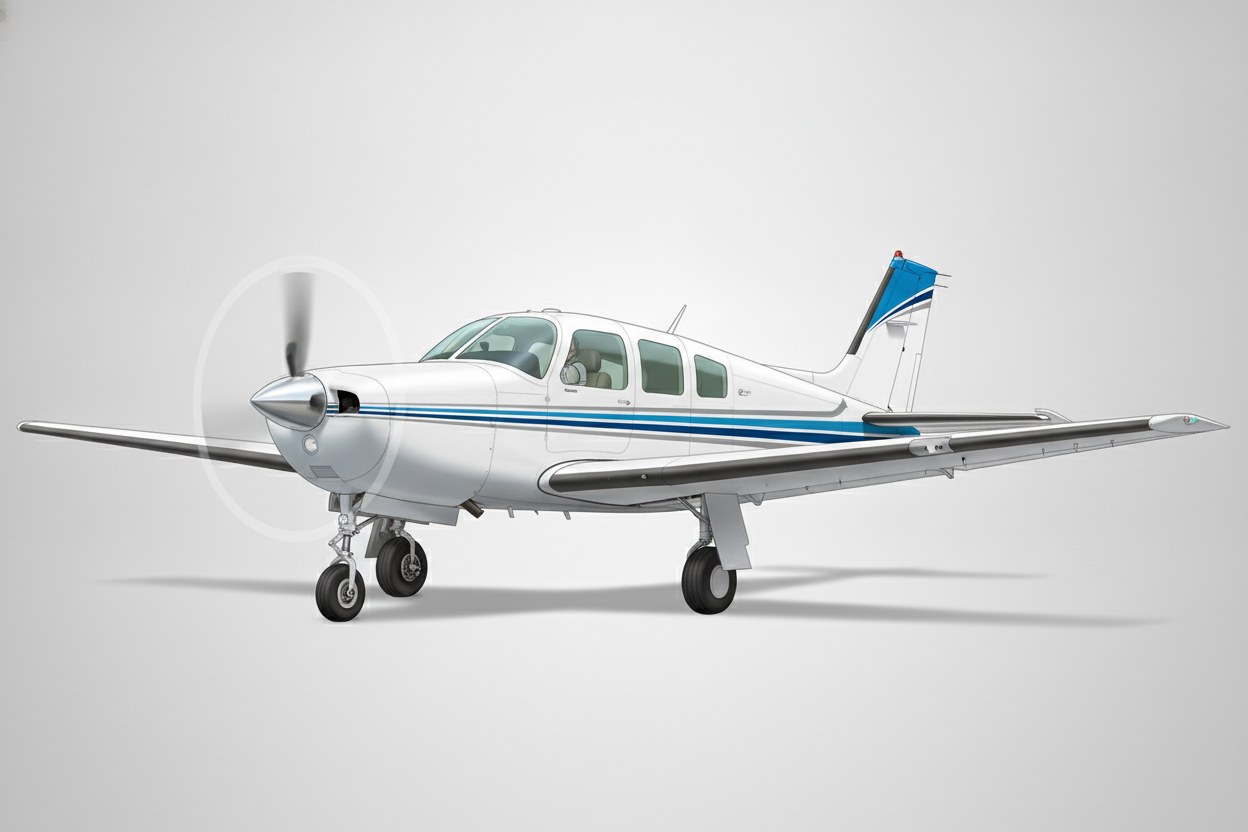
Evolution from the A36TC
The B36TC represented Beechcraft's commitment to continuous improvement within their flagship Bonanza series. When the company replaced the A36TC model in 1982, they incorporated the longer wingspan from their successful Baron twin-engine aircraft onto the proven Model 36 fuselage. This engineering decision increased fuel capacity by 28 gallons compared to its predecessor, extending the aircraft's operational range and making it more competitive in the business aviation market.
Technical Refinements
Powered by Continental's TSIO-520 turbocharged engine, the B36TC delivered 325 horsepower while maintaining the service ceiling of 25,000 feet established by earlier turbocharged Bonanza variants. The turbocharging system allowed pilots to maintain sea-level power output at higher altitudes, providing consistent performance in thin air where naturally aspirated engines would lose significant power. The aircraft's retractable landing gear system and conventional tail design preserved the aerodynamic efficiency that had made the Bonanza family famous among general aviation pilots.
Beech Aircraft Corporation's Legacy
Founded in 1932 in Wichita, Kansas, Beech Aircraft Corporation had established itself as a premier manufacturer of high-performance general aviation aircraft by the time the B36TC entered production. The company's commitment to quality and innovation had made the Bonanza line the longest continuously produced aircraft series in aviation history, with production beginning in 1947. Through various ownership changes, including becoming part of Hawker Beechcraft and eventually Textron Aviation, the company maintained its reputation for building aircraft that combined performance with reliability.
Market Position and Utility
The B36TC served a specialized niche within general aviation, offering the only retractable-gear, single-engine, six-seat configuration in its class. This unique positioning made it particularly attractive to business operators and affluent private owners who needed to transport multiple passengers efficiently across long distances. The aircraft's wide double doors and extended cabin provided practical advantages over smaller Bonanza variants, while the turbocharged engine ensured consistent performance regardless of altitude or atmospheric conditions.
Pilot Perspective and Performance
Pilots appreciated the B36TC's combination of speed, climb performance, and high-altitude capabilities. The turbocharged Continental engine provided strong performance during climb and cruise phases, while the aircraft's aerodynamic design delivered respectable fuel efficiency for its power class. With its 102-gallon fuel capacity, the B36TC could undertake transcontinental flights with appropriate reserves, making it suitable for serious cross-country travel. The conventional tail design offered predictable handling characteristics that experienced Bonanza pilots found familiar and reassuring.
Production History and Market Impact
During its twenty-year production run from 1982 to 2002, Beechcraft built exactly 116 B36TC aircraft. This relatively modest production number reflected both the specialized nature of the turbocharged market and the aircraft's premium pricing within the Bonanza lineup. Each aircraft represented significant manufacturing investment, as the turbocharging system and associated engine modifications added complexity and cost compared to naturally aspirated variants.
End of an Era
The final B36TC rolled off the production line in 2002, marking the conclusion of turbocharged single-engine Bonanza production. Economic factors and changing market preferences led Beechcraft to discontinue the model, though the company continued producing naturally aspirated Bonanza variants. The decision reflected broader trends in general aviation, where buyers increasingly favored either high-performance turboprops or more economical normally aspirated engines over the complexity and maintenance requirements of turbocharged piston powerplants.
Contemporary Operations and Legacy
Today, B36TC aircraft remain active throughout the general aviation fleet, with many examples upgraded with modern avionics systems including GPS navigation and electronic flight displays. The aircraft's robust construction and proven powerplant ensure continued airworthiness for operators willing to maintain the turbocharged engine system properly. As vintage examples of Beechcraft's engineering excellence, well-maintained B36TC aircraft command strong resale values in the used aircraft market, testament to their enduring appeal among discerning pilots who value performance and prestige in equal measure.