
Service History
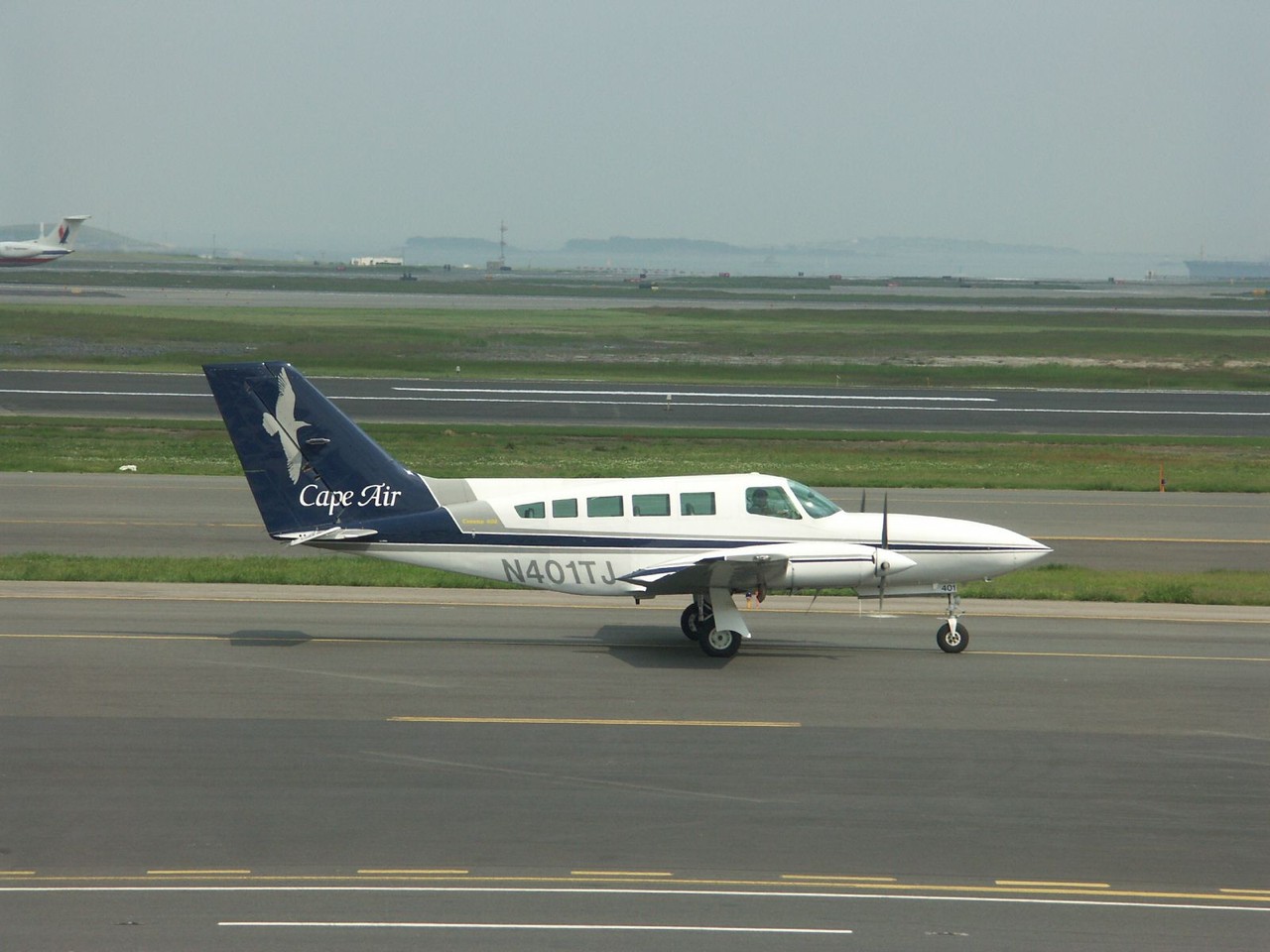
The Cessna 402 established itself as a cornerstone of regional aviation, with commuter airlines like Cape Air operating the type for decades on short-haul routes throughout New England and the Caribbean. Of the 2,853 total 402 aircraft produced between 1967 and 1985, hundreds remain in active service worldwide, testament to the design's durability and operational flexibility. The aircraft's removable seat configuration allowed operators to switch between passenger and cargo missions, making it particularly valuable for small airlines serving remote destinations.
The Manufacturer
Cessna Aircraft Company, founded in 1927 by Clyde Cessna, developed the 402 as a direct response to the problematic Cessna 411, which suffered from high accident rates and unreliable geared engines. Based in Wichita, Kansas, Cessna's engineering team created the 402 to provide a more reliable and cost-effective twin-engine solution. The company experienced peak production during the 1970s before facing industry-wide challenges in the 1980s due to product liability issues and economic downturns. Following acquisitions by General Dynamics in 1985 and Textron in 1992, the company continues today as Textron Aviation while maintaining the Cessna brand.
Engine & Technical Evolution
The original 402 series utilized Continental TSIO-520 turbocharged six-cylinder engines, producing 300 horsepower each in early variants and 325 horsepower in the final 402C model introduced in 1979. However, the most significant advancement came with turbine conversions, particularly the Turbo Star 402 developed by American Jet Industries beginning in 1969. The prototype first flew on June 10, 1970, powered by twin Allison 250-B17 turboprops, offering improved reliability and performance over the piston engines.
The 402C variant incorporated substantial improvements including a five-foot wingspan increase borrowed from the Cessna 414, hydraulic landing gear, and wet-wing fuel tanks holding 213 gallons. These modifications increased gross weight to 6,850 pounds while improving single-engine performance and reducing stall speeds.
Turbine Conversions
Two major turbine conversion programs extended the 402's operational life significantly. American Jet Industries' Turbo Star 402 received re-certification in 1974 with increased fuel capacity and higher gross weight, though rights were eventually sold to Scenic Airlines of Las Vegas in 1977. A more radical approach came from Hendrik Venter's DMI Engineering with the Falcon 402 conversion, which replaced both piston engines with a single Walter M601D turboprop mounted in an extended nose, using the former engine nacelles as additional fuel tanks.
These turbine modifications addressed the 402's primary limitation—modest performance relative to its power—while capitalizing on the airframe's proven reliability and spacious cabin. The Allison 250 series engines, widely used in helicopter applications, provided excellent power-to-weight ratios and simplified maintenance compared to the complex turbocharged Continental engines.
Production & Legacy
Cessna manufactured the 402 in four distinct variants: 322 original models, 125 402As with stretched noses for additional baggage, 1,384 402Bs featuring optional extended-range fuel tanks, and 1,022 of the improved 402Cs. The aircraft received FAA certification in January 1969, with production continuing until 1985 when general aviation manufacturing faced severe contraction.
The 402's success stemmed from its pragmatic design philosophy prioritizing versatility and operating economics over raw performance or cabin pressurization. Unlike many contemporary twins that emphasized speed, the 402 focused on payload flexibility, reasonable acquisition costs, and straightforward maintenance requirements. This approach proved prescient as the general aviation market shifted toward more economical operations during the economic challenges of the 1980s.
Today, the 402 remains a common sight at regional airports worldwide, particularly in cargo operations and specialized passenger services to short airfields. Cape Air's continued operation of the type demonstrates the aircraft's enduring utility in niche markets where larger regional jets cannot operate economically. The turbine conversions, while produced in limited numbers, showcase the fundamental soundness of the 402 airframe and its adaptability to evolving powerplant technology.