
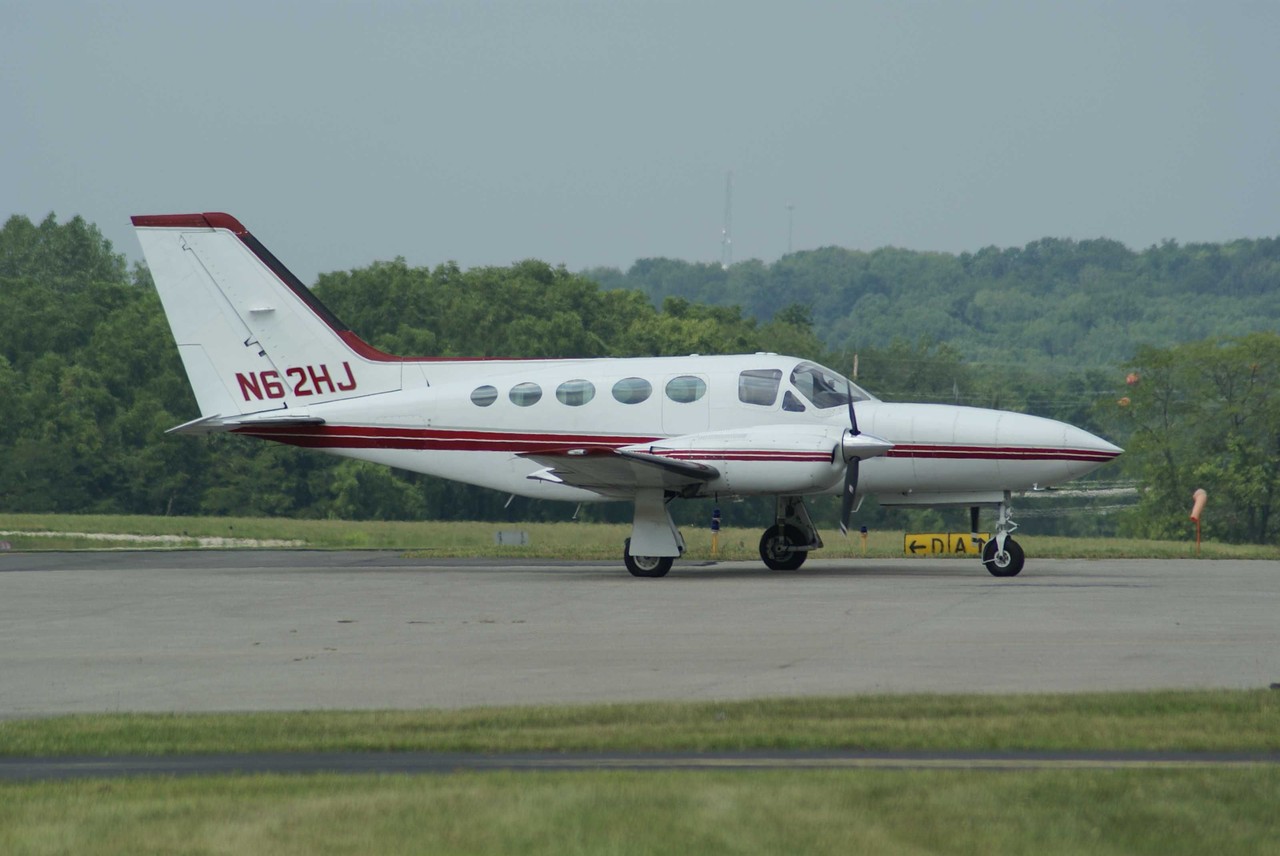
Development and Conversion Program
The Cessna 421T emerged from the aviation industry's growing recognition that turboprop engines offered superior reliability, reduced maintenance requirements, and better high-altitude performance compared to complex piston engines. While Cessna Aircraft Company never produced a factory turboprop version of the 421, several aftermarket conversion specialists recognized the potential of mating turbine power to the proven 421 airframe.
These conversions typically involved removing the original Continental GTSIO-520 engines and replacing them with Pratt & Whitney Canada PT6A series turboprops, the same engine family that powered Cessna's factory-built 425 Corsair. The modification required extensive engineering work, including new engine mounts, revised fuel systems, updated electrical systems, and modified engine nacelles to accommodate the different powerplant configuration.
Technical Configuration
The 421T retained the fundamental design characteristics that made the original 421 successful: a pressurized cabin capable of maintaining a sea-level environment up to approximately 8,000 feet, retractable tricycle landing gear, and accommodation for up to seven passengers plus one pilot. The aircraft's 41-foot wingspan and overall length of 36 feet provided a stable platform for the turboprop conversion.
Most 421T conversions utilized PT6A-112 or PT6A-135 engines, each producing between 500 and 680 shaft horsepower depending on the specific variant chosen. This represented a significant power increase over the original 375-horsepower piston engines, resulting in improved climb rates, higher service ceilings, and enhanced single-engine performance—a critical safety consideration for twin-engine aircraft operations.
The turboprop installation necessitated three-blade constant-speed propellers, typically Hartzell units designed specifically for PT6A applications. The conversion also required modification of the aircraft's instrument panel to accommodate turbine engine instrumentation, including torque meters, inter-turbine temperature gauges, and revised fuel flow indicators.
Performance Characteristics
The 421T conversion delivered substantial performance improvements over the piston-powered original. Typical cruise speeds increased to approximately 240 knots true airspeed at altitude, compared to roughly 220 knots for the piston version. More importantly, the turboprop engines provided significantly better performance at high altitudes, where the 421T could maintain cruise power at flight levels that severely limited piston engine output.
Service ceiling improved to approximately 30,000 feet, nearly 5,000 feet higher than most piston 421 variants could practically operate. This altitude capability proved particularly valuable for weather avoidance and improved fuel efficiency on longer flights. Range with typical fuel loads extended to approximately 1,200 nautical miles, though specific performance varied depending on the conversion specifications and operating conditions.
Operational Advantages
Pilots who transitioned from piston 421s to turboprop conversions consistently praised the reduced workload and improved reliability of turbine power. The PT6A engines eliminated the complex mixture controls, cowl flaps, and temperature management challenges inherent in high-performance piston engines. Cold weather operations became significantly more reliable, as turbine engines typically start more easily in low temperatures and require less warm-up time.
Maintenance intervals for turbine engines generally exceeded those of piston powerplants, particularly for the hot-section inspections that replaced traditional overhauls. However, when maintenance was required, turbine work typically demanded specialized facilities and higher costs per hour, though the extended intervals often resulted in lower overall maintenance expenses.
Market Position and Legacy
The 421T conversions filled a specific niche in the general aviation market, offering turbine reliability and performance in an airframe that many pilots already understood and appreciated. The conversion cost, typically exceeding $400,000 per aircraft in 1980s dollars, meant that most 421T aircraft were operated by businesses or individuals requiring maximum utility from their aviation investment.
These conversions demonstrated the viability of turboprop power in the mid-size cabin-class twin market, helping to establish demand for factory-built aircraft like the Cessna 425 Corsair and later the Piper Cheyenne series. While exact production numbers remain unclear due to the aftermarket nature of most conversions, the 421T proved that the fundamental 421 design was robust enough to handle significantly more power while maintaining its reputation for solid handling characteristics.
Today, surviving 421T aircraft remain in service primarily in corporate and charter operations, where their combination of turbine reliability, pressurized comfort, and reasonable operating costs continues to provide value for operators requiring dependable transportation in challenging operating environments.