
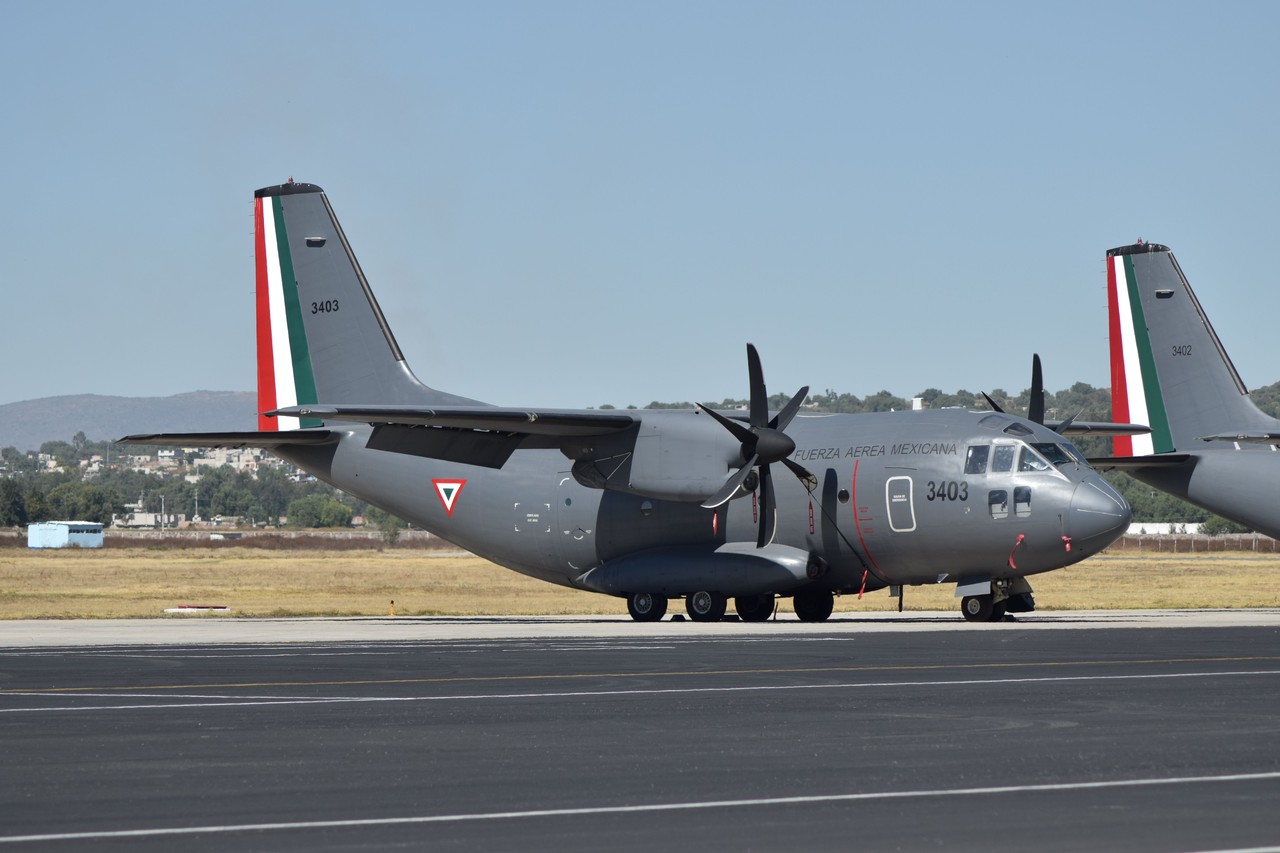
Service History
The C-27J Spartan has established itself as the premier medium-lift tactical transport for air forces requiring capabilities between smaller utility aircraft and larger strategic transports like the C-130. Since entering service with the Italian Air Force in 2006, the aircraft has been adopted by 15 nations with confirmed orders totaling at least 101 aircraft, though some sources indicate production exceeded 115 units by 2020. The type fills a critical operational gap, providing C-130-like cargo capacity while accessing shorter, unprepared airstrips that larger aircraft cannot reach.
Operators span four continents, with the largest fleets serving Italy (12 plus 3 MC-27J variants), the United States (21), Australia (10), and Greece (8). Romania became an early adopter, receiving its first two aircraft on April 12, 2010, while Slovakia represents one of the most recent operators, taking delivery of its first Spartan in October 2017.
Operational History
While the C-27J has not participated in major conventional warfare, it serves extensively in humanitarian, peacekeeping, and special operations roles. The Italian Air Force developed the MC-27J "Praetorian" special operations variant, which first flew on March 25, 2014, with three aircraft converted by 2016. This variant incorporates advanced sensors and equipment for intelligence, surveillance, and reconnaissance missions.
The aircraft's versatility allows rapid reconfiguration between roles: standard cargo transport, troop carrier for 36 soldiers, medical evacuation platform accommodating 18 stretchers, or VIP transport. Its ability to operate from semi-prepared strips as short as 500 meters makes it invaluable for delivering aid and supplies to remote locations during natural disasters and humanitarian crises.
The Manufacturer
Alenia Aeronautica developed the C-27J as an extensively modernized derivative of its earlier G.222 transport, which first flew on July 18, 1970. The company's aviation heritage traces to 1969 when Aeritalia formed through the merger of Fiat's aviation division with other Italian aerospace firms. Aeritalia evolved into Alenia Aeronautica during the 1990s, later becoming Alenia Aermacchi in 2012 under Finmeccanica.
In 1997, Alenia partnered with Lockheed Martin to establish Lockheed Martin Alenia Tactical Transport Systems (LMATTS) specifically for C-27J development, combining Italian airframe expertise with American avionics and propulsion technology. Today, the company operates as Leonardo's Aircraft Division following Finmeccanica's 2017 rebranding to Leonardo S.p.A.
The partnership proved crucial for the aircraft's success, particularly in securing the massive U.S. Joint Cargo Aircraft contract worth $2.04 billion, originally intended for 78 aircraft before budget cuts reduced the order to 21 units.
Engine & Technical Innovation
The C-27J's transformation from its G.222 predecessor centered on adopting the Rolls-Royce AE 2100D3 turboprop engines shared with the C-130J Super Hercules. Each engine drives a Dowty R391 six-blade propeller, delivering 35 percent greater range and 15 percent higher cruise speed compared to the G.222's General Electric T64G engines.
The aircraft features a fully digital glass cockpit derived from the C-130J, with MIL-STD-1553 avionics architecture ensuring compatibility with NATO standard systems. The crew consists of two pilots and a loadmaster, though the aircraft can be operated by a two-person crew when required.
Design innovations include a rear cargo ramp enabling rapid loading of vehicles, palletized cargo, or personnel, plus the ability to airdrop supplies or paratroopers through both the ramp and side doors simultaneously.
Performance Characteristics
Pilots appreciate the C-27J's forgiving handling characteristics and robust performance in challenging conditions. The aircraft achieves a service ceiling of 9,150 meters and maintains the short takeoff and landing capabilities essential for tactical operations. Its maximum speed of 583 kilometers per hour provides rapid response capability while maintaining fuel efficiency for extended missions.
The high-wing configuration and powerful engines enable operations from unpaved strips, grass fields, and other austere locations where larger transports cannot venture. This capability has proven invaluable during disaster relief operations and military deployments to forward operating bases.
Production Legacy
Manufacturing occurred primarily at Alenia's Italian facilities, with U.S. aircraft assembled at Cecil Field, Florida, under L-3 Communications' prime contractor role for the Joint Cargo Aircraft program. The U.S. program experienced significant turbulence, with the Air Force retiring its C-27Js early due to 2012 budget cuts, transferring the aircraft to the Army and Coast Guard instead.
Despite the U.S. program's truncation, international sales continued steadily. Australia completed its ten-aircraft delivery program in April 2018, while ongoing modernization efforts include winglet installations and avionics upgrades that maintain the type's relevance into the 2020s.
The C-27J's success demonstrates the viability of international aerospace collaboration, proving that combining complementary national expertise can produce aircraft that neither partner could have developed independently. More than two decades after its first flight, the Spartan continues production, validating the original concept of a medium transport that bridges the gap between utility aircraft and strategic airlifters.