
Service Dominance
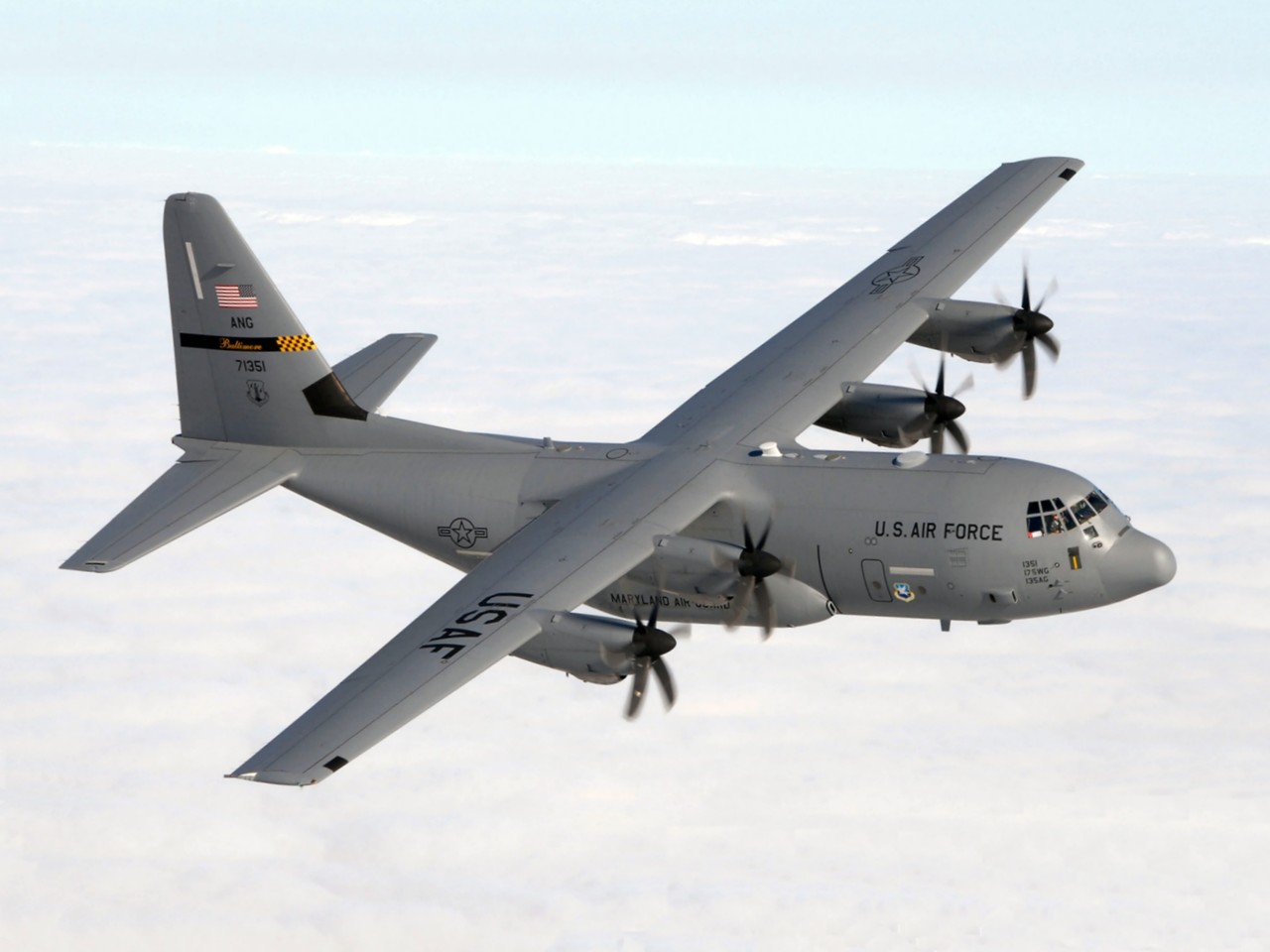
The C-130J Super Hercules has established itself as the backbone of tactical airlift operations worldwide, operating in more than 20 countries since 1999. The United States Air Force received its first operational C-130J in February 1999, followed by the Royal Air Force introducing the type as the Hercules C4 and C5 later that year. The Canadian Forces began operating 17 CC-130J aircraft starting in June 2010, completing deliveries by May 2012. Beyond these primary operators, the Royal Australian Air Force and numerous other nations have integrated the Super Hercules into their transport fleets, with deliveries continuing as recently as August 2024 to new customers.
The aircraft's versatility extends across multiple mission profiles, from standard cargo and personnel transport to specialized roles including medical evacuation, airdrop operations, and reconnaissance missions. Variants like the AC-130J gunship and HC-130J search-and-rescue configuration demonstrate the platform's adaptability to diverse operational requirements.
Combat Operations
The C-130J has proven its capabilities in major conflicts including operations in Afghanistan beginning in 2001, Iraq War missions, and ongoing counter-terrorism operations worldwide. As a tactical transport, the aircraft excels in forward deployment scenarios, capable of operating from austere airfields with takeoff distances as short as 800 feet. This capability allows military forces to establish supply lines and troop movements in contested or underdeveloped areas where conventional transport aircraft cannot operate.
Military variants include the standard C-130J, the stretched C-130J-30 with extended fuselage capacity, the KC-130J aerial refueling tanker, and specialized versions tailored to specific national requirements. The aircraft's ability to carry 128 fully equipped paratroopers or serve as an 18-stretcher medical evacuation platform makes it invaluable for both combat and humanitarian missions.
Manufacturing Heritage
Lockheed Martin's production of the C-130J continues a legacy that began when the original Lockheed Aircraft Corporation won the U.S. Air Force transport contract on July 2, 1951. The Lockheed-Georgia Company facility in Marietta, Georgia, has remained the sole production site for all C-130 variants since 1954, making it the longest continuous military aircraft production program in history. When Lockheed merged with Martin Marietta in 1995 to form Lockheed Martin, the new corporation inherited not only the C-130 program but also the engineering expertise from companies with roots dating to 1912.
The original Lockheed Aircraft Corporation, founded by brothers Allan and Malcolm Loughead, had established itself as a premier military aviation manufacturer through aircraft like the P-38 Lightning fighter. This heritage of military aircraft development provided the foundation for what would become the most successful tactical transport family in aviation history, with over 2,500 C-130 variants built across all models by 2015.
Advanced Powerplant Technology
The C-130J's performance advantages stem largely from its four Rolls-Royce AE 2100D3 turboprop engines, each generating approximately 4,700 shaft horsepower. These powerplants, which entered service with the C-130J in 1999, represent a significant advancement over the Allison T56 engines that powered earlier C-130 variants. The AE 2100D3 engines feature electronic controls that improve both reliability and fuel efficiency compared to their predecessors.
The engines drive six-bladed composite propellers, an increase from the four-bladed propellers of earlier Hercules models. This configuration initially created low-speed stall tendencies due to the increased power and modified airflow, but Lockheed Martin resolved these issues through aerodynamic modifications before the aircraft received FAA certification in September 1998 following 4,000 hours of flight testing.
Operational Excellence
Pilots appreciate the C-130J's advanced two-crew glass cockpit, which reduces crew requirements from the three or four personnel needed for earlier C-130 variants. The digital avionics suite enhances situational awareness and reduces pilot workload during complex missions. With a service ceiling of 28,000 feet and maximum speed of 417 mph, the Super Hercules offers improved performance over legacy models while maintaining the short-field capabilities that define the C-130 family.
The aircraft's range of 2,400 miles with a 35,000-pound payload enables long-distance deployment without requiring intermediate stops, a crucial capability for rapid response missions. The Royal Air Force has documented the C-130 family's exceptional safety record, reporting only one loss per 250,000 flight hours, making it among the safest military aircraft types in service.
Production Legacy
With more than 300 C-130J Super Hercules aircraft delivered by 2024 and production continuing, the type represents the current pinnacle of tactical transport development. The broader C-130 family's production span from 1954 to present establishes it as the longest continuously manufactured military aircraft in history. While the earlier civil L-100 variant saw limited commercial success with 115 aircraft built between 1964 and 1987, the military versions have dominated their market segment across seven decades of production. Today's C-130J continues this tradition, operating in environments ranging from Antarctic research support to combat zones, ensuring the Hercules legacy will extend well into the future.