
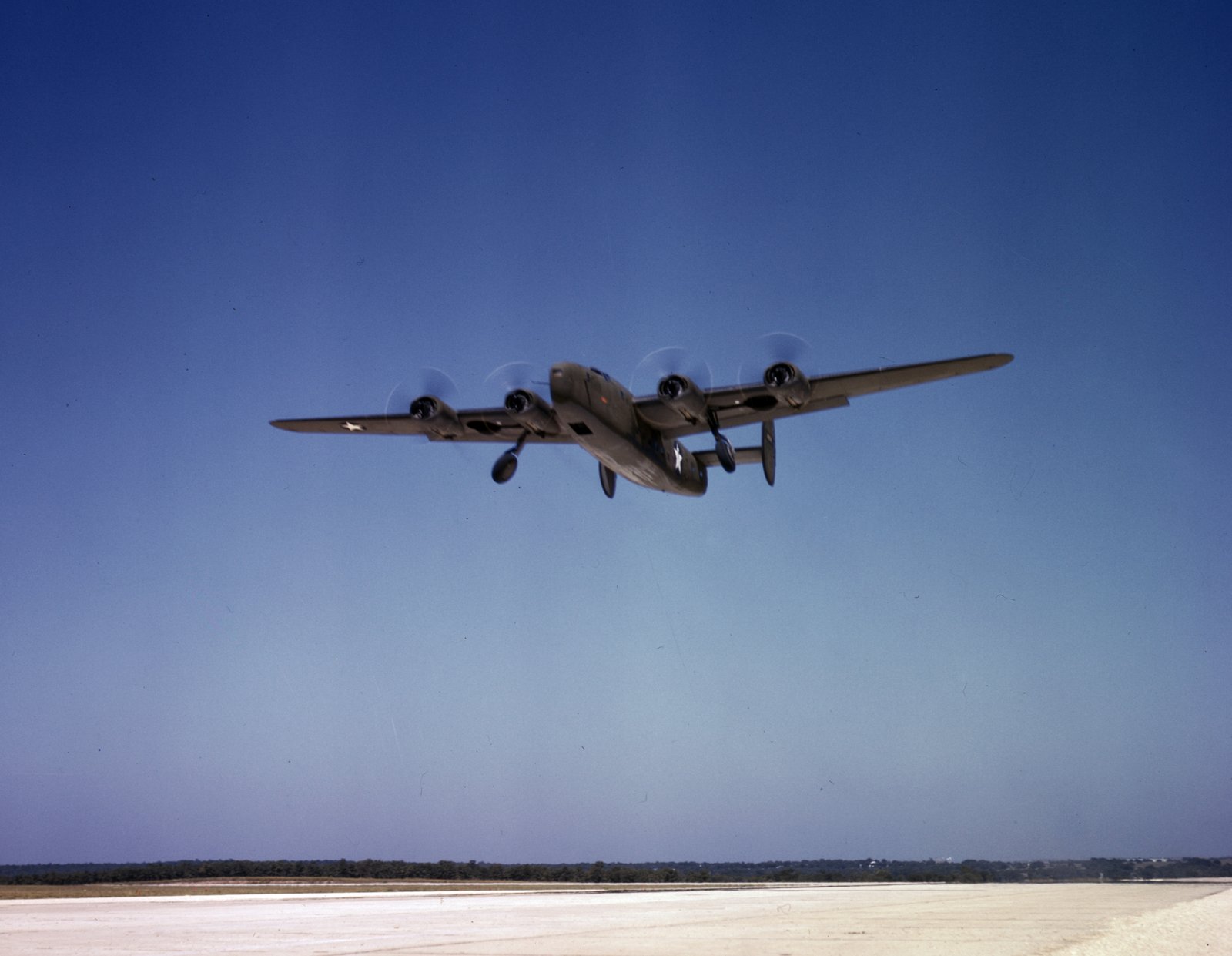
The Consolidated C-87 Liberator Express was a specialized transport adaptation of the B-24 Liberator heavy bomber, designed to provide the United States Army Air Forces (USAAF) with a heavy-lift capability for personnel and cargo over vast distances. The foundational design work for the B-24 began at Consolidated Aircraft in January 1939, with the original prototype taking flight on December 29, 1939. The C-87 variant emerged as a necessity for long-range logistics during World War II.
Production of the C-87 took place at Consolidated's plant in Fort Worth, Texas, between September 2, 1942, and August 10, 1944. A total of 287 aircraft were produced. The manufacturing process began with the conversion of 73 existing B-24D airframes remaining at the Fort Worth facility, while the subsequent aircraft were built specifically as transports. The aircraft was typically operated by a crew of four, consisting of a commander, co-pilot, navigator, and radio operator.
In service, the C-87 played a critical role in the China-Burma-India theater. It was utilized in the hazardous "Hump" operations, transporting ordnance, supplies, and personnel between Assam, India, and China. Additionally, the aircraft operated on the "Sky Train" transoceanic routes, connecting the United States and the Caribbean with Brazil, North Africa, and Europe. A specialized VIP version, the C-87A, featured a refined interior with 16 passenger seats and the option for five berths. One notable C-87A, serial number 41-24159 and named "Guess Where II," served as the first "Air Force One" for President Franklin D. Roosevelt.
Despite its utility, the C-87 suffered from significant operational flaws. Crews reported frequent fuel system leaks, poor engine performance, and inadequate cockpit equipment. Furthermore, the anti-icing systems proved ineffective during the extreme conditions encountered over the Himalayas, leading to reports of in-air fires. Due to these reliability issues, the USAAF eventually replaced the C-87 in most transport roles with the more dependable Douglas C-54 Skymaster.