
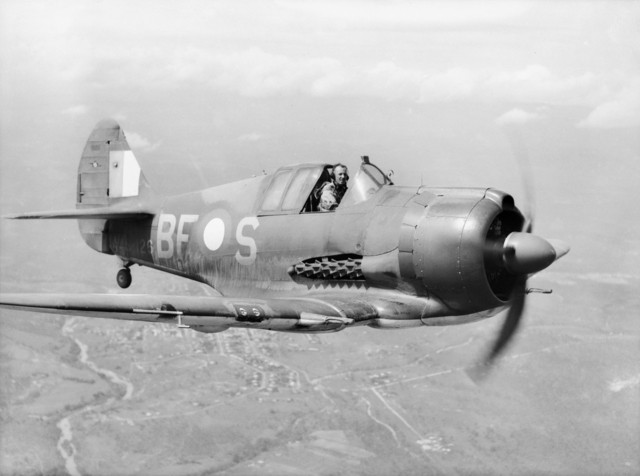
Emergency Fighter Development
The CA-19 emerged from one of the most remarkable aircraft development programs in aviation history. When the Japanese attack on Pearl Harbor thrust the Pacific into war on 10 December 1941, the Commonwealth Aircraft Corporation revived earlier proposals for a "Wirraway Interceptor" fighter. Under the direction of Fred David, a German-Jewish engineer who had fled Nazi Germany after working for Heinkel AG, the design team accomplished what was virtually impossible in wartime aircraft development: they completed the journey from drawing board to first flight in just five months.
The prototype A46-1 took to the skies on 29 May 1942, piloted by CAC test pilot Ken Frewin at Fishermans Bend. This extraordinary timeline was achieved through innovative engineering that maximized existing resources. David's team utilized the wing, tail assembly, undercarriage, and center section of the proven Wirraway trainer, combining these components with a new forward fuselage housing a more powerful engine. The result was Australia's first indigenous fighter, designed and built entirely within the Commonwealth.
Service History and Production
The CA-19 represented the culmination of an expanded production program that grew far beyond its original scope. The Australian War Cabinet initially authorized 105 CA-12 aircraft on 18 February 1942, but when the Commonwealth Aircraft Corporation encountered insurmountable difficulties developing the CAC Woomera twin-engine bomber project, the government extended Boomerang production to 250 total aircraft. This decision kept the Fishermans Bend factory operational until North American P-51 Mustang production could begin.
Production of the CA-19 variant spanned from 1942 to 1945, with exactly 49 aircraft completed as the final Boomerang variant. The last Boomerang ever manufactured, designated A46-249, rolled out of the Melbourne facility in February 1945. These aircraft joined their earlier CA-12 and CA-13 siblings in Royal Australian Air Force service throughout the Southwest Pacific Theater.
The Commonwealth Aircraft Corporation
The Commonwealth Aircraft Corporation established its manufacturing and testing facilities at Fishermans Bend, Melbourne, purchasing specialized tooling and equipment from manufacturers in both Britain and the United States. The company had been successfully producing the CAC Wirraway trainer aircraft since 1939, providing the foundation of experience and infrastructure that made the rapid Boomerang development possible.
CAC's engineers and production staff demonstrated remarkable adaptability in transitioning from trainer to fighter production. The company's ability to license-build the Pratt & Whitney R-1830 Twin Wasp engine at their Lidcombe, New South Wales facility proved crucial to the program's success, ensuring a reliable powerplant supply for both the Boomerang and Australian-built Beaufort bomber projects.
Engine and Performance
The CA-19 was powered by the license-built Pratt & Whitney R-1830 Twin Wasp, a proven radial piston engine that represented the most powerful powerplant available to Australian manufacturers at the time. While reliable, the Twin Wasp's limitations became apparent in operational service. The engine delivered insufficient power at altitude, resulting in the Boomerang proving slower than contemporary Allied and enemy fighters.
Despite these performance limitations, the Boomerang proved highly maneuverable and easy to handle. Test pilots Ken Frewin and RAAF pilot John Harper reported excellent handling characteristics during initial flight testing. The aircraft's maneuverability and the pilot's excellent visibility made it well-suited for close air support and reconnaissance missions rather than high-altitude interception.
Armament and Combat Role
The CA-19 carried a formidable armament package consisting of two 20mm Hispano-Suiza HS.404 cannons and four .303 caliber machine guns. This firepower, combined with the aircraft's maneuverability, made it effective in its primary role as a fighter-interceptor with the Royal Australian Air Force from 1943 to 1945.
The Boomerang served exclusively in the Southwest Pacific Theater, where its capabilities proved better suited to ground attack and reconnaissance missions than air-to-air combat. The aircraft's relatively low speed compared to contemporary fighters limited its effectiveness as a pure interceptor, but its rugged construction and reliable engine made it valuable for close support operations in the challenging Pacific environment.
Legacy and Preservation
The rapid withdrawal of Boomerang aircraft from RAAF service in 1945 marked the end of Australia's first fighter aircraft program. Many surviving aircraft met their fate at the scrap yards of Oakey, Queensland, as the RAAF transitioned to more advanced Allied fighters like the P-51 Mustang.
Today, the RAAF Museum preserves one Boomerang in its collection, while several examples in private hands undergo restoration to flying condition. The CA-19 and its Boomerang siblings represent a crucial chapter in Australian aviation history, demonstrating the nation's capacity for rapid industrial mobilization and indigenous aircraft design during its darkest hour in World War II. The program's achievement of producing a flyable fighter design in just three months remains one of the most remarkable accomplishments in wartime aircraft development.