
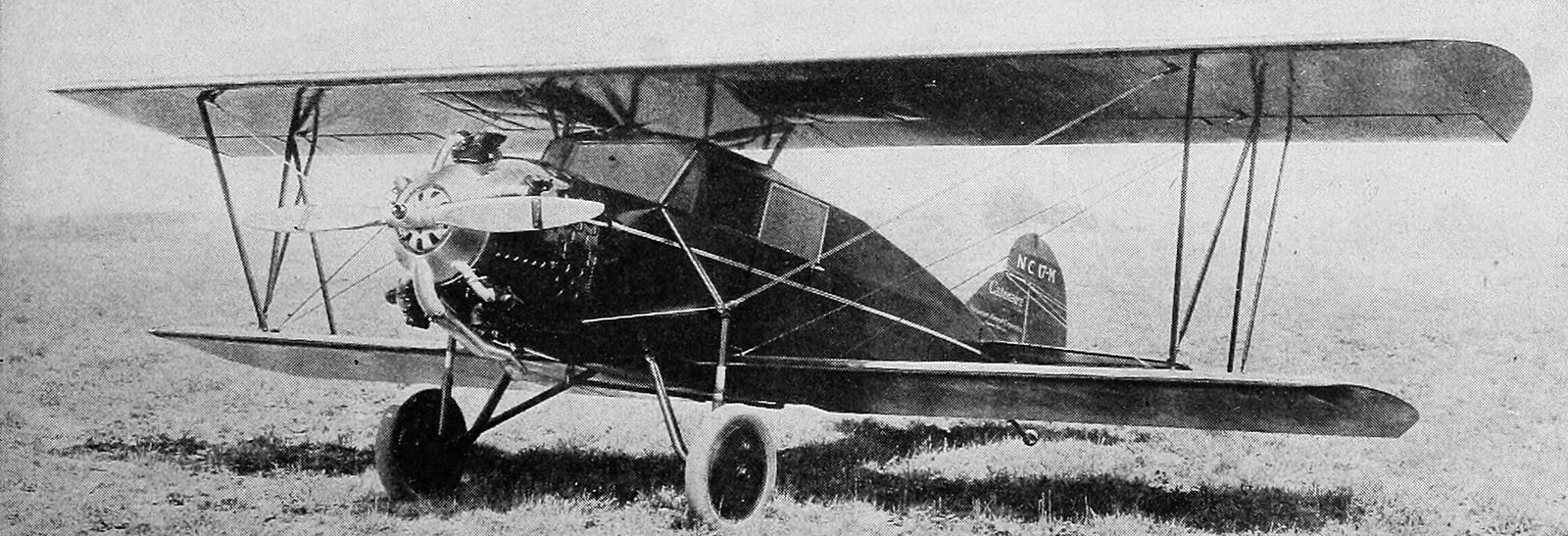
Early Personal Aviation Pioneer
The Paramount Cabinaire emerged during a transformative period in American aviation when manufacturers raced to develop practical aircraft for civilian use. Unlike the open-cockpit biplanes that dominated the skies of the 1920s, the Cabinaire offered passengers the comfort of an enclosed cabin, positioning it among the progressive designs that would define the future of personal aviation.
Design and Configuration
The Cabinaire featured a high-wing monoplane configuration that provided excellent stability and ground clearance—characteristics highly valued by pilots operating from unpaved airfields common in the era. The aircraft's 33-foot wingspan supported a relatively compact fuselage measuring 24 feet 7 inches in length and standing 9 feet tall. With an empty weight of 1,620 pounds, the Cabinaire struck a balance between structural integrity and operational efficiency.
The standard powerplant was the Wright J6 Model 540, a five-cylinder radial engine producing 165 horsepower. This reliable engine had proven itself across numerous aircraft types and provided the Cabinaire with dependable performance for cross-country flying. The combination earned the aircraft the designation Cabinaire 165, reflecting its engine's power output.
Production Variants
Paramount offered the Cabinaire in multiple configurations to appeal to different market segments. While the three-passenger Cabinaire 165 represented the primary production model, the company also manufactured the Cabinaire 110, which featured a 110-horsepower Warner Scarab engine and expanded seating for four passengers. This variant demonstrated Paramount's attempt to capture both the performance-oriented and capacity-focused segments of the emerging personal aircraft market.
Production records indicate that Paramount built at least six aircraft, including one four-seater with the Warner engine and five three-seaters with the Wright powerplant. Construction number 7, completed in 1929, exemplified the standard configuration with its original Wright Model 540 engine and later received the registration N17M.
The Manufacturer's Brief Existence
The Paramount company operated during aviation's experimental period when numerous small manufacturers attempted to establish themselves in the rapidly evolving aircraft industry. Like many contemporaries, Paramount faced the dual challenges of limited capital and an uncertain market for personal aircraft. The company's production ceased by 1932, making the Cabinaire a product of aviation's pioneering era rather than its commercial maturation.
This brief operational period reflected broader industry dynamics as the Great Depression curtailed demand for personal aircraft and forced consolidation among manufacturers. Only companies with substantial resources or military contracts survived the economic downturn that eliminated dozens of promising aircraft designs and their creators.
Operational Characteristics
The Cabinaire's high-wing design provided inherent stability that made it suitable for pilots with limited experience—a crucial consideration during an era when pilot training was less standardized than today. The enclosed cabin protected passengers from weather and wind, representing a significant comfort improvement over open-cockpit alternatives that exposed occupants to the elements.
The Wright J6 engine's reputation for reliability made the Cabinaire attractive to pilots planning extended cross-country flights. This five-cylinder radial had powered numerous successful aircraft designs and offered maintenance simplicity that proved valuable when operating from remote airfields with limited support facilities.
Legacy and Preservation
The Cabinaire's brief production run and the small number manufactured have made surviving examples exceptionally rare. Construction number 7, preserved at the Golden Wings Flying Museum, represents a tangible link to aviation's formative years when innovative manufacturers like Paramount pursued their vision of accessible personal flight.
This preserved aircraft serves as a testament to the entrepreneurial spirit that characterized American aviation in the late 1920s. During this period, manufacturers constantly experimented with new configurations and powerplant combinations, seeking the optimal balance of performance, comfort, and affordability that would unlock the personal aircraft market.
Historical Significance
The Paramount Cabinaire occupies a unique position in aviation history as representative of the transition from aviation's barnstorming era to its commercial development. While the aircraft never achieved widespread adoption, its enclosed cabin design and focus on passenger comfort anticipated features that would become standard in later general aviation aircraft.
The Cabinaire's story illustrates both the innovation and uncertainty that defined early aviation manufacturing. Companies like Paramount demonstrated remarkable creativity in pursuing new markets, even as economic realities limited their ability to sustain production and compete with larger, better-capitalized manufacturers who would ultimately dominate the industry.