
Development and Design Origins
The Bush Caddy R-120 emerged from the successful foundation established by Jean Eude Potvin, who founded Club Aeronautique Delisle Incorporated (CADI) as a flight training operation in Lac Saint-Jean, Quebec. Potvin's original CADI R-80 first flew during the first half of 1993, with refined kits entering the market in 1994. The R-120 represented a significant structural advancement, introduced at AirVenture Oshkosh in July 2001 to accommodate larger engines and higher gross weights than its predecessor.
Manufacturing Evolution
Production of the R-120 began under Canadian Light Aircraft Sales and Service (CLASS), the evolved successor to CADI, operating initially from Saint-Lazare, Quebec, before relocating to Les Cedres, Quebec. The aircraft family achieved notable early success, with nearly 100 aircraft across all Bushcaddy variants sold by the end of 2002, including 66 actively flying examples. In 2011, Bushcaddy acquired the manufacturing rights from CLASS and relocated production to Lachute, Quebec, subsequently moving operations to Cornwall Regional Airport in Summerstown, Ontario.
Technical Innovation
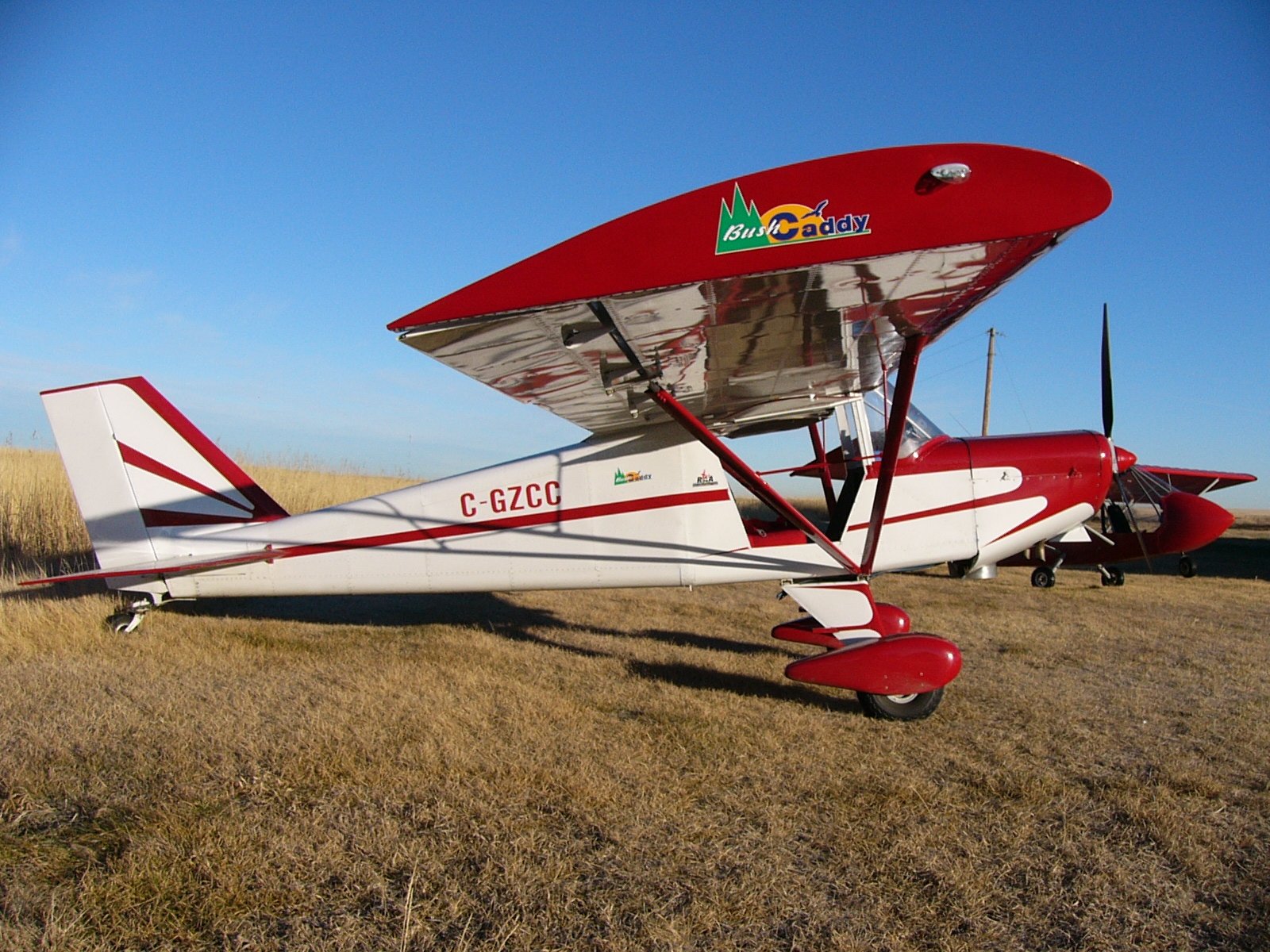
Potvin's design philosophy emphasized practical bush flying capabilities through robust construction methods. The R-120 features a two-spar wing incorporating a modified Piper Super Cub airfoil with a flat lower surface, supported by twin 7.6-centimeter extruded aluminum bracing struts and composite wingtips. The fuselage employs all-metal construction using 6061-T6 aluminum sheet over a welded aluminum square tube framework, creating a conventional semi-monocoque tail boom configuration.
The non-tapered planform wings utilize 6061-T6 ribs and spars with a NACA 4413 modified airfoil section, providing predictable handling characteristics essential for bush operations. Controls feature a distinctive central Y-configuration control stick, while flaps are available as optional equipment for the R-120 variant.
Powerplant and Performance
The standard powerplant consists of a Rotax 912ULS four-cylinder, liquid and air-cooled, four-stroke engine producing 100 horsepower. The design accommodates engines ranging from 48.5 to 89.5 kilowatts (65 to 120 horsepower), with the 73.5-kilowatt Rotax 912 ULS as the standard installation and engines up to 89.5 kilowatts available as options.
Performance specifications include a range of 500 nautical miles and endurance exceeding four hours. Standard fuel capacity measures 100 liters, expandable to 155 liters with optional tankage. The aircraft's versatility extends to seasonal operations through approved float and ski installations, enhancing its appeal for Canadian bush flying operations.
Market Position and Pricing
The R-120 targeted the amateur-built aircraft market with construction times estimated at 1,000 hours from the factory kit. Fast-build options reduced assembly time by providing completed wing and fuselage internal structures requiring only covering installation. In 2003, basic kit pricing reached US$15,089 excluding engine, propeller, and interior finishing, while quick-built kits commanded US$32,000. Factory-finished aircraft were available for US$45,500 in 2002, with current BushCaddy LSA variants priced at $89,900 Canadian.
Safety Considerations
The Aviation Safety Network documented multiple incidents involving Bushcaddy R-80 and R-120 aircraft from 1997 through 2025. A notable accident occurred on August 20, 2019, when CLASS BushCaddy R-120 registration C-GSDX sustained substantial damage at New Germany Lake, Lunenburg County, Nova Scotia. Transport Canada's Aviation Safety Letter addressed documented wing spar failures on BushCaddy aircraft in their January-February 2010 edition, highlighting structural concerns within the fleet.
Continuing Legacy
The R-120 established the foundation for an expanding family of kit aircraft that remains in active production today. The design's adaptability across multiple engine options, landing gear configurations, and construction methods has sustained its market presence for over two decades. Current production continues under the Bushcaddy name, with the aircraft serving recreational pilots and bush flying operators throughout North America, maintaining Jean Eude Potvin's original vision of accessible, versatile aviation for the amateur-built market.