
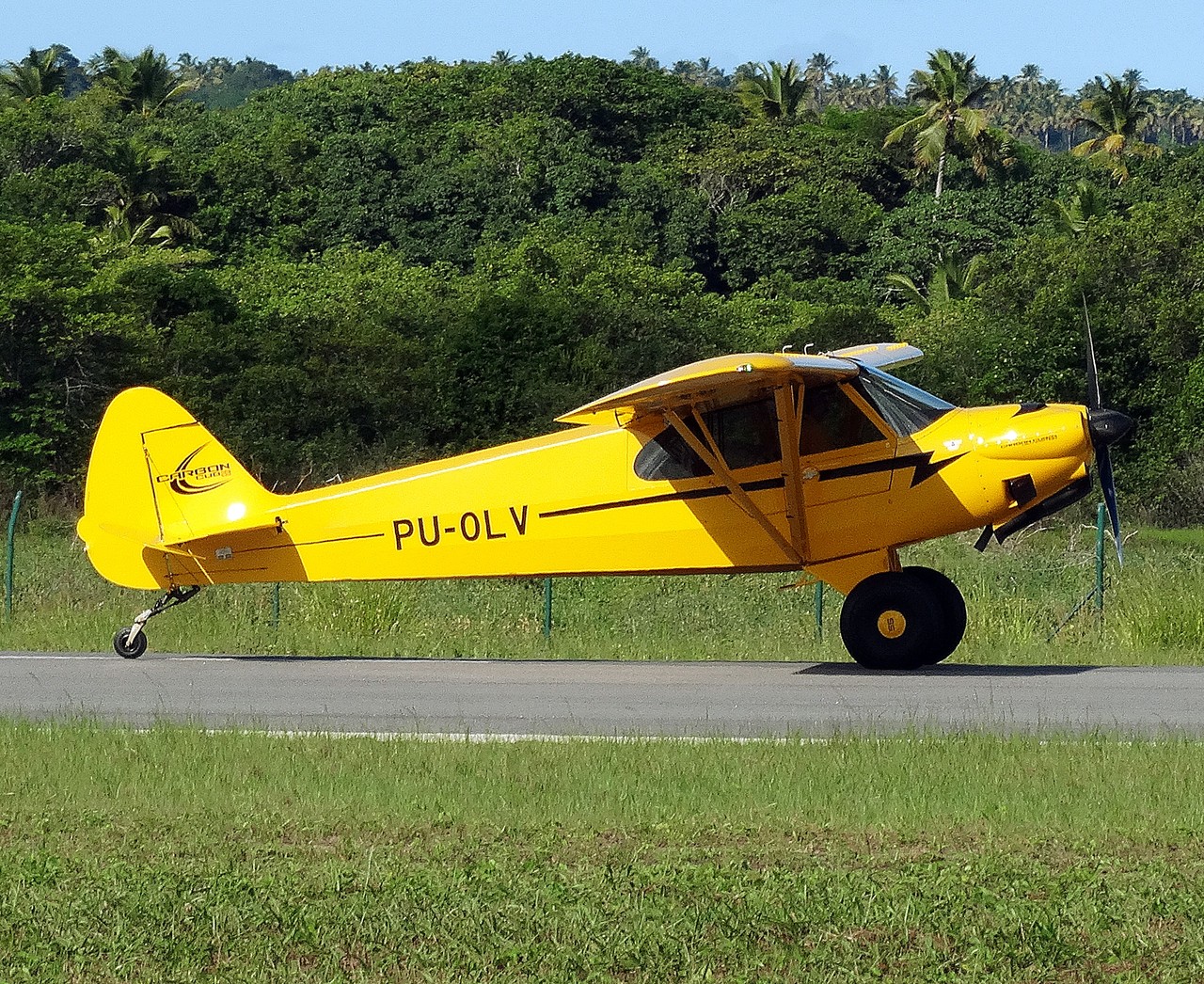
Service History
The Carbon Cub transformed backcountry flying by offering modern LSA compliance without sacrificing the rugged capabilities that made Super Cubs legendary. Since entering production in 2009, the aircraft has dominated the premium bush plane market, with CubCrafters celebrating its 10-year anniversary in 2019 at Cubfest in Yakima. The type gained significant recognition when AVweb named it "Airplane of the Year" for 2015 in January 2016. In 2025, a Carbon Cub achieved a remarkable altitude record of 37,608 feet off the California coast, demonstrating the design's exceptional performance envelope far beyond typical bush flying missions.
The Manufacturer
CubCrafters Inc. was founded by Jim Richmond shortly after 1980, following an inspirational trip to Alaska where he witnessed Piper PA-18 Super Cubs in their natural element. Richmond established the company as a heavy maintenance and overhaul facility for classic Piper aircraft, building expertise that would prove invaluable for future developments. The transition to manufacturing began in 1998 with the Piper/CubCrafters PA-18 under the FAA's Spare & Surplus Rule. CubCrafters earned its FAA Part 21 Production Certificate and first Type Certificate in 2004 for the Top Cub (CC18-180). In 2015, the company sold the Top Cub type certificate to Liaoning Cub Aircraft Corporation for the Chinese market, focusing resources on Carbon Cub development and newer designs like the XCub (certified 2016) and NX Cub (2021).
Engine & Technical Details
The CC-11 Carbon Cub employs the CubCrafters CC340 engine, a heavily modified 180-horsepower version of the Lycoming O-320 developed in partnership with Engine Components International (ECi). This inline piston powerplant features dual electronic ignition, ECi O-320 cylinders, and drives a 2-bladed CATTO composite propeller. For LSA compliance, power output is restricted to 5 minutes at maximum, yet the engine delivers an impressive climb rate of 2,100 feet per minute with a thrust-to-weight ratio of 7.33 pounds per horsepower.
The airframe showcases extensive carbon fiber construction, including a 6-pound cowling and carbon spinner that contribute to significant weight savings. Richmond's design team utilized computer-aided design and two decades of Super Cub improvement experience, incorporating chrome-molybdenum steel tubing for strength while achieving a 300-pound weight reduction compared to the original Piper PA-18. The wing features a USA35(B) airfoil optimized for low-speed performance, enhanced by vortex generators that improve handling characteristics.
Pilot Perspective
Pilots praise the Carbon Cub for combining modern comfort with traditional Cub flying qualities. The spacious cockpit addresses cramped conditions common in vintage Super Cubs, while maintaining the exceptional short-field performance that defines the type. With a stall speed of just 27 knots with flaps deployed (35 knots clean), the aircraft excels in confined areas where other planes cannot operate. Maximum speed reaches 88 knots (101 mph), with a service ceiling of 17,999 feet and ferry range of 650 nautical miles on 24 gallons of usable fuel.
The tandem seating arrangement preserves the traditional Cub configuration while offering improved visibility and ergonomics. Wing loading of 7.37 pounds per square foot contributes to gentle handling characteristics, making the aircraft forgiving for pilots transitioning from other types. The 5.2:1 aspect ratio wing provides excellent lift at low speeds while maintaining adequate cruise efficiency.
Production & Legacy
Production began in 2009 following the aircraft's 2007 debut at the Alaska State Aviation Trade Show in Valdez, with manufacturing continuing at CubCrafters' Yakima facility. The company expanded the line with the Carbon Cub EX experimental kit in 2010 and Carbon Cub FX builder-assist option in 2015, though exact production totals remain proprietary. Notable early operators included Boeing CEO Scott Carson, who purchased a related CC11-100 Sport Cub S2 in 2007.
The Carbon Cub's success stems from bridging traditional bush flying heritage with modern LSA regulations and construction techniques. By pioneering affordable carbon composite construction in the LSA market, CubCrafters demonstrated that advanced materials could enhance rather than compromise classic designs. The aircraft maintains strong demand today, representing the evolution of American bush plane design while preserving the essential characteristics that made the original Super Cub an aviation icon. Current examples continue flying worldwide, with the type's ongoing production ensuring its legacy in backcountry aviation.
Variants & Registry Designations
CubCrafters uses two parallel designation systems, which is why a single Carbon Cub airframe can appear in the FAA registry under several different model strings.
Factory-built aircraft carry a CC-series designation whose numeric suffix denotes engine horsepower: the CC11-100 Sport Cub (100 hp Continental O-200) and the CC11-160 Carbon Cub SS, both certificated as Special Light-Sport Aircraft at 1,320 lb gross weight.
Owner-built aircraft instead carry a CCK- or CCX- designation whose numeric suffix is the maximum gross weight in pounds. CCK denotes a kit shipped to the builder, sold as the Carbon Cub EX; CCX denotes CubCrafters' factory builder-assist program, sold as the Carbon Cub FX. The two ran concurrently rather than in sequence, and both are certificated Experimental Amateur-Built.
| Registry model | Marketing name | Build path | Gross weight |
|---|---|---|---|
| CCK-1865 | Carbon Cub EX / EX-2 | Kit | 1,865 lb |
| CCX-1865 | Carbon Cub FX / FX-2 | Factory builder-assist | 1,865 lb |
| CCK-2000 | Carbon Cub EX-3 | Kit | 2,000 lb |
| CCX-2000 | Carbon Cub FX-3 | Factory builder-assist | 2,000 lb |
| CCX-1320 | Light-sport gross-weight variant | Factory builder-assist | 1,320 lb |
ICAO Doc 8643 assigns every one of these — factory-built and owner-built alike — the single type designator CC11.
Two closely related CubCrafters designs are not Carbon Cubs and carry their own type designators. The CC18-180 Top Cub is a Part 23 type-certificated Super Cub development (ICAO PA18), and the CC19 XCub / NXCub family — including the experimental CCX-2300 and CCK-2300 kits — is a separate 2,300 lb airframe (ICAO CC19).