
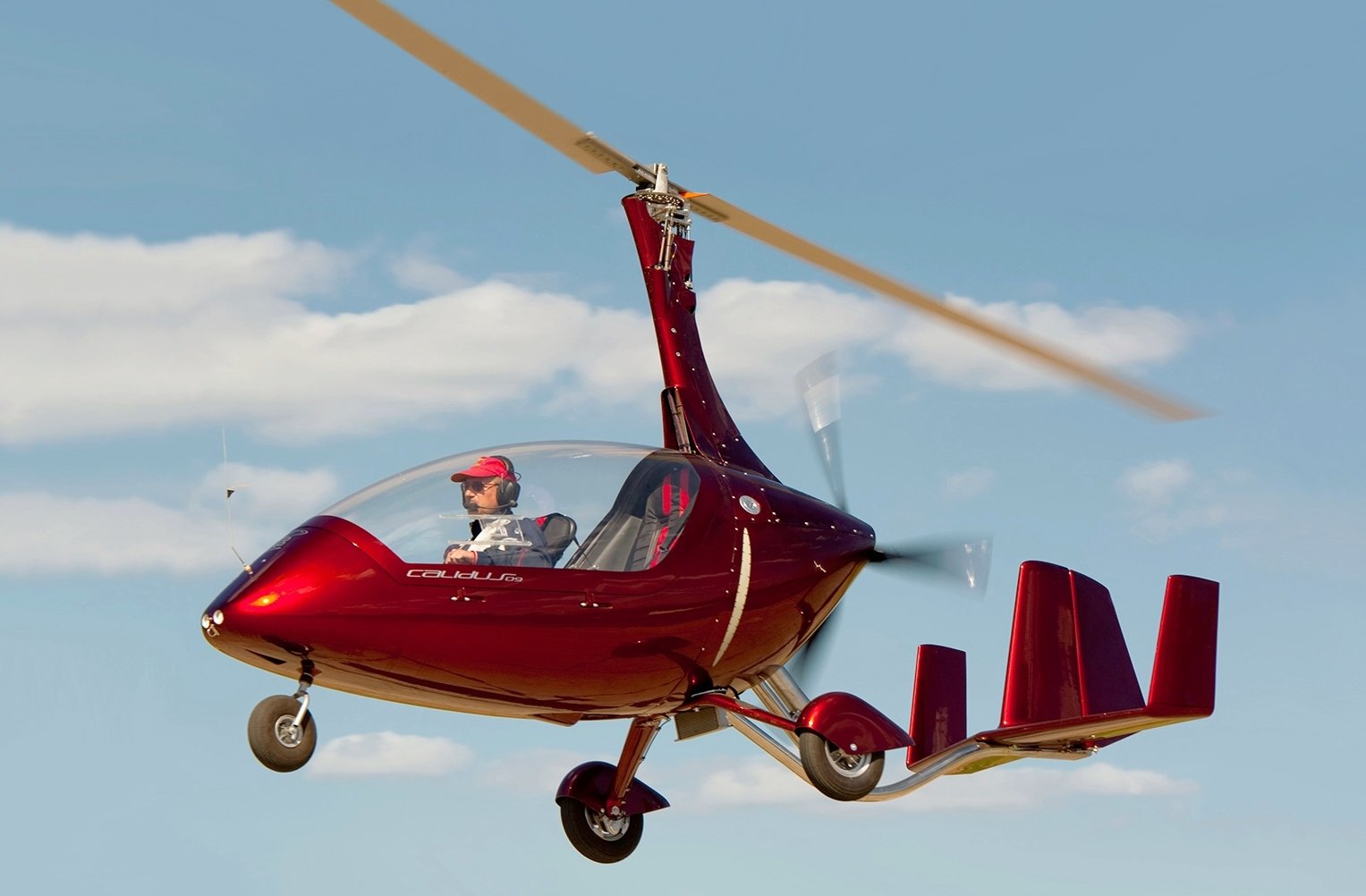
Service History
Since entering production in 2009, the Calidus has established itself as one of the most successful autogyros ever manufactured, with over 1,000 units sold worldwide by 2024. More than 500 aircraft remain in active service across multiple continents, serving diverse roles from flight training to law enforcement operations. The aircraft's fully enclosed cockpit and superior cruise performance made it immediately attractive to operators seeking weather protection and practical cross-country capability.
By December 2012, eight examples had been registered with the Federal Aviation Administration in the United States, primarily under Experimental-Amateur-built and Experimental-Exhibition categories. Transport Canada had registered three additional aircraft, demonstrating the type's growing international acceptance. The Calidus found particular favor with flight schools and sightseeing operators who valued its enclosed cockpit for passenger comfort and its impressive 800-kilometer range for extended operations.
The Manufacturer
AutoGyro GmbH of Hildesheim, Germany, developed the Calidus as part of their comprehensive gyroplane product line. The company collaborated with RotorSport UK Ltd (later renamed AGC) to create a variant specifically meeting British Civil Airworthiness Requirements CAP643 Section T, which was approved in 2010. This partnership enabled the Calidus to access both European and British markets with appropriate certifications.
AutoGyro GmbH continues operations today as the primary manufacturer, maintaining continuous production for over 15 years. The company's success with the Calidus led to development of the side-by-side configured AutoGyro Cavalon, demonstrating how the Calidus platform provided a foundation for further gyroplane innovations.
Engine & Technical Details
The Calidus employs four-cylinder Rotax engines in pusher configuration, manufactured by the Austrian engine specialist BRP-Rotax. Initial variants featured the Rotax 912 ULS producing 100 horsepower and the turbocharged Rotax 914 UL generating 115 horsepower. Later production incorporated the more advanced Rotax 915 iS and 916 iS engines, with the 916 iS variant achieving recognition as one of the fastest production gyroplanes available.
The aircraft's composite fuselage incorporates sophisticated vibration dampers that significantly reduce main rotor vibration transmission to the cockpit, addressing a common complaint with earlier gyroplane designs. The teardrop-shaped fuselage fairing ensures smooth airflow over the variable-pitch pusher propeller, contributing to the aircraft's efficient cruise performance and reduced noise signature.
Pilot Perspective
Pilots consistently praise the Calidus for its stability, aesthetic appeal, and performance characteristics that bridge the gap between traditional open-cockpit gyroplanes and conventional aircraft. The enclosed cockpit provides protection from inclement weather while maintaining excellent visibility through its comprehensive glazing. The tandem seating arrangement offers optimal weight distribution and flight characteristics compared to side-by-side configurations.
With a never-exceed speed of 225 kilometers per hour and cruise speeds ranging from 90 to 160 kilometers per hour depending on engine installation, the Calidus delivers performance suitable for serious cross-country flying. Take-off distances of 70 to 110 meters and landing distances as short as 15 meters provide operational flexibility unavailable to conventional aircraft. The aircraft's ability to perform near-vertical landings under certain conditions adds to its operational versatility.
Production & Legacy
The Calidus succeeded by addressing fundamental limitations of earlier gyroplane designs while maintaining the inherent safety characteristics that make autogyros attractive to recreational pilots. Its 265-kilogram empty weight and maximum gross weight ranging from 450 to 560 kilograms depending on configuration provide substantial payload capability with a typical passenger and baggage load of 230 kilograms.
Fuel capacity options of 74 to 100 liters enable the aircraft's impressive 800-kilometer range, making it practical for touring and commercial operations previously impossible with shorter-range gyroplanes. The aircraft's 4.78-meter length and 2.74-meter height allow hangar storage comparable to conventional light aircraft.
The Calidus demonstrated that certified, factory-built gyroplanes could achieve commercial success in specialized markets while maintaining the safety and handling characteristics that distinguish autogyros from conventional aircraft. Its continued production after 15 years and influence on subsequent designs like the Cavalon establish the Calidus as a pivotal aircraft in modern gyroplane development.