
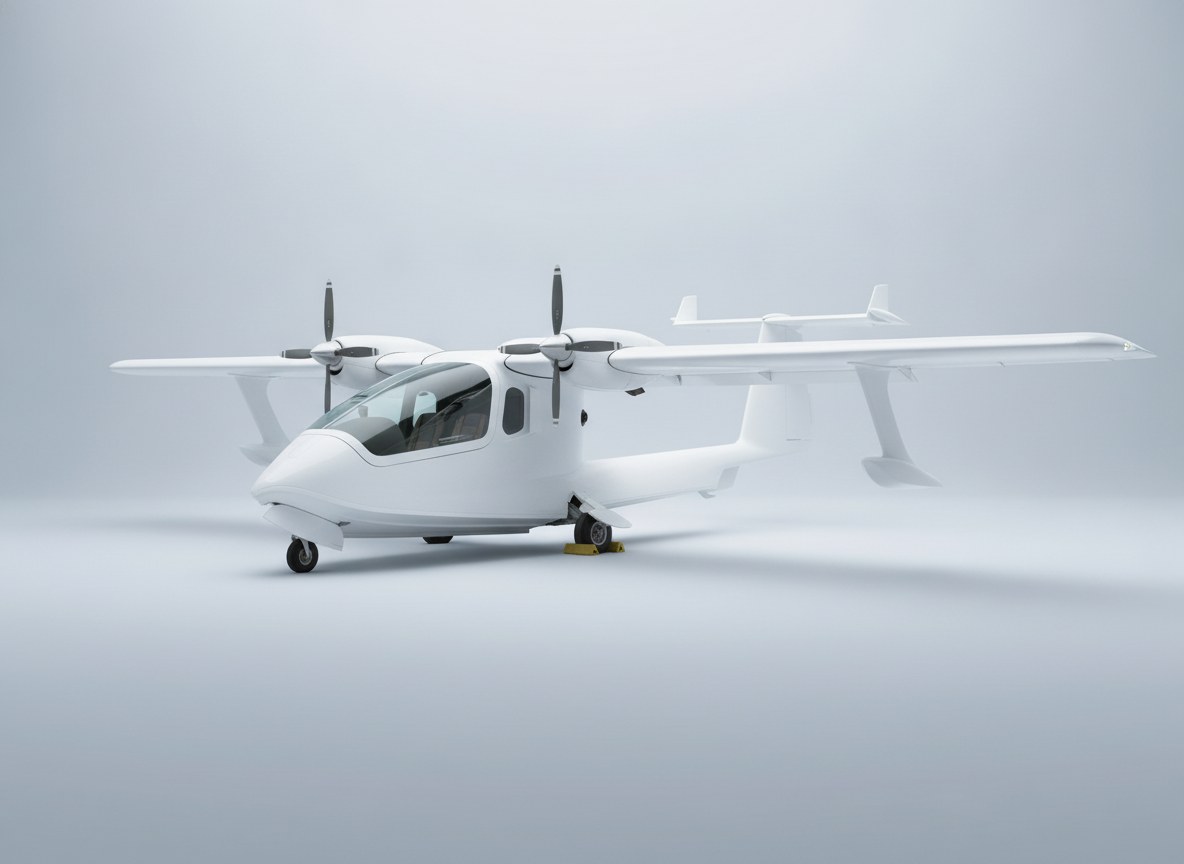
Development and Certification
The Freedom S100 emerged from an ambitious eleven-year development program spanning from 1995 to 2006, reflecting Colyaer's commitment to creating a versatile amphibious aircraft for the emerging light-sport category. The Spanish manufacturer conducted extensive flight testing, accumulating over 2,000 flight test hours before achieving certification. This thorough testing regimen paid dividends when the aircraft obtained FAA certification as a Special Light-Sport Aircraft (S-LSA) in November 2006, making it one of the early amphibious aircraft to achieve this designation in the United States.
The aircraft's certification journey began with Spanish Civil Aviation Authorities (DGAC) approval as an ultralight in 2005, followed by successful certification in Australia and the United States. This multi-national approval process demonstrated the Freedom's ability to meet diverse regulatory requirements across different aviation authorities.
The Manufacturer
Colyaer SL, founded in 1995 in Portonovo, Spain, established itself as a specialist manufacturer of kit aircraft and experimental designs. The company's founding coincided with the beginning of the Freedom S100 development program, making this amphibious aircraft the cornerstone of their product line. Unlike many ultralight manufacturers that focus on simple tube-and-fabric designs, Colyaer committed to advanced composite construction from the outset.
The company remains active today, continuing operations under its original name while expanding its market reach through distributors. In 2015, Galicia Avionica SL took over marketing responsibilities for the Freedom S100 and the company's Martin3 S100 model, broadening the aircraft's commercial presence in European markets.
Design Innovation and Construction
The Freedom S100's most distinctive feature lies in its comprehensive composite construction, utilizing carbon fiber, Kevlar, and fiberglass materials throughout the airframe. This advanced material selection provides exceptional strength-to-weight ratios while enabling the complex hull shapes necessary for amphibious operations. The aircraft incorporates rust-resistant 316 stainless steel fittings and fastenings, ensuring longevity in marine environments.
The deep V-shaped hull design allows operations in open water while cushioning wave impact during water landings and takeoffs. Wing-tip pontoons provide lateral stability during water operations, while the retractable tricycle landing gear enables seamless transitions between land and water operations. The electric landing gear system features stainless steel actuators with independent operation for each wheel and position indicators on the control panel.
One of the aircraft's most impressive performance characteristics is its 20:1 glide ratio, enabling power-off soaring flights and providing exceptional safety margins during engine-out scenarios. The reflexed flap system optimizes performance for both cruise flight and landing configurations, while generous control surfaces ensure stable water takeoffs even in challenging conditions.
Engine and Performance
The Freedom S100 utilizes the proven Rotax 912ULS four-cylinder engine, producing 75 kW (101 horsepower) through its liquid and air-cooled, four-stroke design. Mounted in pusher configuration, the engine is fully integrated into the fuselage to improve aesthetics, aerodynamics, and stability. This installation choice also provides better weight distribution and reduces noise levels in the cockpit.
Performance specifications reflect the aircraft's versatility across multiple mission profiles. Maximum speed reaches 230 km/h (140 mph), while cruise speed settles at 190 km/h (120 mph). The low stall speed of 70 km/h (43 mph) provides excellent short-field performance, with land takeoff distance of just 275 meters and water takeoff distance of 300 meters. The 83-liter fuel capacity enables ranges exceeding 1,000 kilometers, making the Freedom suitable for cross-country flights.
Operational Flexibility
With a gross weight of 650 kilograms and wing loading of 54.2 kg/m², the Freedom S100 delivers gentle handling characteristics suitable for sport pilots transitioning to amphibious operations. The side-by-side seating arrangement with enclosed cockpit provides excellent visibility for both occupants, making the aircraft well-suited for surveillance, aerial photography, and instructional flights.
The aircraft's 5 m/s rate of climb ensures adequate performance for obstacle clearance during both land and water operations, while the impressive glide ratio provides confidence during approach phases over water.
Production and Global Presence
Colyaer has manufactured at least six Freedom S100 aircraft, with examples operating across multiple continents including the United States, China, Finland, Australia, and Spain. This global distribution demonstrates the aircraft's appeal to diverse markets and its ability to meet varying regulatory requirements across different nations.
The Freedom S100's limited production numbers reflect both the specialized nature of amphibious aircraft and the challenges facing small-scale manufacturers in the competitive light-sport aircraft market. However, its continued presence in international markets and ongoing manufacturer support indicate sustained viability for this unique amphibious design.