
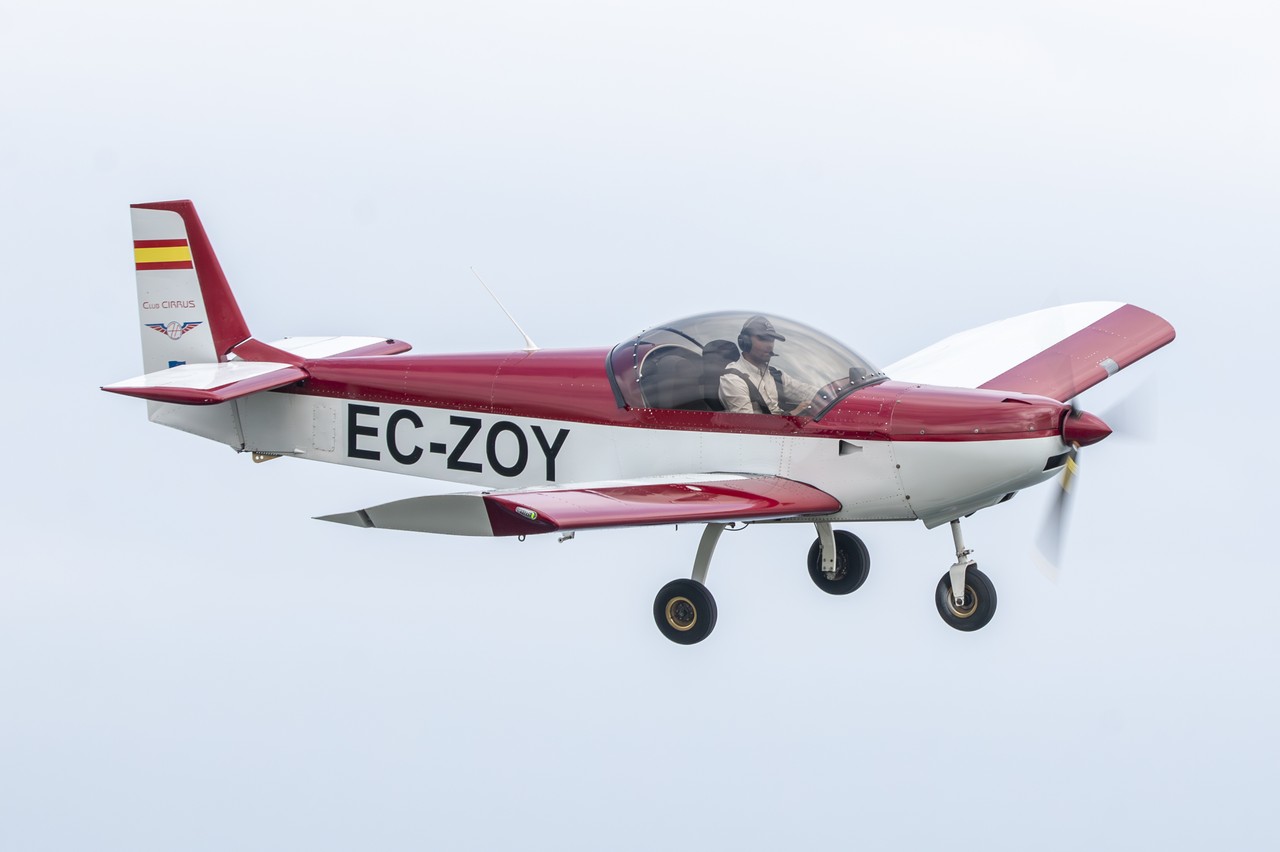
Design Innovation and Quick Construction
The CH-250's revolutionary design philosophy centered on enabling amateur builders to construct an all-metal aircraft in record time. Chris Heintz's engineering background at Avions Pierre Robin informed his approach to creating a structure that could be assembled in just 360 hours for the basic framework and 380 hours for final assembly. This philosophy was spectacularly demonstrated at the 1976 EAA Convention in Oshkosh, Wisconsin, where Heintz and his team built and flew a CH-200 in just eight days, requiring only 550 person-hours of labor.
The aircraft employed a modified NACA 64A515 airfoil with a 5:1 aspect ratio wing design, optimized for both performance and manufacturing simplicity. The all-metal construction used techniques and materials accessible to home builders, breaking away from the fabric-covered designs that dominated amateur-built aircraft of the era.
The Manufacturer's Origins
Zenair Ltd. emerged from humble beginnings in 1974 when Chris Heintz, a French aeronautical engineer, emigrated to Canada in 1973. Heintz had departed Avions Pierre Robin following the company's nationalization in June 1974, bringing his design expertise to North America. Initially operating from Heintz's two-car garage, Zenair began manufacturing kits for the CH-200/250 family, with the first North American-built example taking flight in October 1975.
The company's growth reflected the success of Heintz's design philosophy. By 1976, over 300 plans for the CH-200 had been sold, demonstrating strong market demand for accessible all-metal construction. Zenair's influence extended beyond the CH-250, eventually developing more than 12 different designs including the CH-300, CH-701 STOL, and CH-601 ZODIAC variants.
Engine and Performance Characteristics
The Continental O-200 engine that powered the CH-250 provided 100 horsepower from its air-cooled flat-four configuration, offering reliability suited to homebuilt operations. With a 1,800-hour overhaul interval, the engine enabled the aircraft to achieve a cruise speed of 110 knots indicated airspeed while burning 4.9 gallons per hour at 75 percent power. The 20-gallon fuel capacity provided a range of 450 nautical miles.
Performance specifications reflected the aircraft's role as an efficient personal transport. The CH-250 could climb at 800 feet per minute and reach a service ceiling of 15,000 feet, with a stall speed of just 47 knots. These characteristics made it suitable for pilots seeking cross-country capability without the complexity of retractable landing gear or constant-speed propellers.
Production and Market Impact
Kit production continued from 1974 through at least 1999, with plans remaining available throughout this 25-year span. While exact production numbers for the CH-250 variant specifically remain unrecorded, hundreds of aircraft from the broader CH-200/250 family were completed by amateur builders worldwide. The success of this family led to continued production of related variants, with the CH-300 remaining in production into the early 1990s.
The aircraft's impact extended beyond raw production numbers. The successful eight-day construction demonstration at Oshkosh attracted significant attention to the concept of quick-build all-metal kits, influencing the entire homebuilt aircraft industry's approach to manufacturing and assembly.
Evolution and Licensing
Zenair's business model evolved significantly through the 1990s as Heintz adapted to changing market conditions. In 1992, he licensed rights to the STOL CH-701 and ZODIAC CH-601 to Zenith Aircraft Company, expanding the reach of his designs. By 1996, Zenair had achieved FAA type-certification for the related CH-2000, which was manufactured by Aircraft Manufacturing and Design (AMD) as the AMD Alarus, with 117 examples registered by 2005.
Current Legacy
The CH-250 and its family members established a lasting presence in the homebuilt aircraft community. Examples continue flying worldwide decades after initial production, with accident records indicating active use as recently as 2013. The design's influence persists through Heintz's broader portfolio, including variants like the Mono-Z (CH-100), with at least five examples remaining airworthy in Canada as of 2020.
The aircraft's significance lies not merely in its technical specifications, but in its role as a catalyst for accessible all-metal homebuilt construction, demonstrating that amateur builders could successfully complete sophisticated aircraft in reasonable timeframes.