
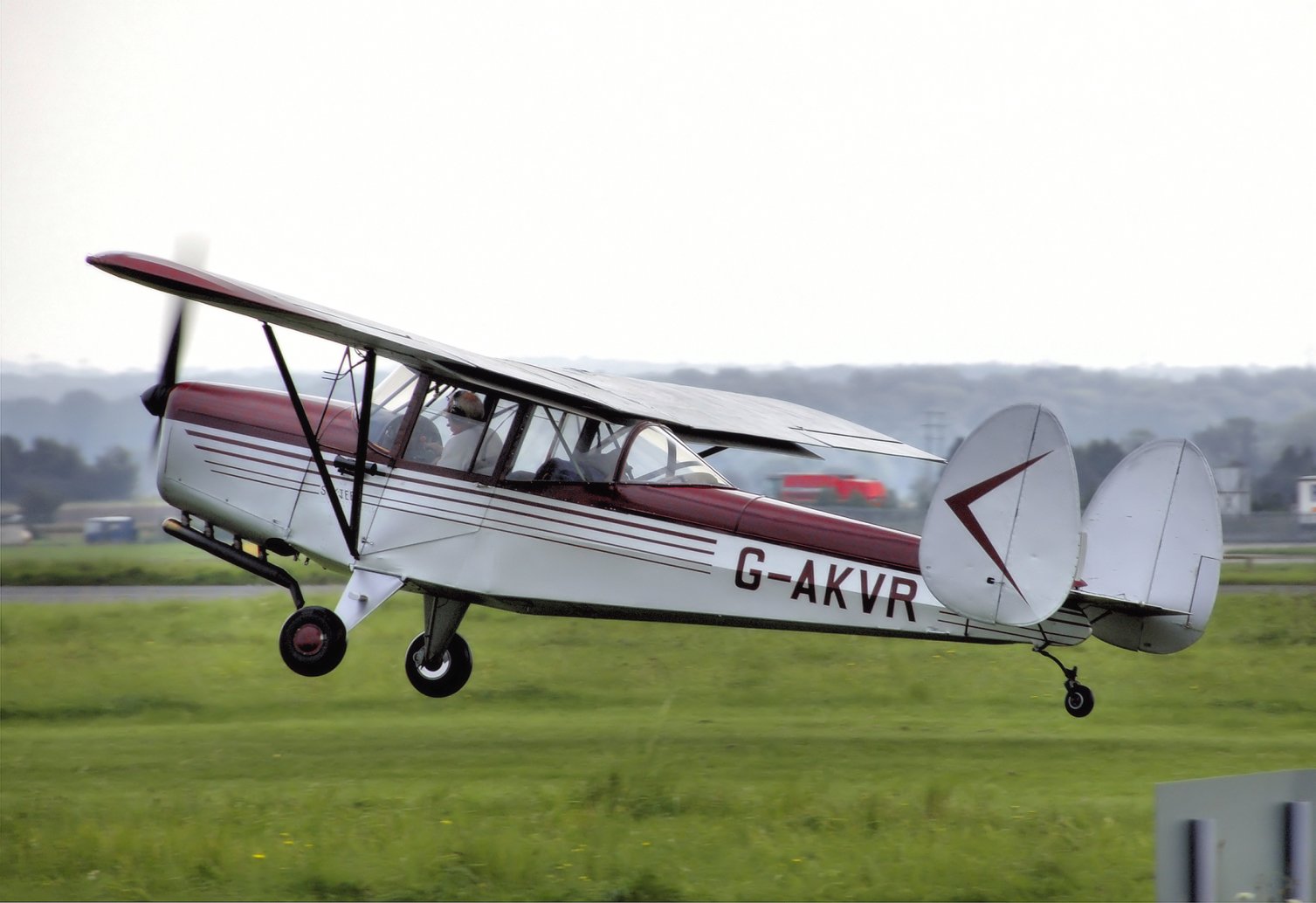
Development and Design
R.C. Christophorides designed the CH-3 series with the vision of creating a modern four-seat cabin monoplane for the burgeoning post-war civilian market. The prototype, designated C.H.3 Series 1 Ace and registered G-AHLG, took to the skies in August 1946 at Heston airfield. This initial aircraft featured several unconventional design elements, including Christophorides' proprietary "Chrislea control system" and an unusual single fin configuration intended to improve directional stability over traditional tailplane arrangements.
The prototype's original powerplant was a 93 kW (125 hp) Lycoming O-290 engine, though production would later standardize on British powerplants. The aircraft's all-metal construction represented modern manufacturing techniques, distinguishing it from many fabric-covered contemporaries in the light aircraft category.
Production Challenges
The Chrislea Aircraft Company Ltd. faced significant obstacles from the outset of production. After building the prototype at Heston, the company relocated operations to Exeter in 1947 to begin manufacturing the improved Series 2 Super Ace variant. However, the immediate post-war period proved challenging for aircraft manufacturers, with material shortages forcing a two-month factory closure in 1948.
Despite these setbacks, production continued between 1948 and 1950. The Series 2 Super Ace incorporated lessons learned from the prototype, most notably the replacement of the unpopular Chrislea control system with conventional flight controls. The production aircraft also adopted the 108 kW (145 hp) de Havilland Gipsy Major 10 inline piston engine, providing more reliable power than the original Lycoming installation.
Engine Specifications
The de Havilland Gipsy Major 10 that powered production Super Ace aircraft belonged to a distinguished lineage of aircraft engines. The Gipsy series, manufactured by de Havilland Aircraft Company, traced its origins to 1927 with the original Gipsy I. The four-cylinder inline design became renowned for smooth power delivery and found widespread application in light aircraft throughout the aviation world. Over 14,000 Gipsy engines across all variants were produced until the 1960s, though the engines required frequent maintenance to maintain their reliability.
Series Variants and Military Interest
Beyond the basic Super Ace, Chrislea developed several variants to expand market appeal. The Series 3 represented an attempt to secure military contracts, specifically designed for British Army Observation Post (AOP) duties. However, this variant never progressed beyond prototype status and failed to enter military service.
The Series 4, marketed as the Skyjeep, targeted the luxury market with an enlarged cabin providing enhanced passenger comfort. Only three Skyjeep aircraft were completed, reflecting the company's increasingly precarious financial position.
Operational Service
The CH-3 Super Ace found its primary role in private ownership, operating throughout the United Kingdom and exported to international markets including Australia. The aircraft's four-seat configuration made it suitable for personal transportation and light charter work, though it never achieved the commercial success envisioned by its creators.
Several aircraft met unfortunate ends during their operational careers. G-AKFD was destroyed in a ship fire at Port Said in March 1949 while en route to Australia, highlighting the risks of international aircraft delivery in that era. G-AKVB crashed in May 1955, while the original prototype G-AHLG was ultimately scrapped at Exeter in April 1952.
Company Demise and Legacy
The Chrislea Aircraft Company's ambitious plans ultimately exceeded its financial capabilities. Persistent supplier issues and cash flow problems led to the company's closure in 1952, leaving several airframes incomplete. The total production run of 33 aircraft included the original prototype, 18-21 Super Ace Series 2 aircraft, the single Series 3 military variant, and three Series 4 Skyjeep aircraft.
Surviving Aircraft
Despite the company's failure and limited production numbers, at least two CH-3 aircraft survive today. The Super Ace G-AKVF underwent complete restoration and achieved its first post-restoration flight on November 4, 1981, demonstrating the enduring appeal of this rare British design. The sole surviving Skyjeep, built in 1951, represents the luxury variant's brief production run.
The CH-3 Super Ace remains a footnote in British aviation history, representing the challenges faced by small manufacturers in the competitive post-war aircraft market. While it failed to achieve commercial success, the aircraft demonstrated innovative thinking in light aircraft design and serves as a testament to the optimism and ambition of Britain's post-war aviation industry.