
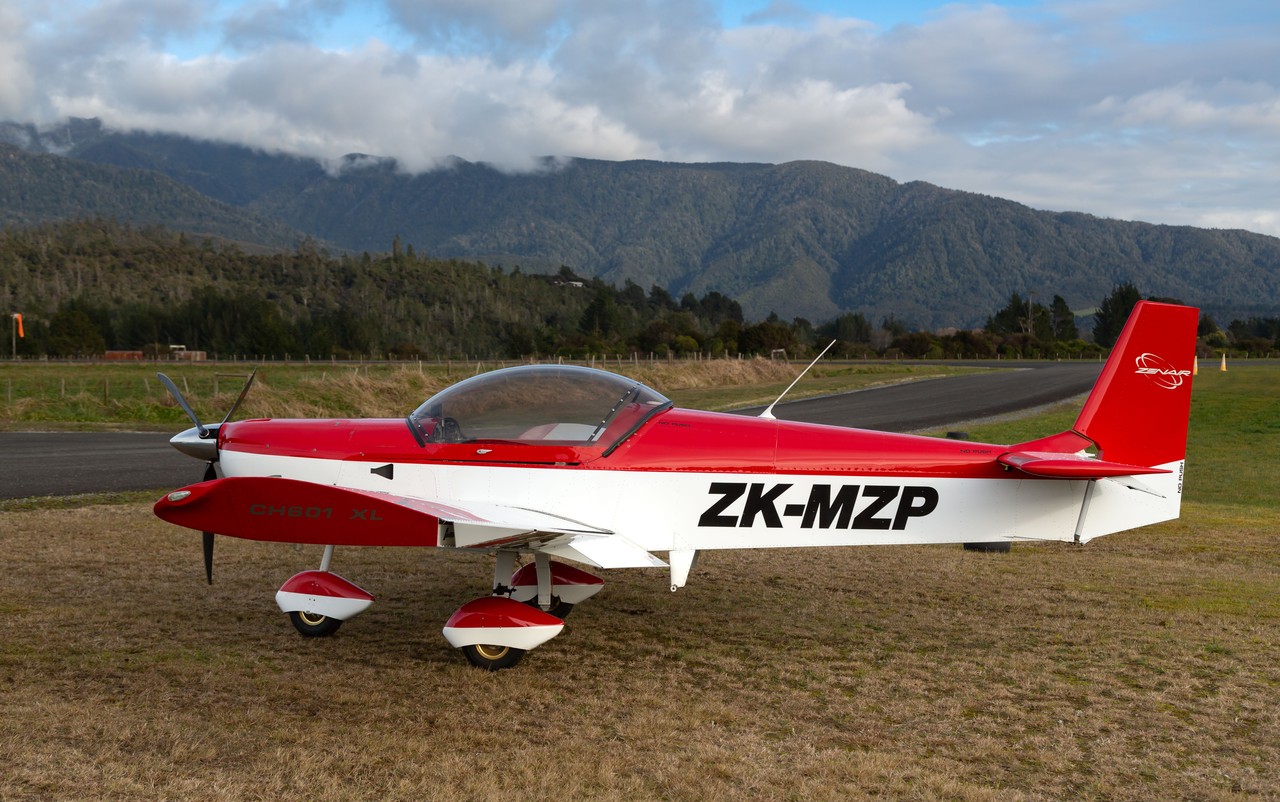
Design Philosophy and Development
Chris Heintz, formerly of Avions Pierre Robin and de Havilland Canada where he worked on the DHC-7, established Zenair Ltd. in 1974 with a clear mission: create affordable metal aircraft that amateur builders could construct in their garages. The CH-600 Zodiac represented his vision of democratizing aviation through simplified all-metal construction techniques that required no specialized tooling or welding skills.
Construction of the prototype CH-60 began in December 1983 at Zenair's Nobleton, Ontario facility. The aircraft incorporated Heintz's signature design elements: flush riveted aluminum construction, a wide-track tricycle landing gear for ground stability, and a spacious cabin accessed through a forward-hinged bubble canopy. The prototype's June 21, 1984 maiden flight validated the design concept, demonstrating gentle handling characteristics ideal for training applications.
Global Manufacturing Network
The Zodiac's success spawned an international manufacturing network unprecedented in homebuilt aviation. Zenith Aircraft Company, established in Mexico, Missouri in 1992, obtained North American rights and established comprehensive builder support programs including hands-on workshops at Mexico Memorial Airport. The company's approach of providing pre-punched parts and detailed instruction manuals revolutionized kit aircraft construction.
Production expanded globally with licensing agreements spanning multiple continents. Agrocopteros Ltd. in Colombia specialized in agricultural variants during the late 1980s, producing several dozen CH-601AG models equipped with chemical hoppers and spraying equipment. European operations shifted from CZAW in the Czech Republic (1997-2006) to Zenair Europe in Belgium, reflecting the design's international appeal.
Engine Evolution and Performance
The original prototype's 65-horsepower JPX/VW1875 converted Volkswagen engine represented typical homebuilt economics of the 1980s. Production aircraft quickly adopted more sophisticated powerplants, primarily the 64-horsepower Rotax 582 two-stroke and 80-horsepower Rotax 912 four-stroke engines that became industry standards for light sport aircraft.
Engine flexibility remained a hallmark throughout the Zodiac's evolution. Builders could specify Continental O-200 engines producing 100 horsepower, Chevrolet Corvair automotive conversions, or modern Jabiru 3300 powerplants. This adaptability allowed owners to balance performance requirements against budget constraints and maintenance considerations.
Variant Development
The CH-600's success generated numerous variants addressing specific market needs. The 1991 CH-601 featured a wider fuselage accommodating larger occupants while maintaining the original's construction simplicity. Specialized versions included the CH-601HD with reinforced structure for commercial training operations and the CH-601HDS Super Zodiac incorporating tapered wings for improved performance.
The 2002 CH-601XL represented a major evolution with electrically-operated flaps, composite landing gear legs, and redesigned wing structures. However, this advancement came with tragic consequences as structural failures resulted in multiple fatal accidents, including a November 6, 2009 incident over Arkansas that brought total Zodiac-related fatalities to eleven across seven crashes.
Market Impact and Light Sport Aviation
The Zodiac family's timing coincided perfectly with the Federal Aviation Administration's 2004 Light Sport Aircraft regulations. AMD (Aircraft Manufacturing & Development Co.) began producing factory-built CH-601XL SLSA variants in 2005, featuring 100-horsepower Continental O-200-A engines and meeting certification requirements for ready-to-fly delivery.
This transition from purely amateur-built to certified production aircraft demonstrated the design's fundamental soundness while addressing pilots seeking professionally-manufactured aircraft. The SLSA variants maintained the Zodiac's affordable operating costs while providing manufacturer warranties and professional assembly quality.
Training Aircraft Legacy
The Zodiac achieved Heintz's original goal of creating an ideal primary trainer through benign handling characteristics and forgiving flight envelope. Its wide-track landing gear eliminated ground handling difficulties that plagued many tailwheel training aircraft, while the spacious cockpit accommodated student-instructor communication effectively.
Flight schools worldwide adopted Zodiac variants for ab-initio training programs, particularly appreciating the aircraft's resistance to student-induced damage and straightforward maintenance requirements. The type's ability to operate from grass strips expanded training opportunities beyond congested airports to quieter rural facilities.
Current Operations
More than four decades after initial design work began, Zodiac variants continue production through Zenith Aircraft Company in Missouri and international licensees. The design's evolution culminated in the CH-650, introduced in 2008 as the latest refinement of Heintz's original concept.
The Zodiac family's distribution across 48 countries represents one of general aviation's most successful homebuilt designs, proving that thoughtful engineering combined with comprehensive builder support can democratize aircraft ownership while maintaining safety standards.