
Design Origins and Development
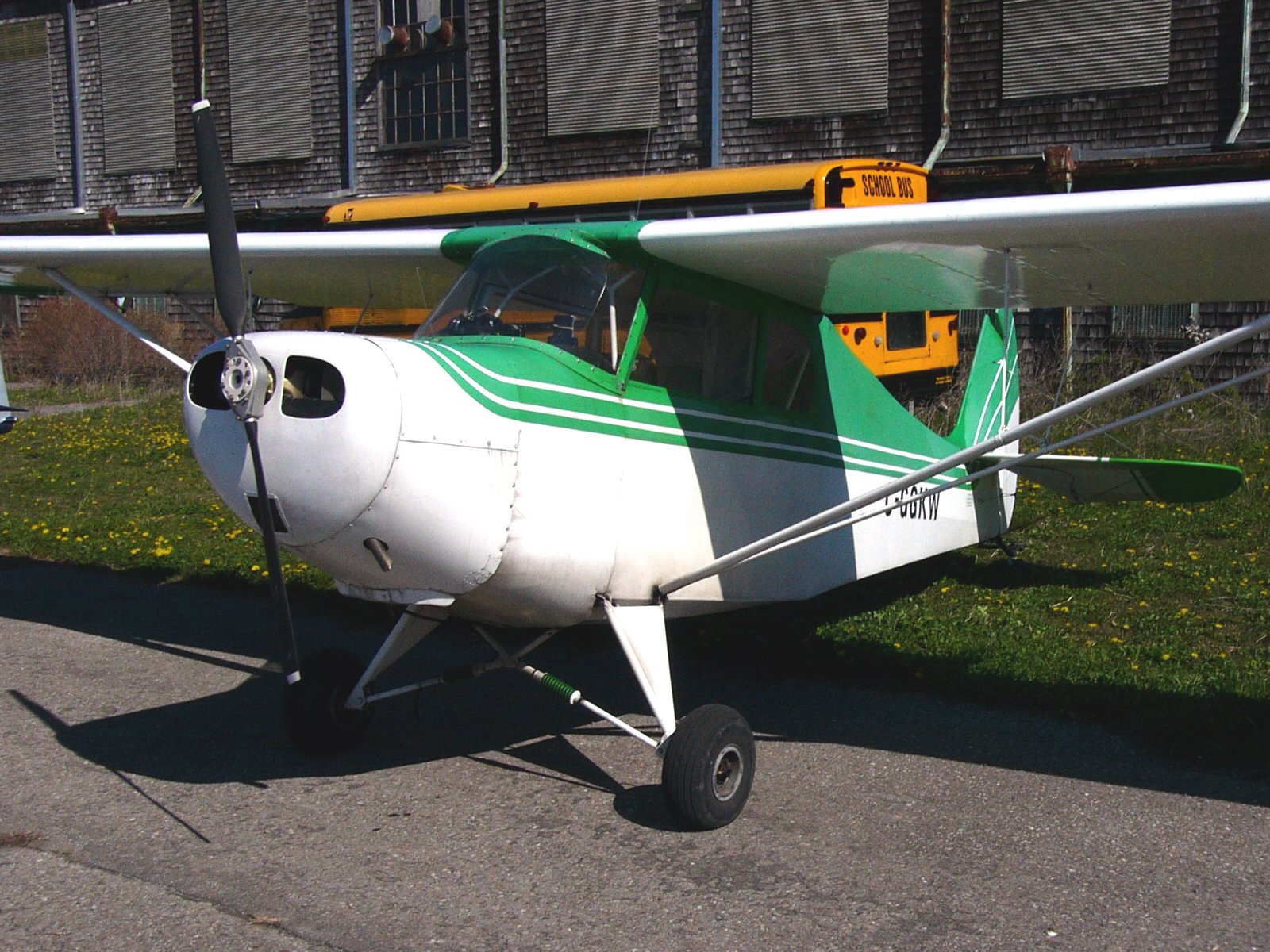
Ron Sands of Elmwood Aviation conceived the Christavia as a missionary aircraft for operations in remote areas, though this original mission never achieved widespread realization. The design process prioritized simplicity and reliability over performance, resulting in an aircraft that visually resembles the classic Aeronca Champion. The prototype, registered as C-GENC, completed its maiden flight on October 3, 1981, with Transport Canada registration following on October 1, 1981.
The Christavia's traditional construction methodology proved both its strength and weakness. Builders faced the challenge of fabricating thousands of individual wooden components for the wing structure while welding every tube joint in the steel fuselage framework. This labor-intensive approach resulted in construction times averaging two man-years, with one documented example requiring over 20 years from initial start to completion in 2013.
Construction and Production Philosophy
Elmwood Aviation never pursued commercial production of the Christavia, instead offering it exclusively as a homebuilt aircraft through construction plans and material packages. This decision reflected the design's complexity and the specialized market it served. When Elmwood Aviation went dormant, Aircraft Spruce assumed responsibility for plan distribution, ensuring continued availability for prospective builders.
The aircraft's construction demands created a selective builder community. Unlike kit aircraft with pre-fabricated components, Christavia builders needed substantial metalworking and woodworking capabilities. The steel tube fuselage required comprehensive welding skills, while the wooden wing demanded precision in crafting numerous ribs, spars, and internal structures before fabric covering.
Technical Specifications and Performance
The Christavia typically employs Continental O-200 engines, though builders have successfully installed various small Continental powerplants based on availability and preference. The O-200, an air-cooled four-cylinder engine, provides adequate power for the aircraft's modest performance envelope. One documented case involved builders selecting the Christavia specifically because they had acquired a Continental engine without cost, making it more economical than alternative designs requiring more powerful engines.
The two-seat tandem configuration places occupants in fore-and-aft seating, with the high wing providing good ground visibility and stable flight characteristics. However, the design's payload limitations prevent carrying meaningful cargo alongside two occupants, and performance suffers when operating from remote high-altitude airstrips with full loads—ironically limiting its effectiveness in the missionary role for which it was originally intended.
Service History and Operations
The Christavia operates exclusively in private and homebuilt categories across Canada and the United States. Multiple examples have achieved airworthiness certification, with documented aircraft including C-FPMY, constructed in 1993 and based in Prince Albert, Saskatchewan as of 2023. The aircraft has maintained an active presence in the homebuilt community, though never achieving the popularity of designs like the Kitfox or RV series.
Accident records spanning from 2005 through 2023 show several incidents involving Christavia aircraft, though most resulted in minor or substantial damage rather than total losses. This safety record reflects both the aircraft's inherently stable characteristics and the careful maintenance typically provided by owner-builders.
Current Status and Legacy
The Christavia remains available for construction through plan sales, with at least one documented airworthy example active as of 2023. However, the design has not achieved widespread adoption compared to more popular homebuilt aircraft, reflecting its demanding construction requirements and modest performance characteristics.
The aircraft's legacy lies not in production numbers but in its representation of traditional aircraft construction methods. For builders seeking to master fundamental skills in steel tube welding and wooden wing construction, the Christavia provides comprehensive education in both techniques. Its fabric covering system also offers experience with traditional aircraft restoration methods still relevant to vintage aircraft maintenance.
Modern homebuilders increasingly favor composite construction or pre-fabricated metal kits that reduce construction time and complexity. The Christavia's two-year minimum build time and requirement for extensive fabrication skills limit its appeal in an era when many builders seek flying results within months rather than years. Nevertheless, the design continues to attract craftsmen who value the traditional building experience over rapid completion.