
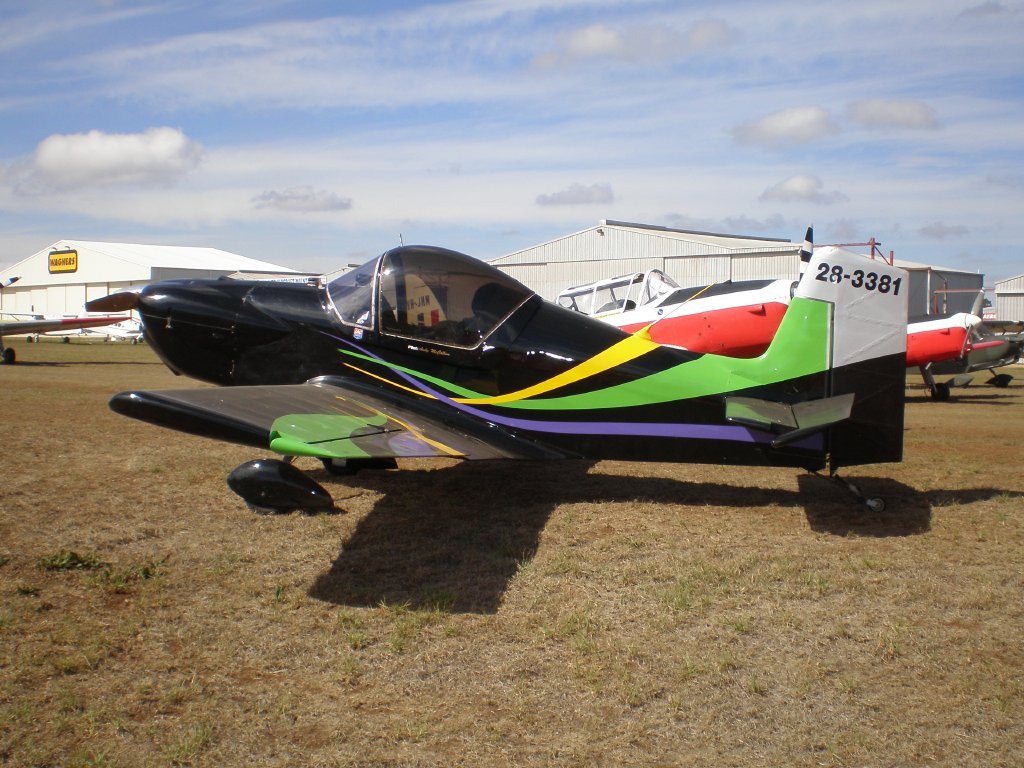
Design Genesis and Competition Success
John Corby, a Sydney-based aeronautical engineer, created the CJ-1 Starlet in response to a 1964 design competition sponsored by Rollason Aircraft Ltd in England. While Corby's entry placed eighth among submissions, it achieved the distinction of being the first design actually completed and flown. The competition sought aircraft suitable for amateur construction, and Corby's design philosophy centered on creating a machine that was small, light, and buildable by enthusiasts with basic woodworking skills.
Corby brought substantial experience to the project, having previously designed two other aircraft types—an early design similar to the Volksplane and the Star Baby, developed with input from Qantas engineers and Eric Morris. Neither of these earlier designs achieved airworthy status, making the Starlet his first successful flying machine.
First Flight and Early Development
The prototype Starlet, registered VH-CBS with constructor number N32, was built by Corby himself and first flown by pilot Peter Hodgen at Camden, New South Wales, on 9 August 1967. The initial flight testing revealed the aircraft's potential, though early engine selection proved problematic. Corby initially fitted a 42-horsepower Agusta MV motorcycle engine converted for aviation use, but this powerplant proved unsatisfactory for the aircraft's performance requirements.
Construction Philosophy and Materials
The Starlet embodied the era's approach to "semi-aerobatic" aircraft design, built to withstand a +4.5G limit load factor that met 1960s aerobatic standards. Corby chose all-wood construction featuring a spruce fuselage framework and laminated wing spars, covered with fabric. This traditional approach made the aircraft accessible to amateur builders who could work with wood and basic tools, avoiding the complexities of metal fabrication that limited many homebuilders.
The design's structural integrity was validated in 1973 when a Starlet won the Australian National Aerobatic Championship, demonstrating that amateur-built aircraft could compete with factory-produced machines in demanding flight regimes.
Engine Evolution and Powerplant Options
Following the prototype's engine difficulties, Corby developed the Starlet to accommodate various powerplants producing up to 80 horsepower and weighing no more than 159 pounds. Volkswagen automotive engine conversions became the most popular choice, with builders installing units producing between 50 and 80 horsepower. The British-built Rollason Ardem 4CO2, based on the 1600cc Volkswagen engine, proved particularly suitable for the design.
Modern Starlet builders have expanded engine options to include the 85-horsepower Jabiru 2200 and 80-horsepower Rotax 912UL, along with various Hapi and Revmaster conversions. The Agusta GA.14 also found favor among some builders seeking alternatives to Volkswagen-based powerplants.
Worldwide Distribution and Production
Unlike conventional aircraft manufacturers, Corby distributed his design through plans sales rather than factory production. Between 800 and 1,000 sets of plans were sold worldwide, with approximately 150 examples completed by amateur builders. Aircraft Spruce & Specialty later offered materials kits to complement the plans, simplifying the construction process for builders.
The second completed Starlet, registered VH-ULV with constructor number V8, was built as a group project by members of the Latrobe Valley Division of the Ultralight Aircraft Association in the early 1970s, making its first flight in mid-1971. This collaborative approach demonstrated the design's suitability for aviation club projects.
Performance Characteristics
The Starlet achieved impressive performance figures for its size and power. With properly selected engines, the aircraft could reach a maximum speed of 160 mph and cruise at 130 mph, while maintaining a gentle stalling speed of just 35 mph. The design offered a service ceiling of 14,500 feet and a rate of climb of 700 feet per minute, with takeoff runs of only 450 feet and landing distances of 400 feet.
Fuel capacity ranged from 36.4 to 42 liters, providing a range of 370 miles. Empty weight was typically 420 pounds, with a maximum takeoff weight of 650 pounds for normal operations, expandable to 750 pounds for specific configurations.
Regulatory Evolution and Modern Operations
While the Starlet was originally certified for semi-aerobatic flight under 1960s standards, modern regulations require +7/-3G capability for aerobatic certification. This regulatory change has limited contemporary Starlets to non-aerobatic flight operations in many jurisdictions, though the aircraft remains popular among private owners for recreational flying.
Examples continue flying in Australia, the United Kingdom, and New Zealand, with aircraft like G-CCXO, built in the UK in 2007, representing the design's enduring appeal. The aircraft typically operates under ultralight regulations in most countries.
Design Legacy and Variants
Corby later announced a redesigned all-metal version designated CM-2, with plans eventually becoming available to builders. Two examples were completed—one in Australia and one in New Zealand—under the name Corby Kestrel. The original Starlet design also inspired other aircraft projects, including the SP-500.
The Corby CJ-1 Starlet stands as one of the most successful amateur-built designs in aviation history, proving that sophisticated performance and aerobatic capability could be achieved through simple construction methods accessible to recreational builders worldwide.