
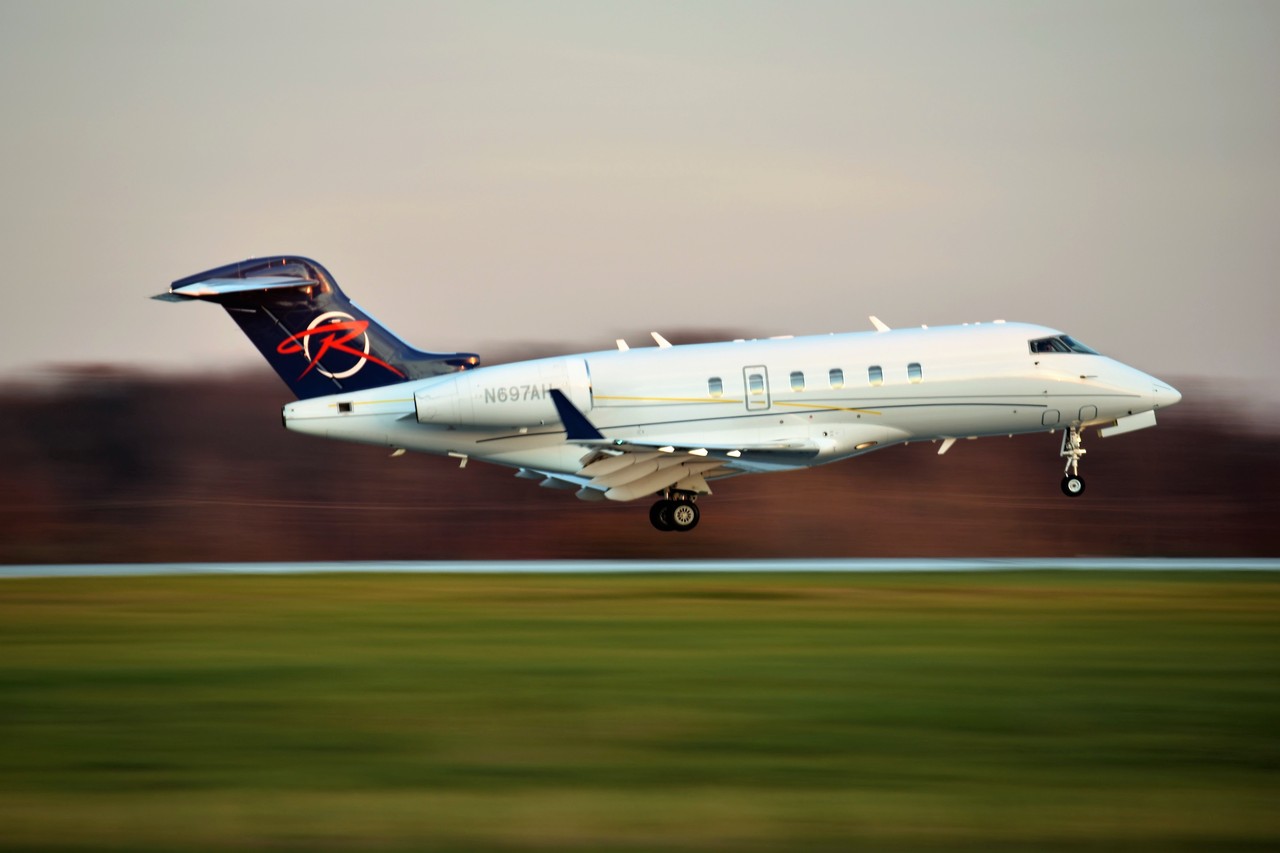
Market Positioning and Development
Bombardier identified a critical gap in their product lineup during the late 1990s between the intercontinental Challenger 604 and the regional Learjet family. The project, formally launched at the 1999 Paris Air Show on July 13, 1999, was initially designated the Bombardier Continental before being renamed the Challenger 300 in September 2002. Design objectives called for accommodating eight passengers across 3,100 nautical miles while maintaining Mach 0.8 cruise performance.
The baseline aircraft achieved its maiden flight on August 14, 2001, from Bombardier's Wichita facility. This represented a completely new design approach rather than an evolution of existing Challenger 600 variants. Transport Canada issued type certification on May 31, 2003, followed by US FAR 25 certification on June 4 and European JAR 25 approval on July 31. Commercial service commenced on January 8, 2004.
Manufacturing and Production Partnership
Bombardier Aerospace, headquartered in Dorval, Canada since its founding on July 10, 1942, established assembly operations at their Learjet plant at Wichita Mid-Continent Airport, Kansas. A crucial partnership with Mitsubishi Heavy Industries provided risk-sharing production support, with the Japanese manufacturer specifically tasked with designing, manufacturing, and integrating the aircraft's innovative single-piece wing structure.
Production continued from 2004 through 2014, when the improved Challenger 350 replaced the 300 on assembly lines. By November 2014, 448 Challenger 300s were operating worldwide, with total deliveries reaching approximately 450 aircraft by July 2020. The majority of sales targeted North American-based operators, with launch pricing established at $17.4 million.
Technical Innovation and Performance
The Challenger 300 incorporated twin Honeywell HTF7000 turbofan engines, each producing 30.4 kN of thrust. These powerplants, originally designated AS907 during development by AlliedSignal before Honeywell's acquisition, provided exceptional fuel efficiency for the super-midsize category. The engines enabled maximum speeds of Mach 0.82 (891 km/h) with real-world range performance of approximately 2,700 nautical miles.
Cabin design prioritized passenger comfort with a spacious flat-floor configuration measuring 7 feet 2 inches in width and 6 feet 1 inch in height. Standard passenger capacity accommodated eight travelers, though maximum certification allowed up to 16 occupants with a two-pilot crew. Advanced noise-reduction technologies, fully adjustable leather seating, and large windows distinguished the interior from competing aircraft.
Market Impact and Success
The Challenger 300 immediately captured significant market attention by combining transcontinental range with superior cabin comfort and operational cost efficiency. This positioning filled a crucial niche between smaller light jets and larger, more expensive long-range business aircraft. By 2018, Bombardier claimed a commanding 58% market share of the entire super-midsize segment, largely attributed to the Challenger 300's initial success and subsequent variants.
The aircraft's commercial impact extended beyond individual sales to establish the viability of the super-midsize category for transcontinental corporate travel. Fractional ownership companies and corporate flight departments found the 300's combination of range, speed, and cabin comfort ideal for coast-to-coast missions without the operating costs of larger intercontinental jets.
Evolution and Improved Variants
The Challenger 350 made its first flight on March 2, 2013, receiving Transport Canada approval on June 11, 2014, followed by FAA certification on June 25 and EASA approval on September 2. This variant incorporated more powerful Honeywell HTF7350 engines with enhanced thrust and climb performance, extending range to 3,200 nautical miles. Cabin improvements included larger windows, advanced LED lighting systems, and enhanced soundproofing materials.
Bombardier launched the Challenger 3500 in September 2021, featuring auto-throttle systems and comprehensive cabin upgrades. The newest variant maintains the 3,200 nautical mile range while incorporating sustainable materials, more fuel-efficient engines, and the proprietary Nuage seat with ergonomic comfort and full reclining capabilities. A smart cabin management system allows passenger control of lighting, temperature, and entertainment through voice commands.
Current Operations and Legacy
Approximately 450 Challenger 300s remain in active service globally, demonstrating the type's operational longevity and market acceptance. The aircraft established Bombardier's reputation as a dominant force in business aviation and validated the super-midsize category as essential for corporate transportation. By July 2019, Bombardier had delivered the 300th Challenger 350, representing five years of continued success building on the original 300's foundation.
The Challenger 300 series continues serving corporate aviation markets worldwide, with many original 300s receiving avionics upgrades and interior refurbishments to extend operational life. The aircraft's success demonstrated the market demand for combining long-range performance with cost-effective operations, influencing subsequent business jet development across the industry.