
Revolutionary Design Philosophy
The Challenger 600's origins trace back to aviation legend Bill Lear, creator of the Learjet series, who conceived the LearStar 600 in the mid-1970s. Canadair purchased Lear's design rights in April 1976 but extensively redesigned the aircraft under their own engineering team, phasing out Lear's involvement by March 1977. The Canadian manufacturer's vision was ambitious: create the world's first wide-body corporate jet that met stringent FAR Part 25 transport category standards, offering unprecedented cabin space while matching the 3,910-nautical-mile range of competitors like the Lockheed Jetstar.
Technical Innovation
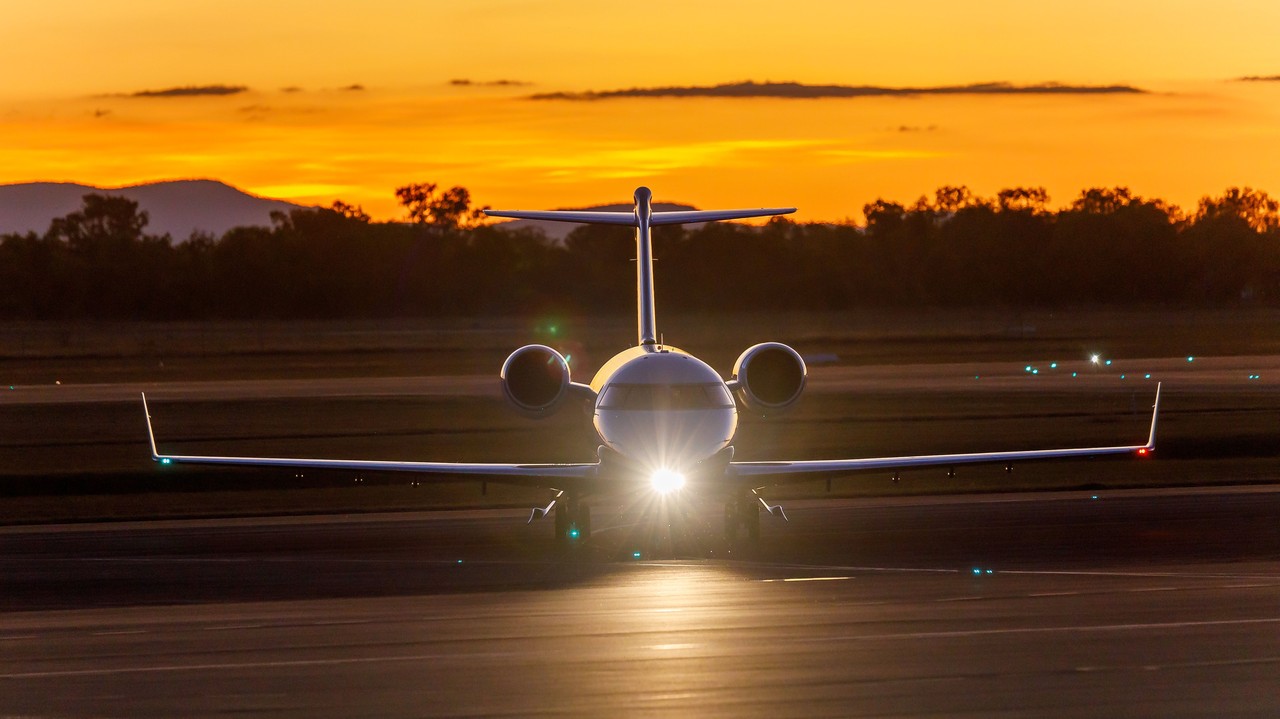
The CL-600 incorporated several groundbreaking technologies for business aviation. Most notably, it featured one of the first supercritical airfoil wings on a corporate jet, optimizing aerodynamic efficiency at high subsonic speeds. The aircraft's distinctive T-tail configuration elevated the horizontal stabilizer above engine exhaust, improving control effectiveness and reducing cabin noise. Three late-production CL-600S variants received winglets, a technology that would become standard on subsequent Challenger models.
Powered by twin Lycoming ALF 502L turbofan engines manufactured by Textron's Lycoming division, the Challenger 600 achieved a maximum cruise speed of Mach 0.85. The powerplants, produced from the late 1970s through the 1980s, provided reliable performance but were later replaced by more fuel-efficient General Electric CF34 engines in the improved CL-601 variant that first flew on April 10, 1982.
Manufacturing and Certification
The first prototype rolled out of Canadair's Montreal facilities on May 25, 1978, with initial flight occurring six months later. Transport Canada granted type certification on August 10, 1980, followed by FAA approval in November 1980, clearing the path for commercial deliveries. By the aircraft's public rollout in 1978, Canadair had already secured more than 116 orders, demonstrating strong market confidence in the wide-body concept.
The Canadair Story
Canadair Limited, founded in 1944 as a Canadian Crown corporation, initially built military aircraft under license during World War II. The company's ambitious Challenger program ultimately cost C$1.5 billion and contributed to severe financial difficulties by 1982. Bombardier acquired the struggling manufacturer in 1986, integrating it into Bombardier Aerospace and continuing Challenger development through 2005. The business jet division was eventually sold to Spirit AeroSystems in 2020, though Challenger production had ceased years earlier.
Service Record and Performance
The Challenger 600 found its primary market among corporate operators, governments, and high-net-worth individuals rather than commercial airlines. The Canadian government became an early operator, replacing aging Lockheed Jetstars for official transport duties. The aircraft's wide fuselage allowed up to three-abreast seating configurations, unprecedented comfort for a business jet of its era.
In 1984, a CL-601 variant set a world speed record by circumnavigating the globe in under 50 hours, demonstrating the platform's capability for long-range international operations. The aircraft required a two-person flight crew and could maintain cruise altitudes supporting efficient transcontinental and intercontinental flights.
Production Legacy
Canadair manufactured exactly 84 CL-600 aircraft for civilian operators before transitioning to improved variants. The entire Challenger 600 series ultimately exceeded 680 aircraft through 2005, with later models like the CL-604 (360 built between 1996-2006) adding extended fuel capacity and modern avionics including Collins Pro Line 21 systems.
Museum Preservation
The third CL-600 prototype (registration C-GCGT), built in 1979 at Montreal, now resides at the Canada Aviation and Space Museum after serving as a testbed for subsequent 601, 604, and 605 developments, including fly-by-wire flight control experiments. Bombardier donated this historically significant aircraft to the museum in 2006. Of the original 84 CL-600s produced, 34 have been retired from active service as of recent surveys.
Lasting Impact
The Challenger 600 fundamentally transformed business aviation by proving that wide-body cabin comfort could coexist with efficient long-range performance. Its success influenced Bombardier's later development of regional jets and established benchmarks for cabin space, range, and operational flexibility that competitors continue to pursue. The introduction of supercritical wings, winglets, and T-tail configurations to the business jet market created lasting technological legacies still evident in modern corporate aircraft design.