
Design Innovation and Development
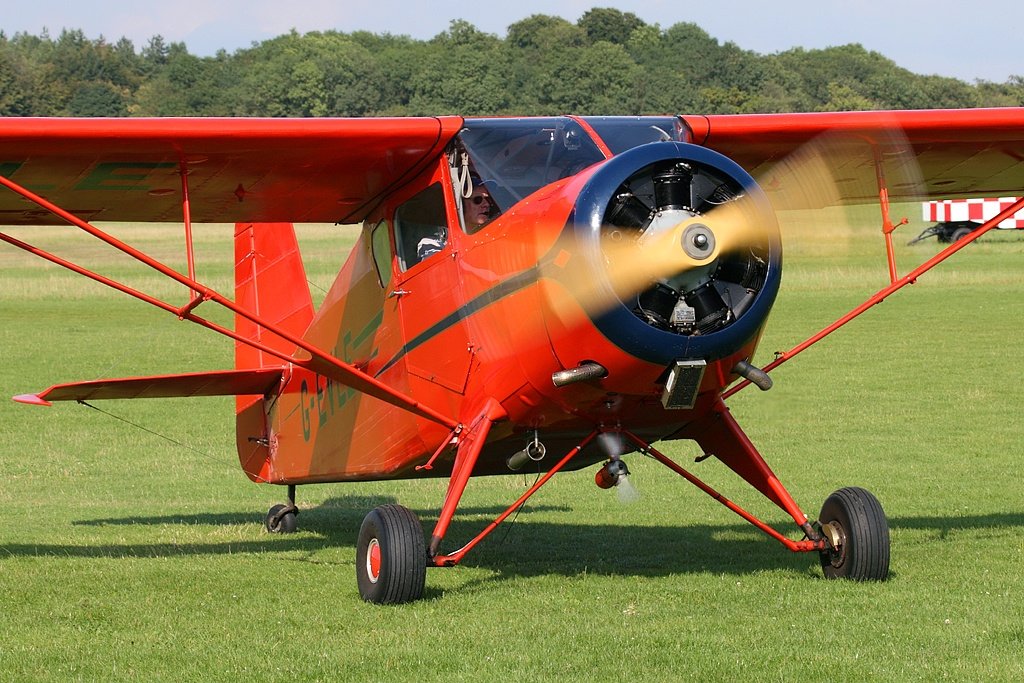
Robert Rummell's design for the Cloudster emerged from Rearwin Aircraft's ambitious goal to create a practical side-by-side seating aircraft while maximizing the use of existing manufacturing tooling from their Speedster and Sportster models. Beginning development in 1938, the company discovered that achieving their objectives required extensive modifications to strut geometry, landing gear configuration, fuselage structure, and engine installation. The prototype required six months to complete, initially bearing the name "Rearwin Coupe" before being rechristened "Cloudster" after just one month.
Vertical Integration Strategy
Rearwin Aircraft & Engines Company exemplified vertical integration in aviation manufacturing during the late 1930s. In 1937, the company acquired LeBlond Aircraft Engine Company, renaming it Ken-Royce to establish an in-house engine manufacturing division. This strategic move allowed Rearwin to produce both airframes and powerplants, giving them complete control over their aircraft's performance characteristics. The Ken-Royce radial engines that powered the Cloudster were five-cylinder units producing between 90 and 120 horsepower, depending on the variant.
Production Variants and Military Applications
The Cloudster family encompassed four primary variants, each tailored for specific operational requirements. The Model 8090 utilized the 90-horsepower Ken-Royce 5F engine, while the Model 8125 featured the more powerful 120-horsepower Ken-Royce 7F. The Model 8135 employed the Ken-Royce 7G engine, also producing 120 horsepower. The specialized Model 8135T trainer variant incorporated significant modifications for flight training applications.
Juan Trippe, founder of Pan American Airways and personal owner of a Rearwin Sportster, approached the company in 1941 with a specific request for an instrument trainer. Rearwin responded by redesigning the existing Model 8135, achieving certification for the 8135T variant in just four months. This trainer featured jettisonable doors for both instructor and student positions, dual flight controls, removable instrument panels, and provisions for a blackout curtain that enabled instrument training while maintaining instructor visibility. Pan American Airways purchased five aircraft, while twenty additional 8135T trainers went to various operators between August 1941 and July 1942.
International Service and Military Use
Twenty-five Model 8125 Cloudsters found their way to Iran in 1941 through export to the Aero Club of Iran. These aircraft demonstrated remarkable longevity, remaining in service as of 1945. Interestingly, the Iranian Cloudsters were modified with .30 caliber machine guns mounted on the left wing strut outside the propeller arc, suggesting paramilitary or training applications.
During World War II, the United States Army Air Forces impressed at least one Model 8135 into military service, redesignating it as the UC-102A under the military designation system. This demonstrated the aircraft's adaptability to military utility roles during wartime.
Technical Innovations
The Cloudster incorporated several design features that enhanced its operational practicality. Late 1941 production aircraft featured a NACA cowling hinged along the top edge, providing superior engine access for maintenance operations. The aircraft's high-wing configuration with strut bracing offered excellent ground clearance and stability characteristics desirable for utility operations. Twin 17-gallon fuel tanks provided the 600-mile range capability that made the Cloudster suitable for cross-country flights.
Production Reality and Market Challenges
Despite its technical merits, the Cloudster faced significant market challenges during its brief production run. Total production reached approximately 75 aircraft across all variants between 1939 and 1942, with the largest single order being the 25 Model 8125 aircraft exported to Iran. The Model 8135T trainer variant accounted for 25 units, representing the most successful single variant in terms of production numbers.
The aircraft's production timeline coincided with America's entry into World War II, which dramatically altered the aviation manufacturing landscape. Resources and production capacity increasingly shifted toward military aircraft production, limiting opportunities for civilian utility aircraft like the Cloudster.
Surviving Legacy
Today, the Cloudster's legacy is preserved through at least one confirmed surviving example. A 1940 Rearwin 8135 Cloudster bearing registration N4404W resides in the EAA Museum collection at Oshkosh, Wisconsin. This aircraft underwent an extensive seven-year restoration from 2003 to 2010, completed by Ed and Roger Shadick, demonstrating the dedication of aviation enthusiasts to preserving this chapter of American aviation history.
The Cloudster represents an important milestone in American general aviation development, showcasing the innovation and ambition of smaller aircraft manufacturers during the golden age of aviation. Its emphasis on practical utility, side-by-side seating, and integrated engine manufacturing highlighted the entrepreneurial spirit that characterized the American aviation industry before World War II fundamentally transformed the sector.